
McLuhan in the age of Meta
Posted: November 17, 2021 Filed under: education, Media Education, technology | Tags: education, McLuhan, mediaecology, mediaeducation, metaverse, technology, zuckerberg Leave a commentThe late Canadian University of Toronto professor of English, Marshall McLuhan, once said, “Resenting a new technology will not halt its progress.” If this is true, then all the raging fires of anger, angst and indignation blazing across our social media feeds and illuminating our phone screens, may only further stoke the flames of the digital inferno now burning wildly out of control all around us.
But McLuhan also believed that “education is ideally civil defense against media fallout.” Rather than fearing and attacking a new medium (technology), people should try to understand it and its potential effects on them. Though perhaps even he could not have envisioned that, one day, his own grandson Andrew would eventually embrace and help preserve his family’s legacy, by leading others in the vital quest to understand today’s shifting media environments.
Andrew McLuhan is not only a self-described writer, maker, thinker and dreamer. He is also a lecturer, researcher, writer, poet, explorer, curator, archivist and Director of the McLuhan Institute (TMI) in Prince Edward County, Ontario. Though, unlike his famous grandfather before him, Andrew candidly acknowledges he is not an academic.
Marshall McLuhan’s often perplexing mosaic-style of weaving aphorisms and metaphors throughout much of his writing and speeches, at times, frustrated his followers and critics alike. Indeed, the scholarly credentials and celebrity status that Marshall possessed may have, ironically, inspired his grandson’s vision to help make the study of media more accessible and comprehensible to the common person.
For Andrew, the main focus of TMI would be on practicality, where methods would replace monuments and tools would help students understand, cultivate and shape their own media environments, rather than be steamrolled by them.
Aware that the clock is ticking, for the past decade Andrew has been meticulously documenting the extensive libraries of his legendary grandfather and late father Eric, whose writings, in Andrew’s eyes, are no less significant than Marshall’s.
As Eric McLuhan’s son, Andrew was keenly aware of the weighty expectations upon his father’s shoulders. Life could not have been easy as the eldest son of a man whose impact on communications has been compared to the likes of Darwin, Freud and Einstein.
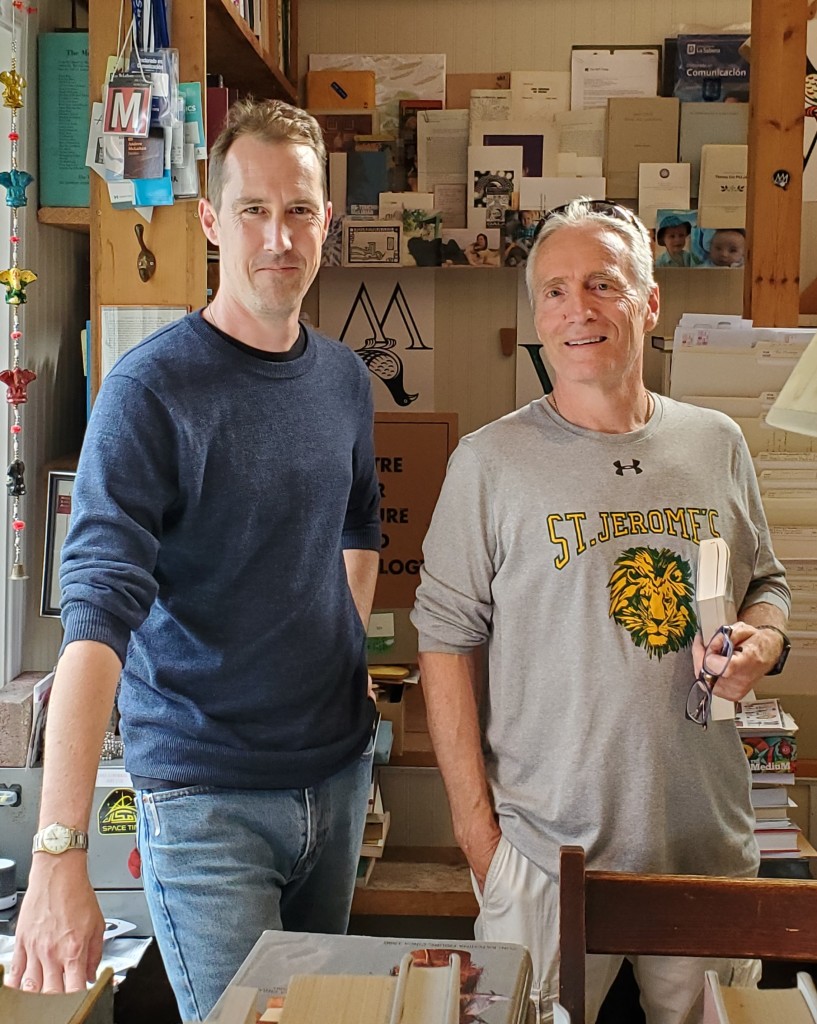
Andrew and I in the ‘Scriptorium’ where he curates the Marshall and Eric McLuhan collections.
(Photo by: B. Redfearn)
Recently, I had the privilege of visiting TMI and meeting Andrew and am currently auditing his course, Understanding Media Intensive – Part Three. The online course contains an eclectic mix of individuals scattered across the global village, all of whom share a common interest in studying the ideas in his late grandfather’s acclaimed 1964 book, Understanding Media: The Extensions of Man.
Another of Andrew’s dreams for TMI is to create an inviting space for media students to sojourn, study, ponder, research, question, and explore ideas, all while steeped in the ‘Scriptorium’ and surrounded by the vast Marshall and Eric McLuhan collections.
As a guest speaker, Andrew has visited and spoken to students spanning from junior elementary to university level classes. These talks allow him to share and discuss ideas related to helping students make some sense of the tsunami of media choices many of them are exposed to and influenced by. He perceives the emergency in our technological environment to be as existential in nature as that of our physical climate crisis, and wonders, “Where is the Greta Thunberg of Media Ecology?”
In a vivid metaphor borrowed from T.S. Eliot and cleverly reworked, Marshall McLuhan held that “the “content” of a medium is like the juicy piece of meat carried by the burglar to distract the watchdog of the mind.” Is today’s social media content, (fake news, misinformation, conspiracy theories, incendiary and divisive posts etc.), the juicy pieces of meat on offer to distract us from the medium (social media) that are quietly doing their work (the message/massage) upon us?
Is the ‘real message’ or fallout, (social media addiction, anxiety disorders, paranoia, obliterated attention spans, clinical depression, alienation, anger, violence and societal breakdown etc.), largely going on undetected and untreated in the background?
Still, Andrew is hopeful. He sees media education and thoughtful action as paths out of our current existential malaise. It appears the somnambulists among us are finally waking up and beginning to discover we each have a choice and a voice.
Undoubtedly there will be more distractions along the road. Will grandiose visions of Mark Zuckerberg’s proposed ‘Metaverse’ dazzle, lure and plunge us deeper into a simulated fantasy world? Or will promises of virtual nirvana reveal a shallow realm, devoid of critical thought and driven entirely by corporate interests?
Perhaps, in the spirit of “why not?”, the daring among us will boldly rise up to create innovative tools and methods to explore new ideas. In the quest to reign in our media environments we will always require defenses against the seductions of eloquence (“juicy pieces of meat”) that amuse and anesthetize us.
Though, ultimately, our response to whatever tool or technology is in vogue will reveal the extent to which we have truly understood and internalized McLuhan’s most insightful discovery – that the medium and the message are inseparably one.
Pandemic learning in 2020-21: Back to the Future
Posted: May 7, 2021 Filed under: COVID-19, education | Tags: education remotelearning pandemic ontario COVID-19 Leave a commentby Michael G. Redfearn
Recently, while seeking refuge from the pandemic fog that descended upon the world over a year ago, I immersed myself in one of my favorite post-apocalyptic films, Planet of the Apes. Since its release in 1968, this Hollywood classic has both haunted and fascinated me.
But this time, the epic twist ending, where U.S. astronaut Taylor, (played by Charlton Heston), falls to his knees, cursing and pounding the wet sand, beneath the ruins of the Statue of Liberty, was starkly different. Taylor’s primal rage, directed toward the folly of his self-destructive fellow human beings, immortalized in the line, “You maniacs! You blew it up!”, jolted me, instantly, back to the future.
Fast forward to the 2020-21 school year. Many bleary-eyed, exhausted, stressed-out parents now wake to the daunting task of working from home, while trying to balance and meet the needs of their own children, who attend virtual school. Add to this mix, the reality that many of these same parents are, themselves, teachers and support staff, who have dozens of other children to educate and care for, and you have ideal conditions for burnout.
This is not what we signed up for. No one wanted the COVID-19 pandemic. Not parents, students, teachers, administrators, support staff, no one. Yet today we are all in the jaws of an insidious disease that, in less than a year, has consumed over 3 million precious lives, and fundamentally flattened economic, social, political, and educational landscapes across our global village.
Although the pandemic has increased the overall harm to the mental health of students, despite the negative outcomes, it has also served as an important event for some young people by fostering their emotional development during their transition to adulthood.
Yet, since the quantum shift by school districts in March of 2020, from traditional ‘bricks and mortar’ to remote learning, social media has been abuzz with teacher-on-teacher angst, where squabbles over which method of learning is more effective, litter the Twitterverse.

Classroom on a ferry New York City, circa 1915 Bureau of Charities,
via Library of Congress
It is fair to say many stakeholders in the education space do not yet fully understand many of the terms and learning modalities bandied about this past year, for example: eLearning, online learning, blended learning, hybrid learning, synchronous learning, Asynchronous learning, and emergency remote learning. A significant challenge ahead for all school districts will be to help clarify these terms for everyone involved in educating our youth.
From A-synchronous to synchronous, remote to in-person, the traditional boundaries and notions of ‘the classroom’ and ‘learning’, from Chatham-Kent to Kenora and beyond, like Taylor’s shattered world, have been blown to bits.
Frankly, I am astonished and disheartened by the widening rift between educators who claim, with certitude, that one modality of learning is superior to another. My Twitter feed is awash with such bogus battles and false dichotomies, over the efficacy of online versus face-to-face learning. The polarization is divisive, unproductive and needs to stop.
This is not to say there is no hope. Indeed, the pandemic has, unequivocally, driven home the reality that 21st century learning is anything but static and that we are far more effective and resourceful when working together.
In-person learning works for some students, online and blending instruction for others. For years, many teachers and students have accessed and benefited from engaging online learning platforms, where rich student assessments and performance tasks are commonplace. We all need to be open and receptive to a broad array of perspectives, learning modalities, educational tools and voices, if we truly want students to succeed.
Many teachers, who, prior to the pandemic, never imagined themselves delivering curriculum virtually, are now doing so by necessity. Undoubtedly, there have been mighty challenges along the road, such as unreliable or non-existent Internet connections, lack of government consultation and planning with school district administrators, teacher association leadership, and frontline educators, insufficient hardware for students and lack of online curriculum delivery training for teachers, to name a few.
Clearly, though, we are not the first generation in history to suffer through a calamitous plague, nor likely the last. During the Polio epidemic that raged in the summer of 1937, schools were closed to protect children. The Globe and Mail and Toronto Star published lessons for high school students and teachers were available by telephone if students needed help. The Chicago school system used the relatively novel medium of radio to teach lessons to children during the same outbreak.
We can also gain inspiration from today’s veteran teachers and support staff who point out that they have never worked as hard and as many hours as they have in the past year. Many of these same educators also reveal they have never seen their colleagues join together so enthusiastically over digital networks, to share resources and ideas as they are now.
The incredible resilience and exuberance shown by many students, parents, administrators, teachers, and support staff serve as beacons of hope. Ultimately, it is these unsung acts of optimism, patience, quiet desperation and courage, that will help carry and sustain our youth, until the last wave of the COVID-19 pandemic washes over us and finally recedes.
Let’s make democracy great again
Posted: February 7, 2017 Filed under: education, politics, technology | Tags: 1984, democracy, education, fakenews, information, liberty, medialiteracy, orwell, orwellian, propaganda, technology, truth Leave a commentThe English novelist George Orwell once observed that in a time of universal deceit, telling the truth becomes a revolutionary act. If this is accurate, then the Internet and the tsunami of so-called ‘fake news stories’ now jamming our online news feeds and flooding the collective social media landscape, makes all of us potential revolutionaries.
The recent world-wide condemnation and outcry over president Donald Trump’s immigration, health care and environmental policies, indicates that many people are finally waking up and fighting back with their own forms of ‘culture jamming’.
Massive astonishing and spontaneous public rallies in cities across the globe, not seen since the anti-nuclear movement of the early 1980’s, are signs that those citizens who sat on the sidelines during past and recent political elections, are not willing to accept alternative facts.
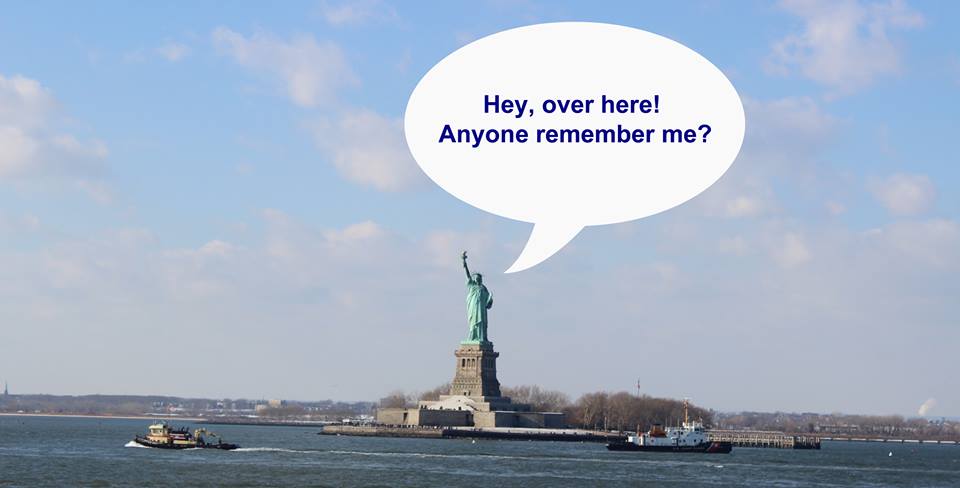
Other forms of dissent involve the propaganda war, where the cyber-weapons of choice are stinging satirical memes and endless streams of phony and real news stories, all intended to persuade and convince by flooding an opponent’s news feeds.
Creators of ‘fake news’ stories have been implicated in manufacturing everything from Obama citizenship conspiracies theories, to linking Republican senator Ted Cruz’s father to the JFK assassination and tilting the result of the recent American election in Trump’s favor. In today’s ‘give me entertainment or give me death culture’, where puny attention spans and instant gratification are king – it’s not necessarily the detection of fake or fabricated news that is the issue.
In today’s ‘give me entertainment or give me death culture’, where puny attention spans and instant gratification are king – it’s not necessarily the detection of fake or fabricated news that is the issue.
With so many compelling and alluring forces vying for their daily attention: work, family, the Internet, binge-watching and dizzying array of the latest smart phones and associated apps – most people do not have the time or the inclination to fact check every pseudo-story that litters their social media news feeds or jams their inbox. Enter the newest technical audio-video manipulation advancements that will soon obliterate any existing line between what is considered fake and real.
In a paper published last year by professors at Stanford University and the University of Erlangen-Nuremberg – researchers discovered that technologists could record video of someone talking and then change their facial expressions in real time. The technology demonstrated how the facial expressions from a news clip of Russian president Vladimir Putin could be altered in real time in difficult-to-detect ways.
Other initiatives like the ‘Digital Emily Project’, a study where researchers used digital characters in place of real people, further blurs the line between fantasy and reality, making truth detection that much more elusive. Seamless digital technologies now employed by Hollywood and video-gaming industry artists, make the detection of real actors from digital avatars virtually impossible.
Advancements in audio technology have also made truth detection an increasingly daunting task. At a developer conference this past November, Adobe touted its new product nicknamed ‘Photoshop for audio’. The product allows a user to transfer around 10 to 20 minutes of their voice into the application, then allows them to type words expressed in that exact voice. The result does not sound computer-generated in the least, but uncannily real.
Imagine how real video and audio interviews of political leaders could be seamlessly twisted to further nefarious ends. For instance, audio of a comment could be generated and inserted before or following an interview (heard over a hot microphone) of a world leader making threatening comments toward another country.
Of course, all this assumes that some people still actually care whether the stories in their newsfeeds are real or fake. Increasingly, consumers of social media seem more concerned that the rivers of content cascading through their media streams support their worldview, as opposed whether any of it is true.
Historically, autocrats rely on the indifference of the masses to maintain their grip on power. Give the masses ‘bread and circuses’ and they will be happy. Given the choice between the awesome power and responsibility of the freedom to choose what’s in the interest of the common good versus ‘bread and circuses’ – I would suspect those in power hope the people continue to choose the latter.
Ironically, it may just be the Orwellian policies of the Trump administration that stir the consciences and souls of the multitudes that tip the balance in making democracy in America great again. The alternative is a darker world, where, theoretically, two plus two could equal five.
Sources:
Vanityfair.com – http://www.vanityfair.com/news/2017/01/fake-news-technology
1984. George Orwell.
Photo Credit: Michael Redfearn
Under the Mediterranean Sun
Posted: July 30, 2016 Filed under: Arts, Inspiration, music, Travel | Tags: italy greece travel aegean mediterranean 1 CommentDance like nobody’s is watching; love like you’ve never been hurt.
Sing like nobody’s listening; live like it’s heaven on earth. ~ Mark Twain
On July 9, 2016 my wife Barb and I embarked with 11 other travelers on a two week odyssey across Italy and Greece. The trip / cruise was organized by Barb’s friend Bridget to celebrate her husband Don’s 60th birthday in truly grand style with Don’s family (Don’s sister Marianne and her husband Scott) and friends (Ray, Lori, B.J., Gina, Bob, Bonnie, Jeff, Mike and Barb).
This blog post is my attempt to chronicle some of the highlights and provide some context around our amazing trip, not just for us, but for our family and friends, those who followed our activities via Instagram and Facebook and those who may not be on those social networks.
It is not intended to be a complete record of what transpired over the 14 days – the 13 of us agreed early on in our adventure that “what happens on the cruise ship stays on the cruise ship”. So this travel journal, though containing photos of our travel companions / friends, is told from my perspective and, for the most part, captures mainly those activities and events involving Barb and I.
We arrived in Rome from Toronto at around 12 noon. Our gallery / museum tickets were for 5 pm so we had plenty of time to check out our amazing 4 star hotel (Artemide) and have drinks on the rooftop before heading to the Borghese Gallery, or so we thought.
Fittingly, the first adventure of our two week Mediterranean holiday began in the ‘eternal city’ of Rome. Having recently visited Rome with my sister and brother-in-law for 9 days in May of 2015 – there were still a few sights we wanted to cross off our bucket list. One of these attractions is the Borghese Gallery & Museum that houses, among other precious artifacts, the amazing works of renaissance master sculptor/architect Gian Lorenzo Bernini.
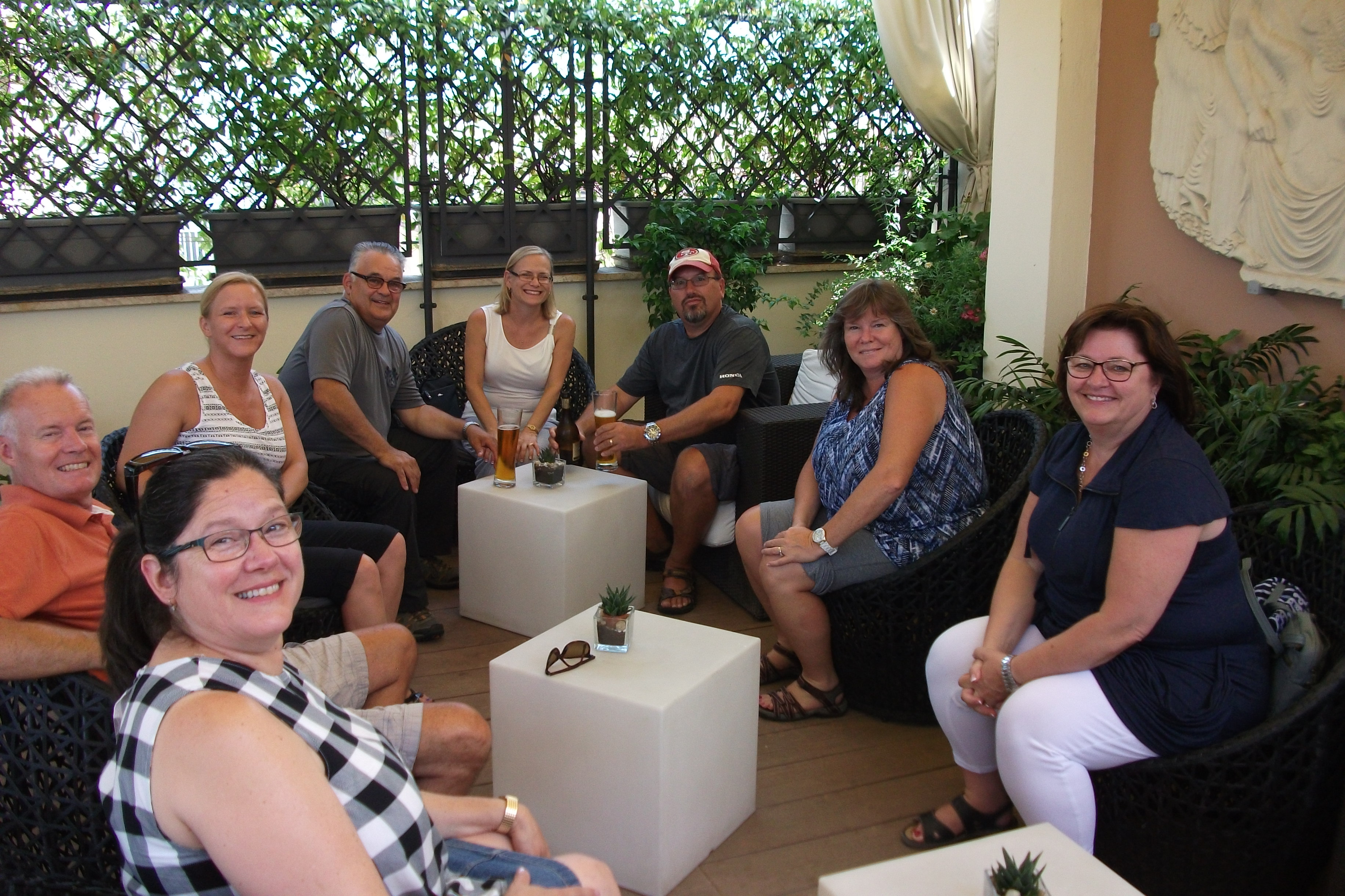
Drinks on the roof top (L to R) Barb, Don, B.J., Ray, Lori, Scott, Marianne, Bridget
After drinks we (B.J., Ray, Lori, Barb and I) headed down to the front desk for directions to Borghese Villa/Park, then were on our way. We walked to the park in about 45 minutes or so then asked someone for directions to the Museum & Gallery. Now you would think that residents of Rome, people working in the park and especially the Carabinieri (Rome police) would know exactly where the gallery was located. But never underestimate the power of the locals and the meandering streets and piazzas of Rome to confuse.
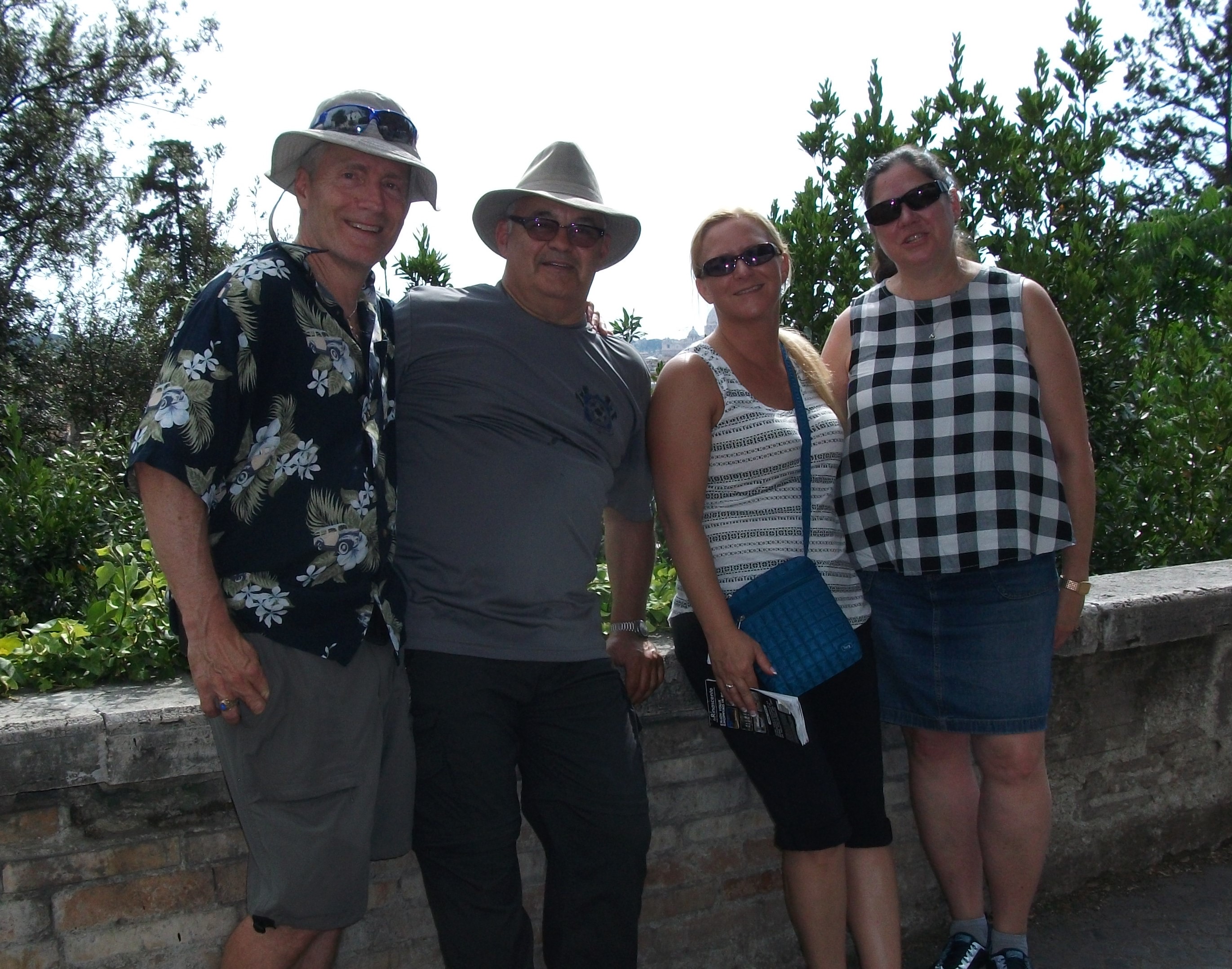
Mike, Ray, B.J. and Barb stopping for a photo op on odyssey to the Borghese Gallery.
It was mid-afternoon, an uncomfortable 34 degrees Celsius and we were speed walking with Ray & BJ setting the pace. But after numerous inquiries and walkabouts to find the gallery – we seemed to be going in circles. I was feeling somewhat parched by this time, fell behind the group to buy a couple of bottles of cold water from a park vendor for Barb and I and guzzled one of the bottles in about 60 seconds before catching up to the rest.
Mercifully, after an hour or so of speed walking and a dizzying number of attempts, we finally found our treasure. Though once there we queued up for at least another 30 minutes before actually getting into the gallery with our coupon and acquiring tickets.
The wild goose chase, the midsummer Roman heat wave and gallery wait were worth it! We sauntered through the air-conditioned gallery rooms and were mesmerized by the stunning collection of priceless sculptures and paintings housed in the museum / gallery.

Saint Jerome Writing by Caravaggio
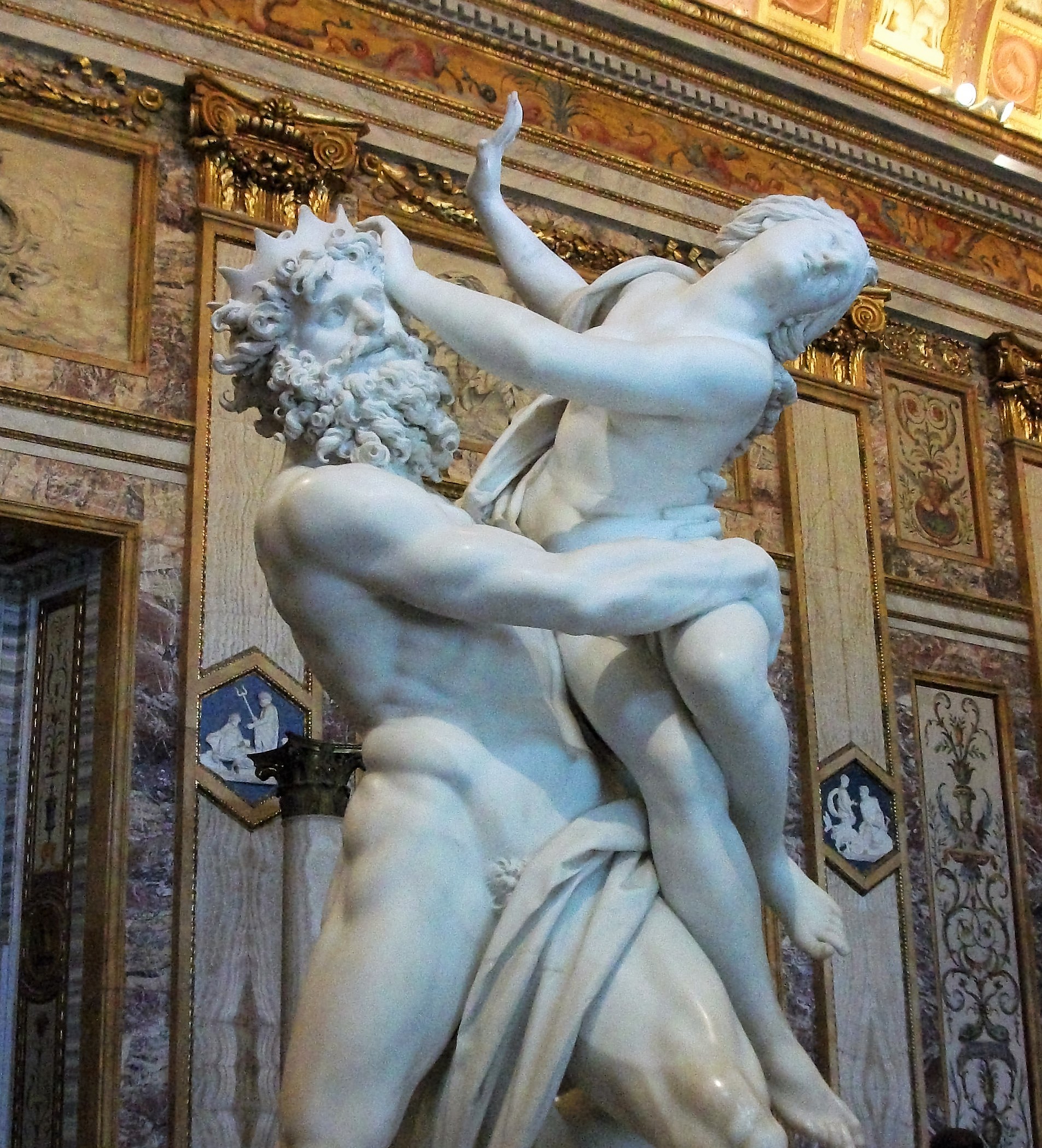
Rape of Prosperina by Bernini
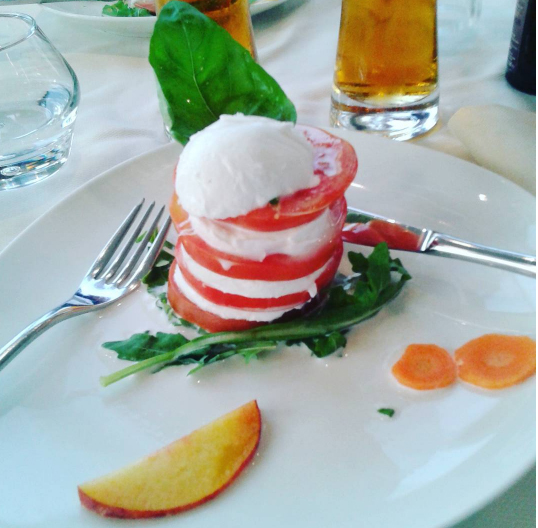
This Caprese salad was a tasty starter to a fabulous dinner at the Ambrosia Restaurant atop the Artemide Hotel.
After a very long exhausting day of travel, walking in the midday heat, gallery viewing, sumptuous dinner and drinks atop hotel Artemide – we eventually made our way to our rooms and collapsed into our cozy beds for the night.
The new day began early with a hearty breakfast at 7 am in preparation for what was for some of us – the most meaningful part of our two week journey, the Scavi tour at the Vatican. The Scavi (excavations) tour is a private guided underground tour to one of the most sacred sites in Christendom, the most likely (99 %) resting place (tomb) of St. Peter, the founder of the Roman Catholic Church. This tour is so exclusive that visitors need to request a reservation a year or so in advance of their trip.
This time all 13 of us headed out on foot together on our pilgrimage towards the Vatican for our 9 am tour. After setting out together and encountering a few delays (toilet break, wrong turns, foot traffic, photo ops etc.) our group took longer than expected to reach our destination. In fact, many of us ended up jogging the last few blocks to the Scavi tour entrance to ensure that we would not lose out on our reservation/tour.
Fortunately, the tour guide was also a few minutes late which allowed us a few moments to collect ourselves, towel off, cool down and pass through security screening. The struggle to make the tour on time was more than worth the effort. Our guide took us to a room that housed a miniature replica (‘trophy’) of St. Peter’s tomb and she gave us an overview of the history of Rome around the time of St. Peter’s martyrdom. We were then guided through a narrow damp underground passageway directly under St. Peter’s basilica where no photos were allowed.
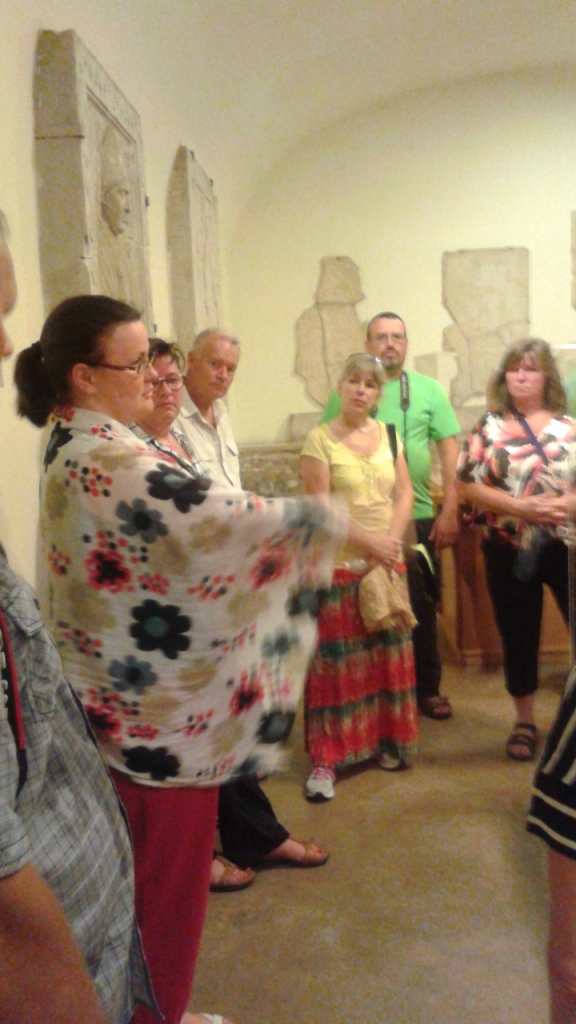
Our Scavi tour guide giving our group an historical overview of ancient Rome.
We eventually made our way through the underground passageways soaking up the rich history surrounding the family tombs and artifacts contained therein. Finally, we were taken to St. Peter’s tomb (trophy) or at least to a large hole in an adjacent ancient wall to gaze upon the ossuary (container) holding the remains of St. Peter, dear friend of Jesus and ‘rock’ upon which the holy Roman Catholic Church was founded.
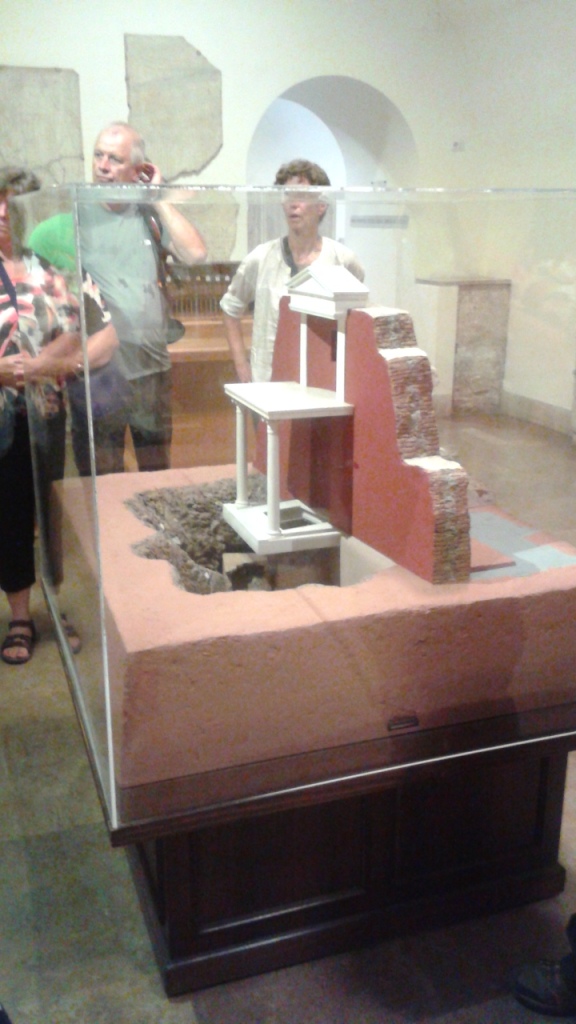
A miniature replica of the ‘trophy’ St. Peter’s tomb is encased in glass.
Our tour guide briefly commented on the religious and spiritual significance of this most holy site and then led us together in praying the ‘Our Father’. It was a spiritual and deeply satisfying experience, filled with stillness, silence, peace and reverence.
Before exiting the tour we were guided into a small chapel located directly beneath the Bernini canopy and high altar in St. Peter’s basilica. In fact, by looking up we could see part of Bernini’s magnificent sculpted bronze canopy through the holes in the floor grate directly above us.
Upon leaving St. Peter’s Barb and I hooked up with Bob and Gina and headed to the piazza Campo dei Fiori. We stopped off for a couple of photos in front of the charming apartment Barb and I shared with my sister and her husband during our visit in May 2015.

Barb & Bob posing in front of 29 Vicolo Del Palle – home base during our visit in May 2015.

Gina and company trying to cope with the oppressive heat by sipping cold beers . . .
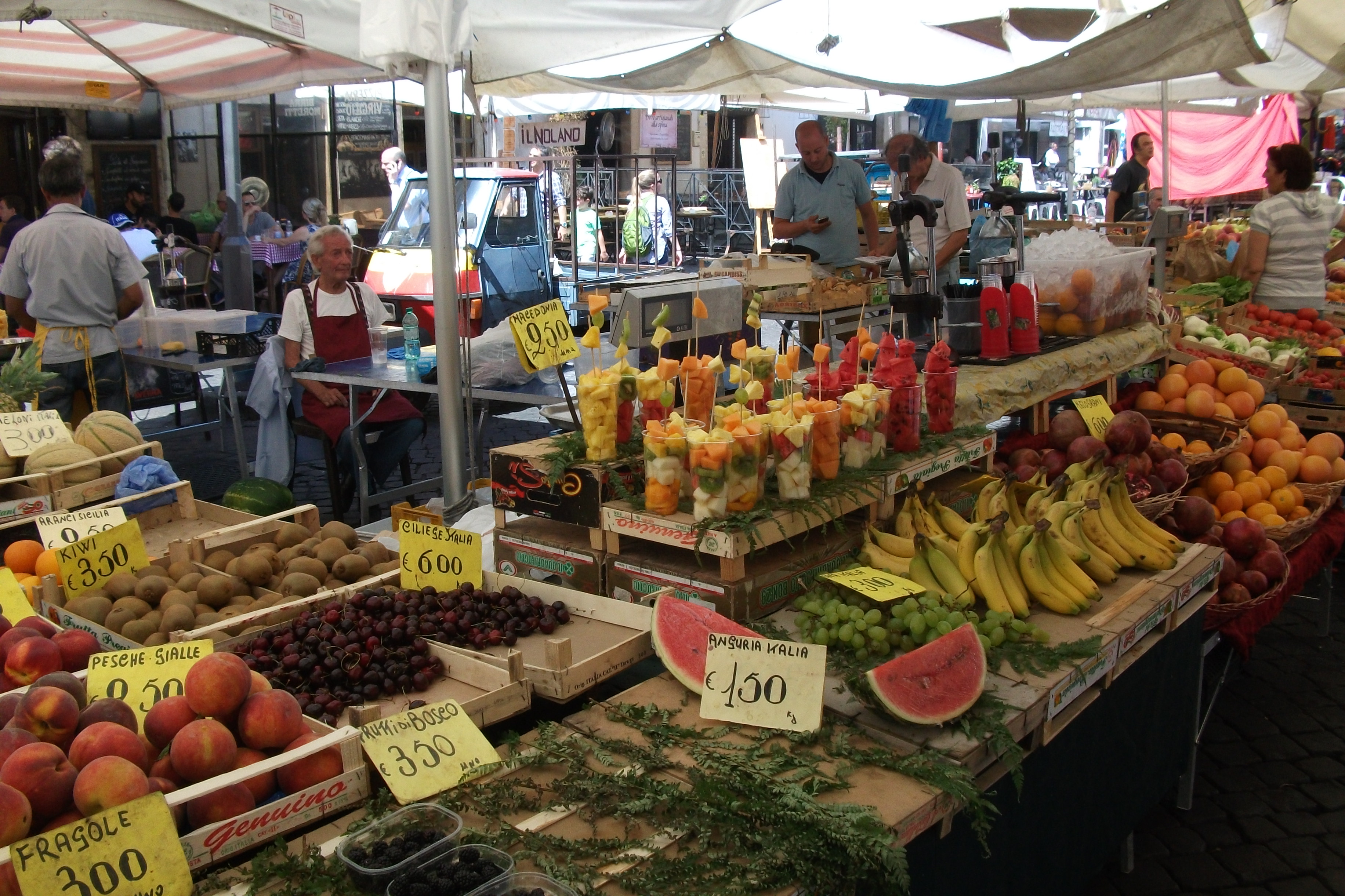
. . . and sampling some of the fruit from the market vendors in the Campo dei Fiori.
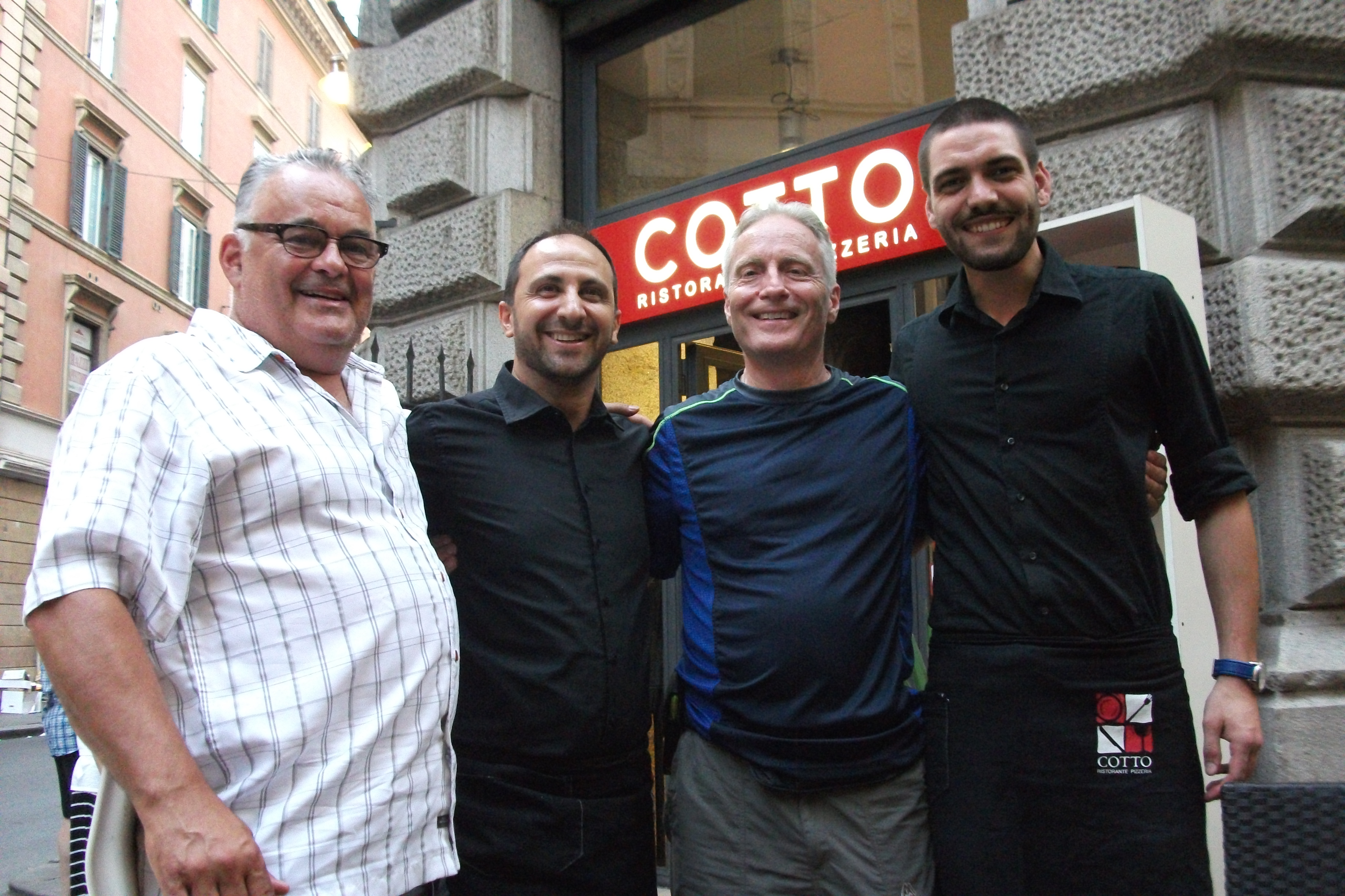 That evening, Ray and I posed with our new waiter friends Tomaso and Vittorio after our group of 13 enjoyed an amazing dinner at Cotto Ristorante.
The next morning Barb and I headed to Castle St. Angelo museum near the Vatican, another destination on our bucket list. We spend a couple of hours viewing the many religious, artistic and cultural treasures housed in this former tomb of the Roman emperor Hadrian and papal fortress.

Castle St. Angelo tomb, fortress & museum sits majestically behind us by the Tiber river.
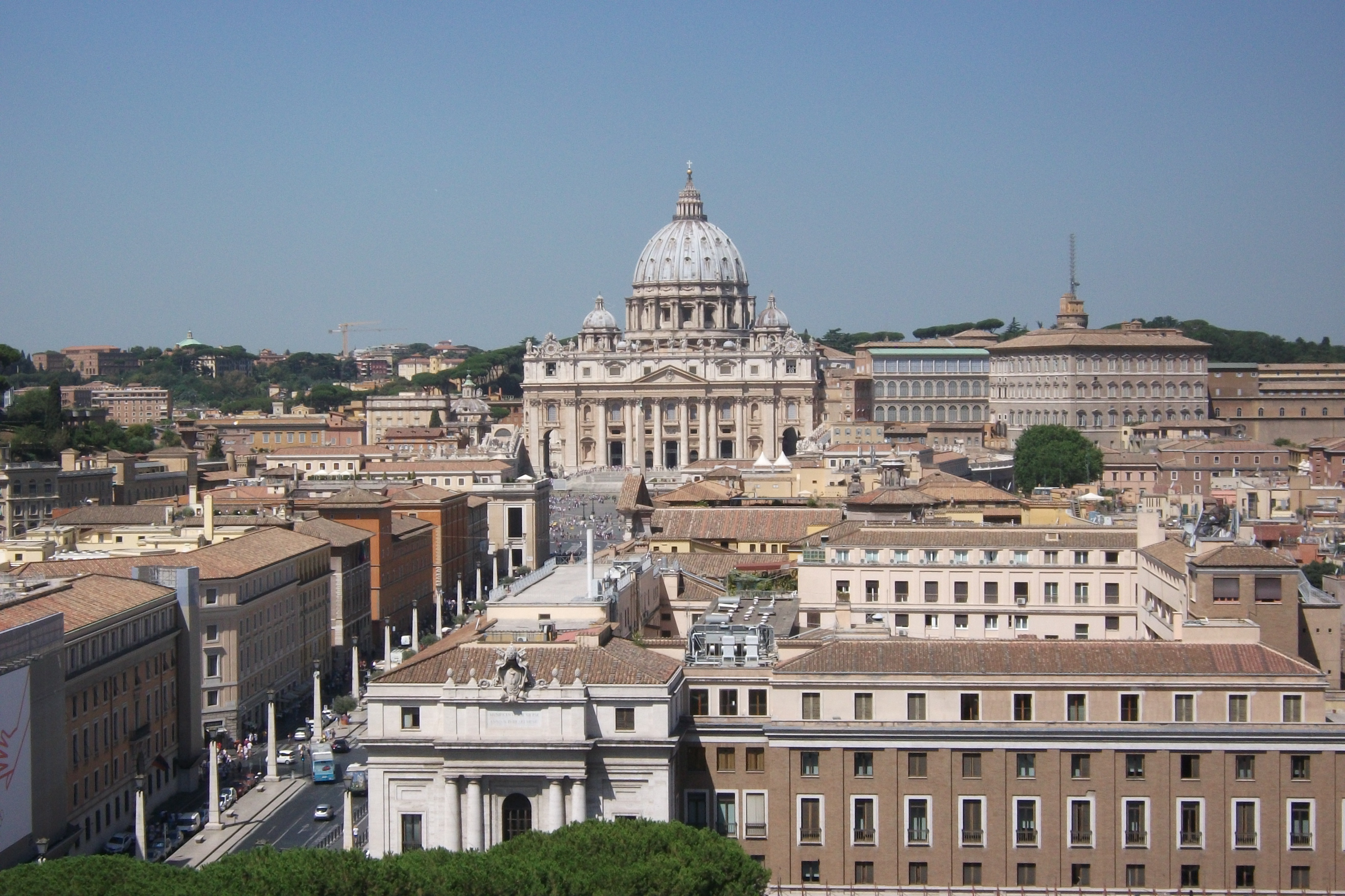
View of St. Peter’s from Castle St. Angelo

This must have been an imposing, intimidating sight for foreign invaders back in the day.

The view of Rome from atop of Castle St. Angelo was well worth the climb.
Following our visit to Castle St. Angelo the plan was to slowly make our way toward Villa Borghese and to stop off at the newly restored Trevi fountain along the way. The hope was to pick up some wine, cheese, fruit and bread to have a leisurely picnic in the famous park. But the extreme 36 degree Celsius heat soon disrupted our best laid plans and had both of us somewhat dehydrated and teetering on heat exhaustion.
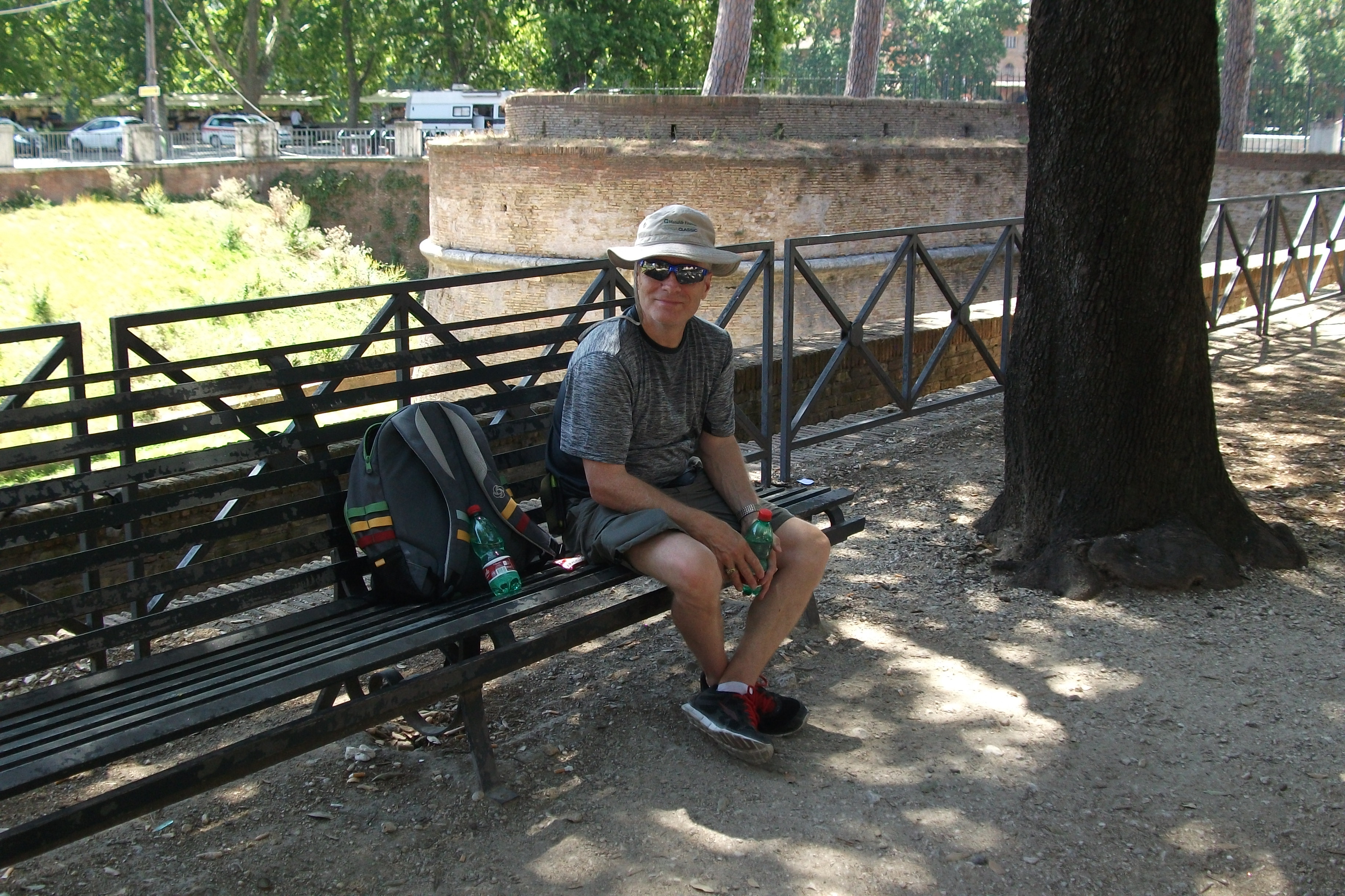
Me forcing a smile, though on the verge of nausea and heat exhaustion. Thank God for the beautiful ubiquitous fresh water fountains (nasoni) all around Rome. I doused my head under one near Castle St. Angelo museum to cool down and filled our water bottles with cool aqua for the trek to the Trevi fountain and Villa Borghese.
On our way to the Trevi we ducked into a modest ristorante to use the toilet and what else of course, but order another beer. Unfortunately, a side effect from drinking so much water to keep hydrated and the odd beer – is having to drink more water and visit the WC every half hour or so.
Even though it was lunch time, the brutal heat robbed us of any appetite for food. I know, hard to believe in a city so famous for fresh pizza, pasta and gelato at almost every turn! Don’t feel sorry for us though! We ate enough delicious pizza, pasta and brain-freezing gelato during our May 2015 visit to last a few lifetimes.

Ahhh . . my bride finally got to view the Trevi fountain in all its newly restored magnificence and splendor – sans scaffolding. Apparently the coin she tossed in May 2015 worked!
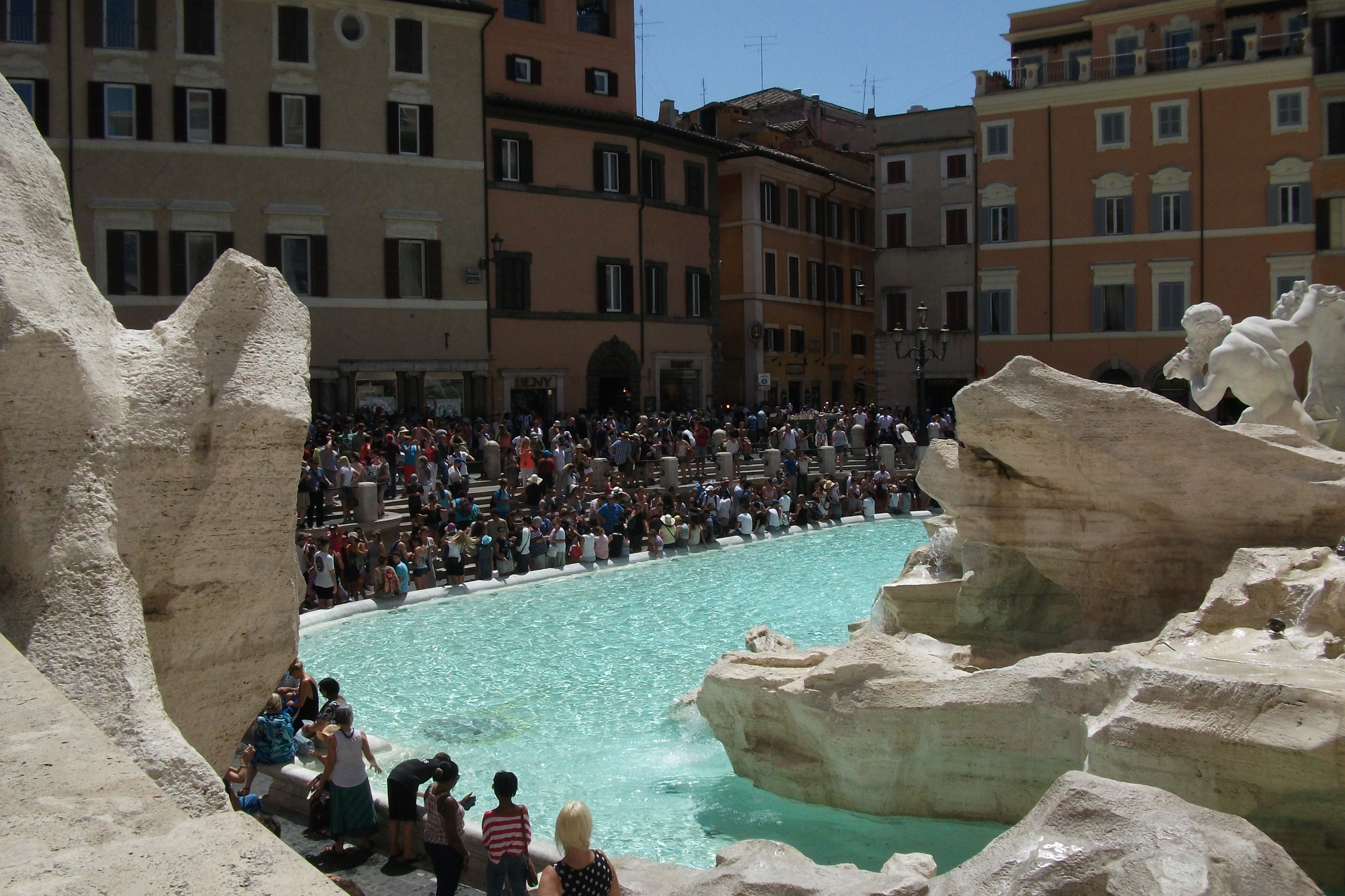
Oh but the throngs of tourists were plentiful and mighty. We even avoided the pickpockets!
From the Trevi we continued our pilgrimage to Villa Borghese in search of some respite (natural shade) from the crushing heat.

It was at least 10 degrees cooler beneath the magnificent green canopy in Villa Borghese.
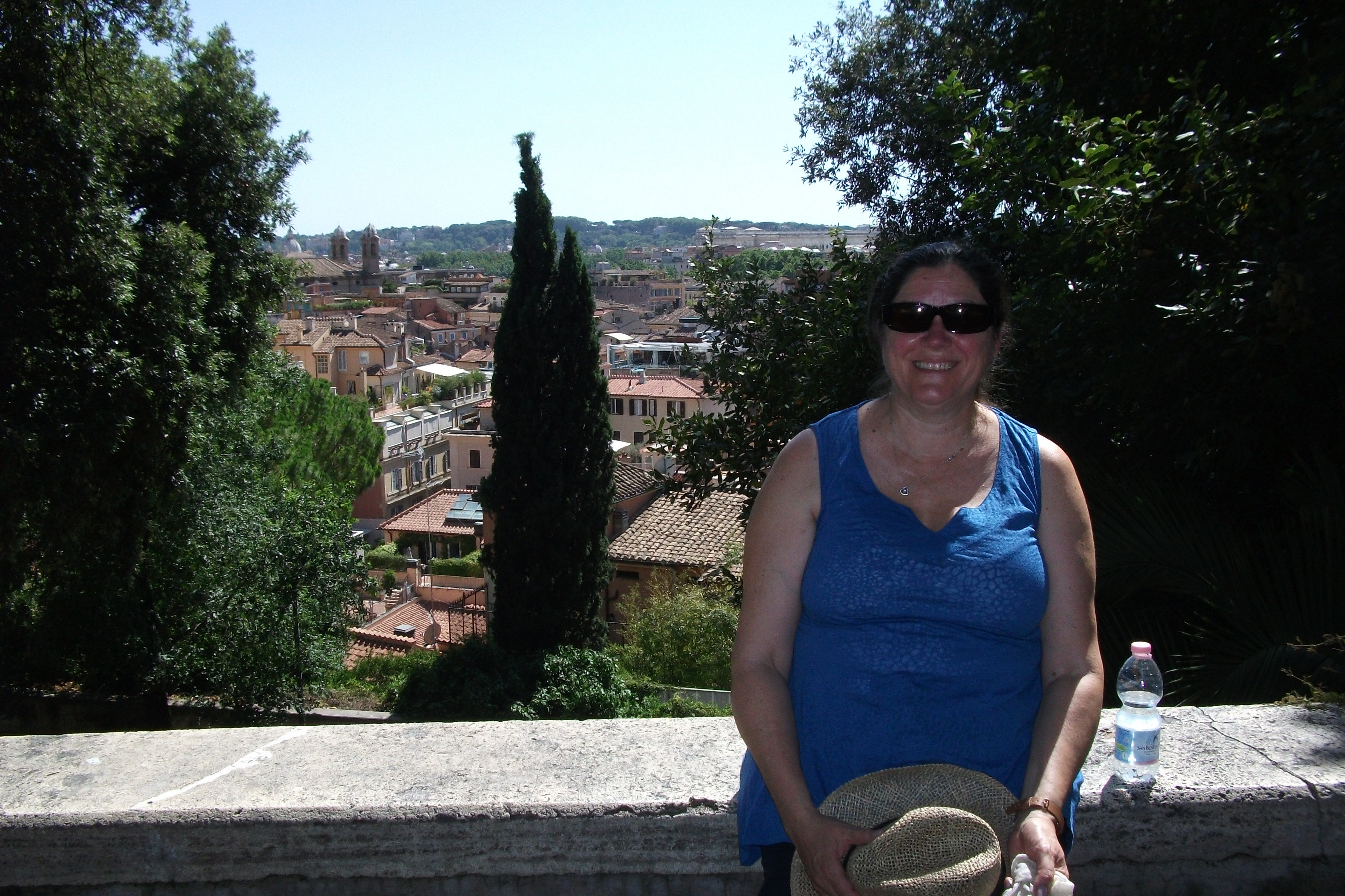
One of many scenic vistas of Rome from Borghese Villa.
After 3 eventful days exploring Rome it was time to say arrivederci and continue on our journey to Athens.

The 4 star Artemide Hotel in Rome was vastly unlike any place I stayed during my ‘student-budget driven’ 1982 visit to Italy.
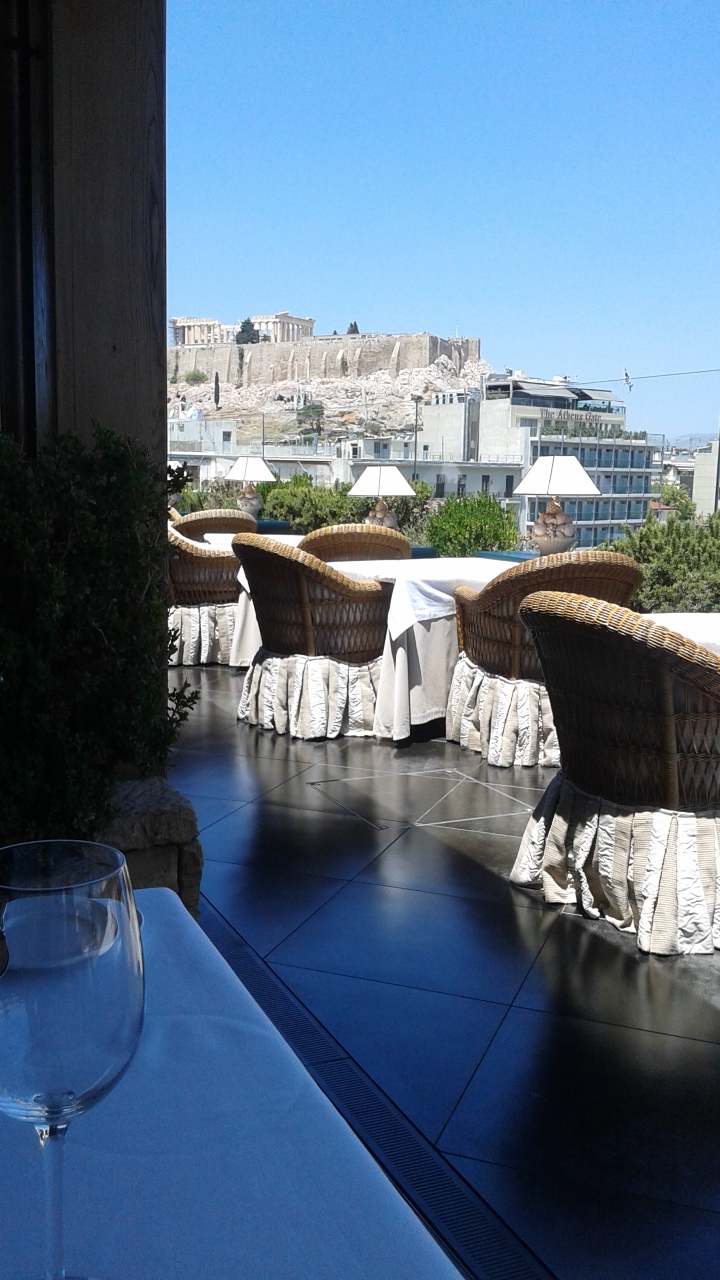
This stunning view of the Acropolis is what greeted us as we arrived for lunch atop the 5 star Royal Olympic Hotel in Athens.
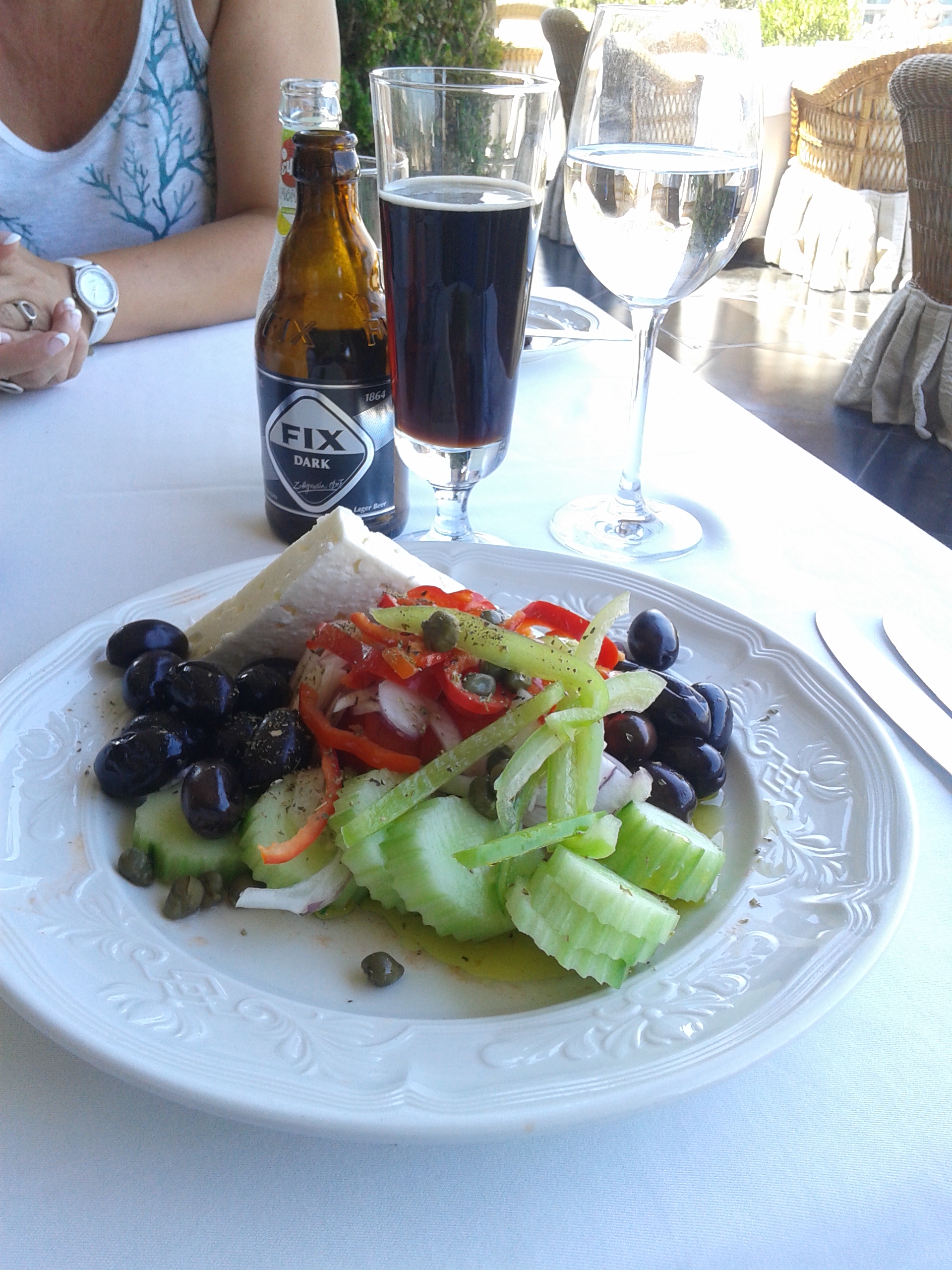
The most delicious Greek salad I have ever eaten. The huge feta wedge, olives, cucumbers, tomatoes, peppers and capers were fresh and flavorful beyond belief. Oh ya, the Fix dark beer was nice too!
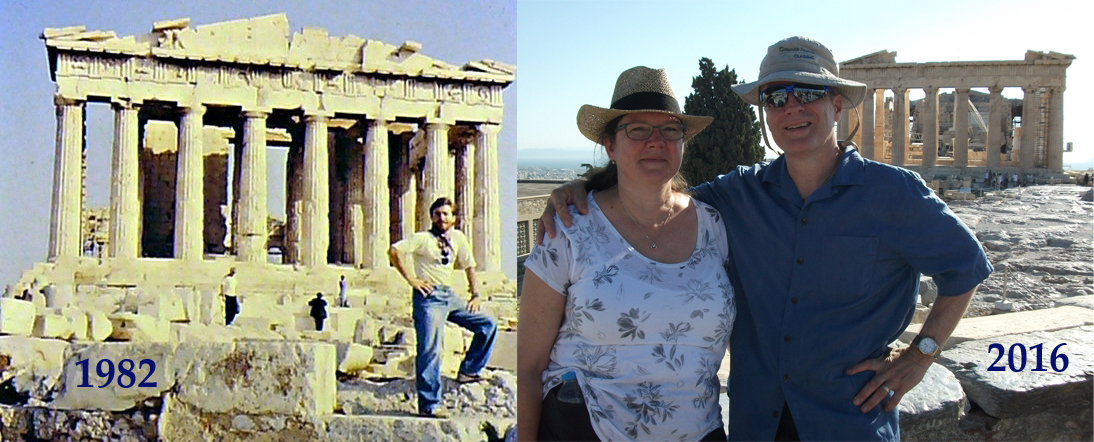
Oppressive, blistering heat as in Rome – even at 4 pm in the afternoon. But I would not have missed the walk to the iconic Parthenon with my beloved for all the marble in Greece.
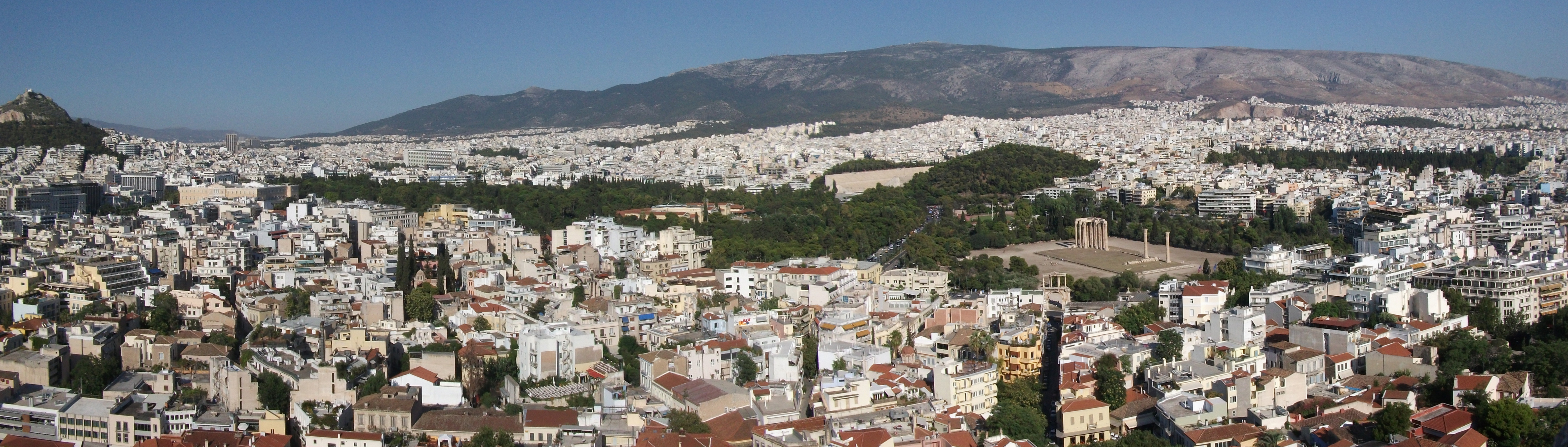
Panoramic view of Athens from the Acropolis
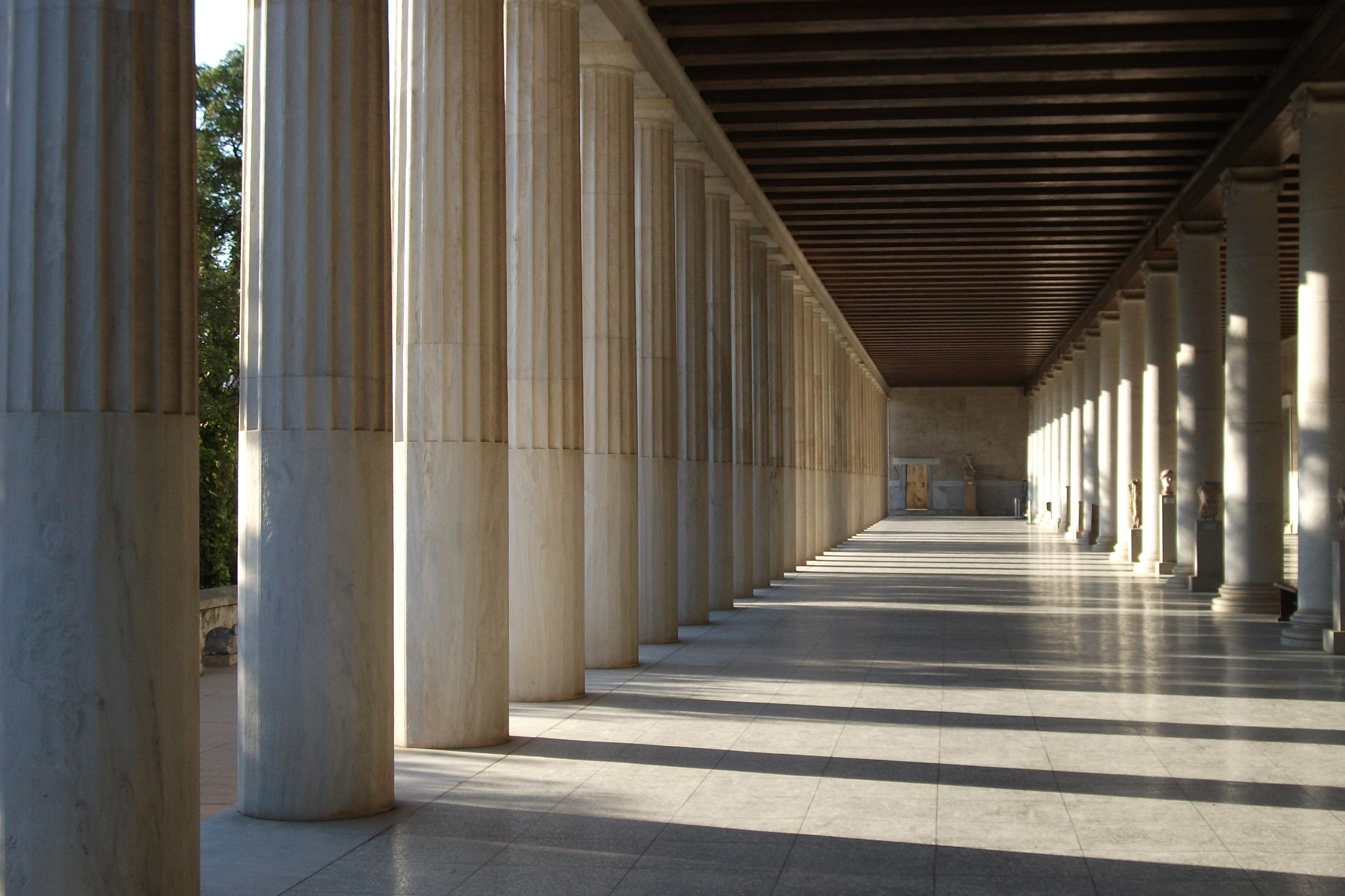
After descending from the Acropolis our tour guide took us to the ancient agora & stoa (pictured here), where Greeks have socialized and discussed politics for thousands of years.
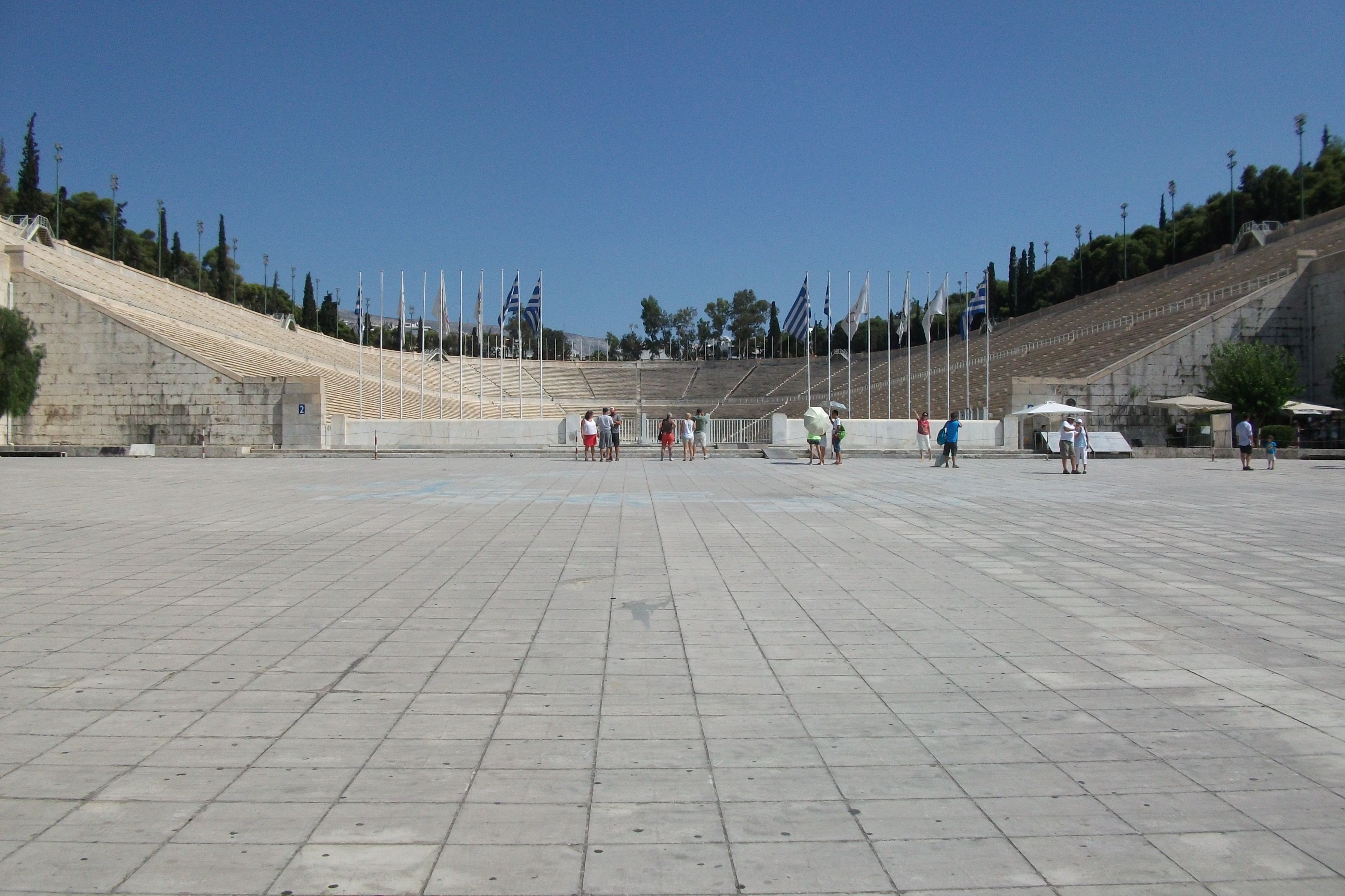
Panathenaic Stadium in Athens – site of the 1st Olympiad of the modern era in 1896. Capacity in 1896 – 80,000 – The only stadium in the world built entirely of marble.
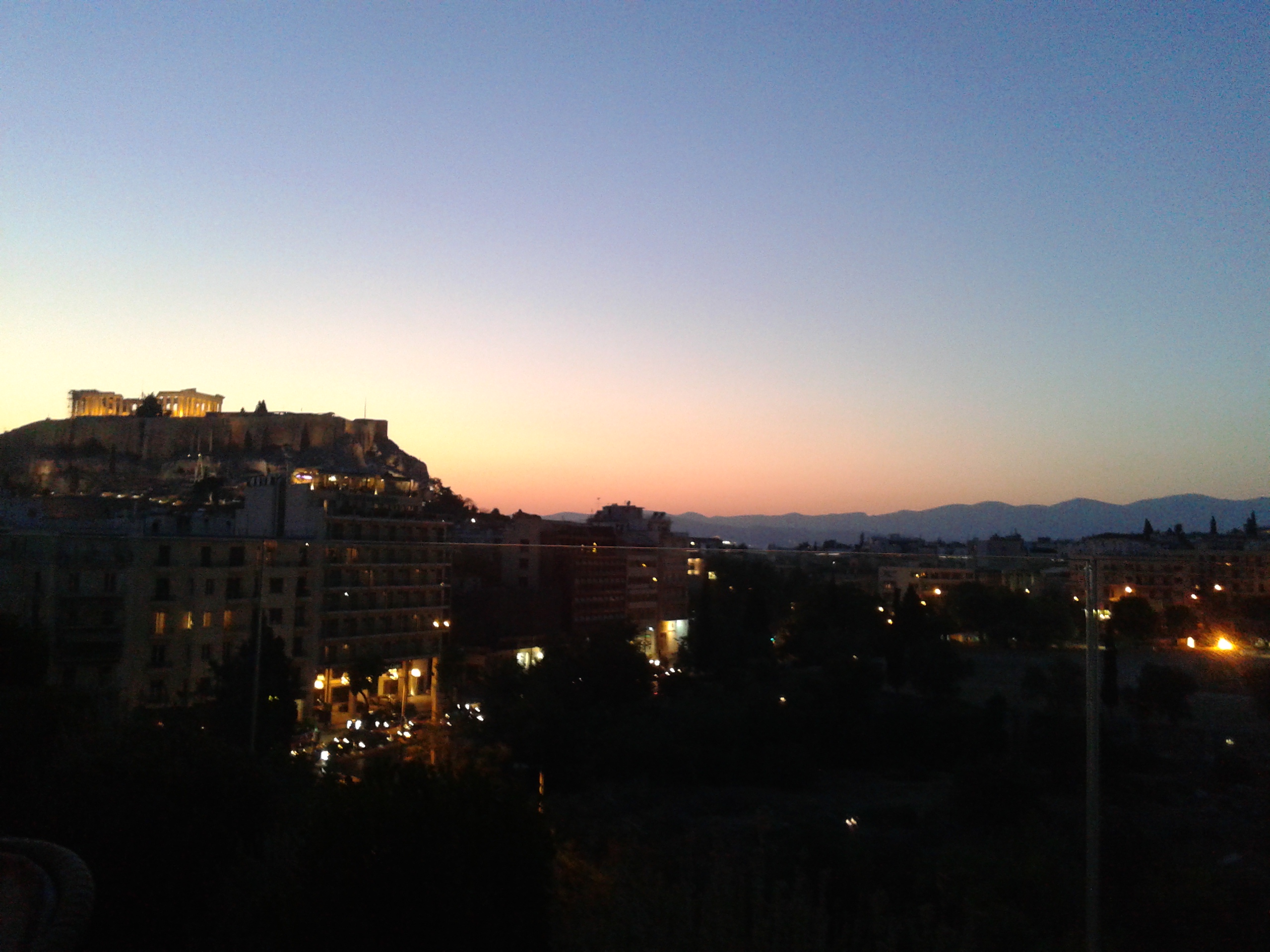
While everyone else went out for dinner after a long eventful day, Barb and I headed back to the Royal Olympic Hotel rooftop for a cold beer and spring rolls, while squeezing in one last magnificent view of the Acropolis at night. #romantic
After one full and memorable day and night in Athens – we were soon on our way to one of the ‘top 100 places to visit before you die’ – the legendary Greek island of Santorini.
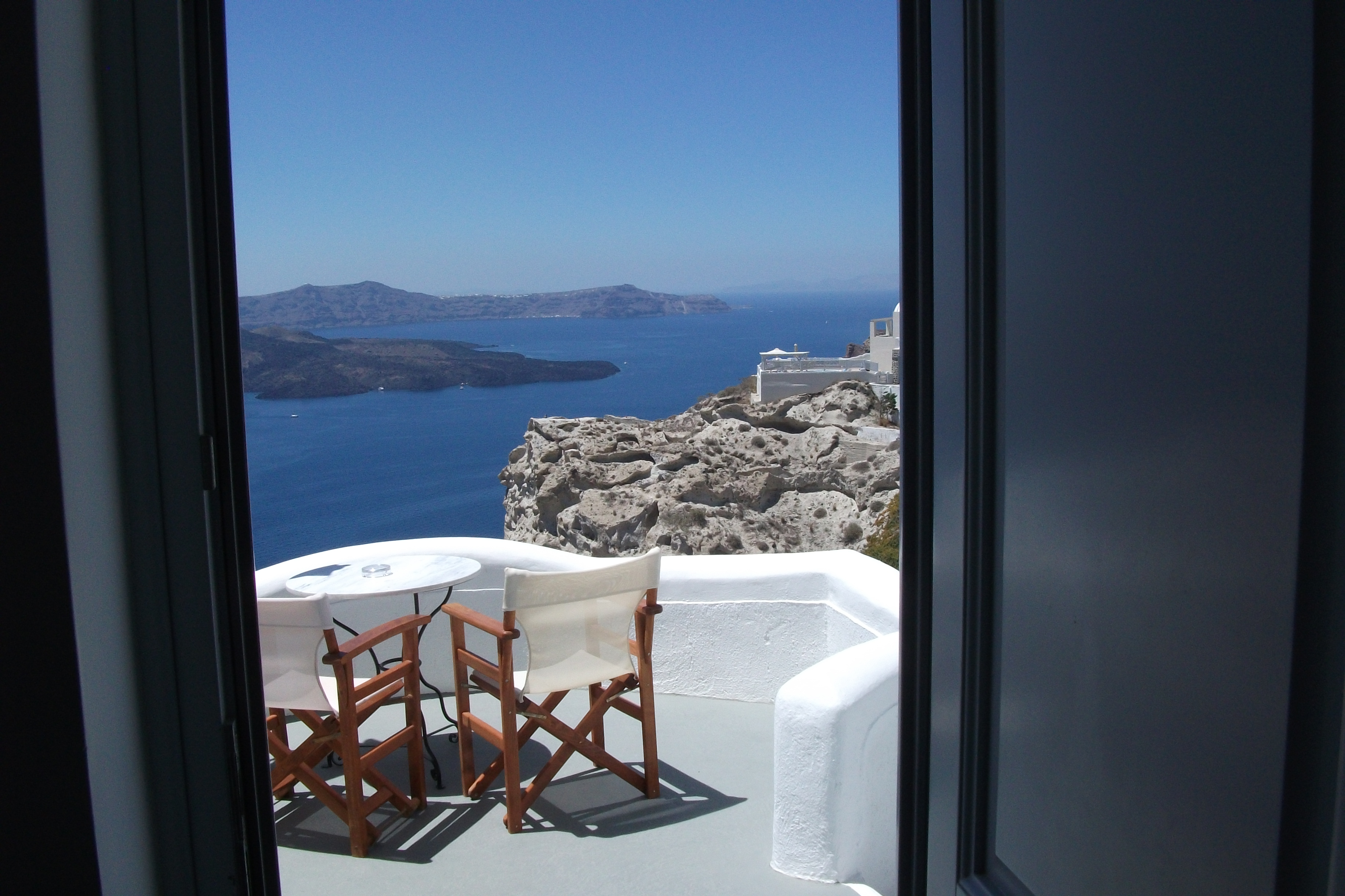
Upon opening the door of our hotel room in Santorini – we were greeted with this breathtaking view from our patio. #volcanoviewhotel
Not ones to rest on our laurels and knowing we only had 2 and 1/2 days in Santorini – we rented a car with Bob & Gina and headed to ancient Thira along with Bonnie, Jeff, Ray, Lori and B.J.
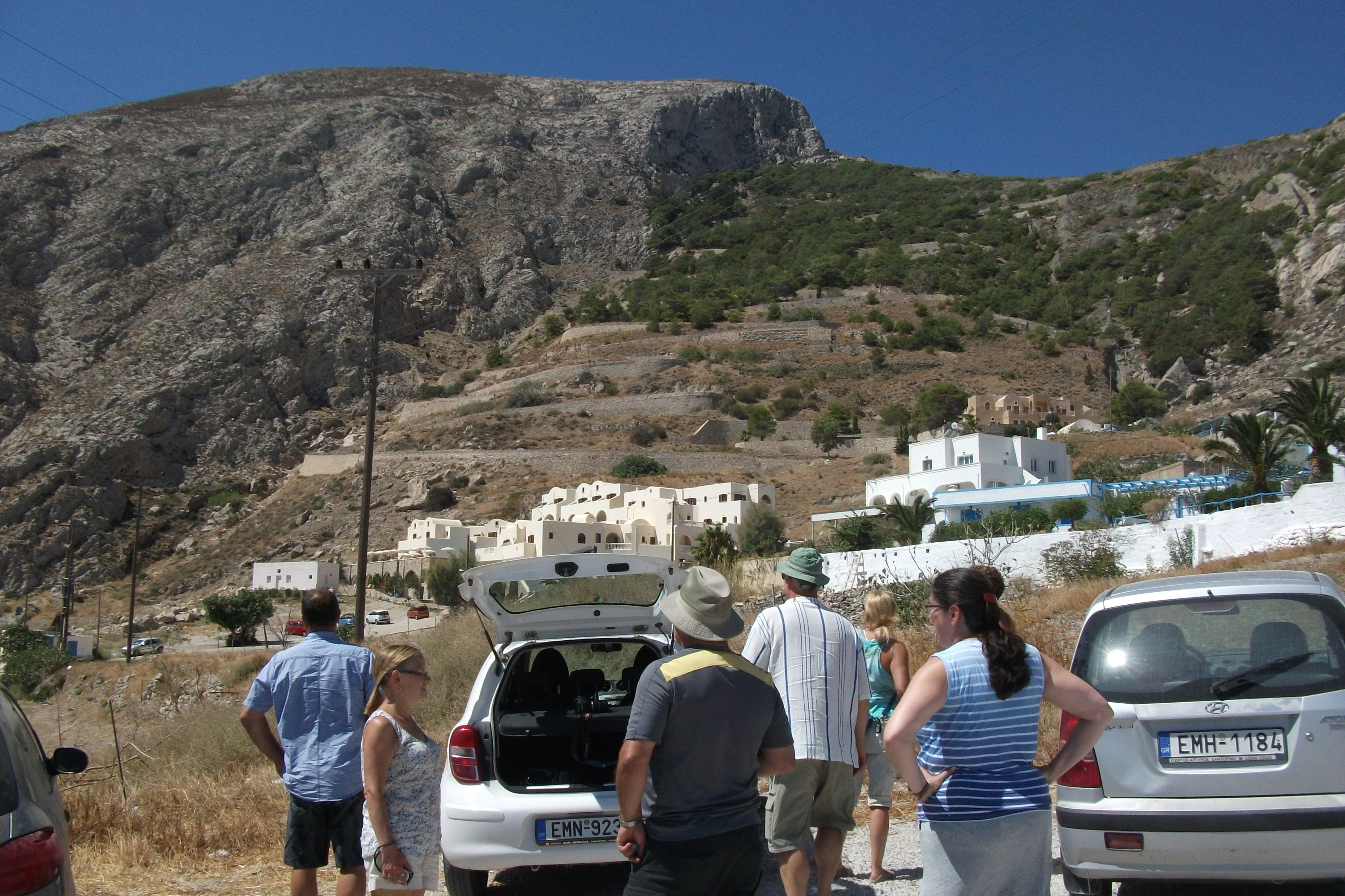 Gina was our awesome driver as she deftly navigated us up the long winding road with steep drop offs and hairpin turns. This drive was profanity-free. Well done Gina!
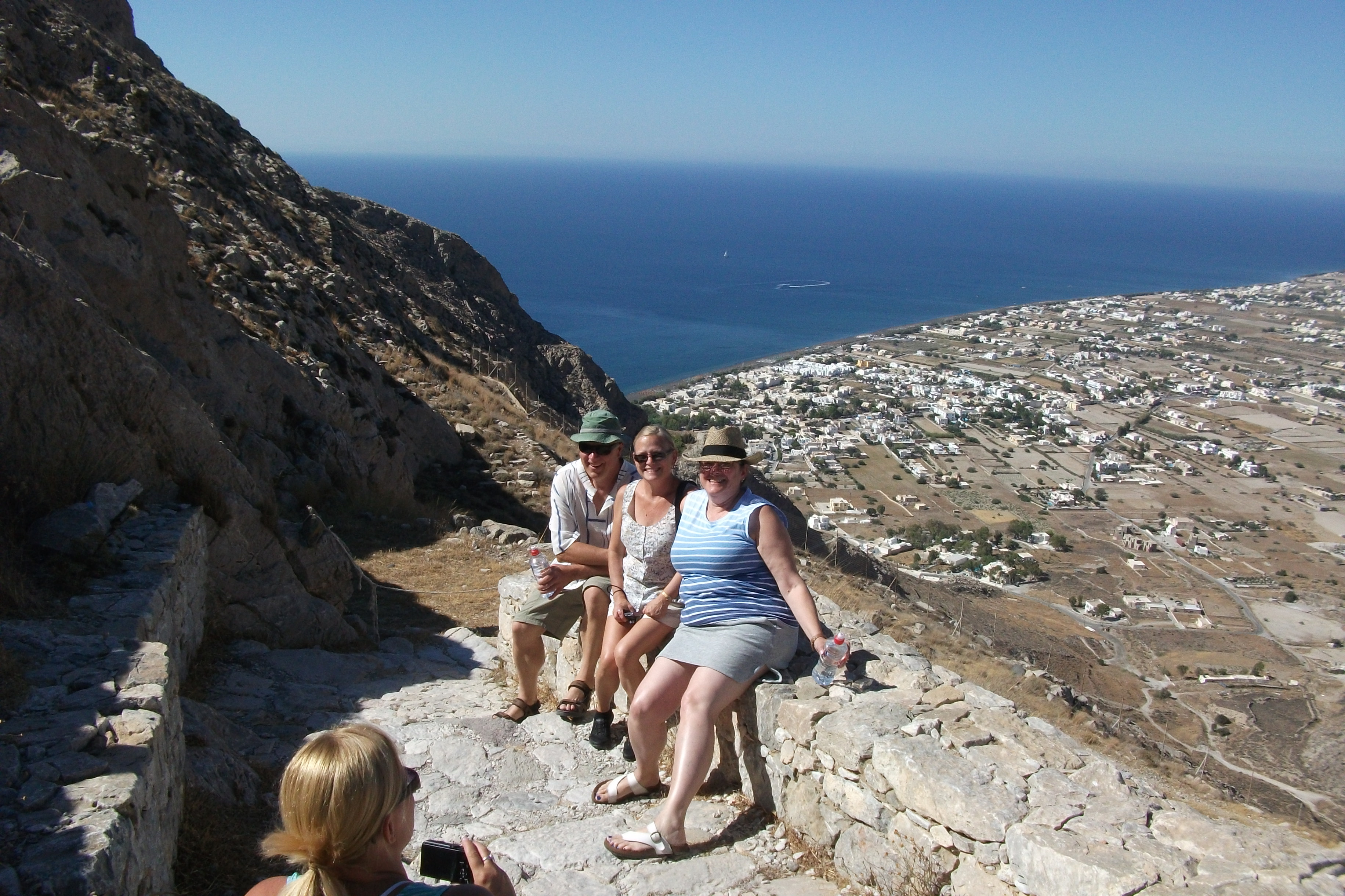
We then left the rentals behind and hiked quite a distance to the top. There was a wonderful cool ocean breeze that made the climb pleasurable. It was such a welcome relief from the stifling heat we experienced in Rome and Athens.
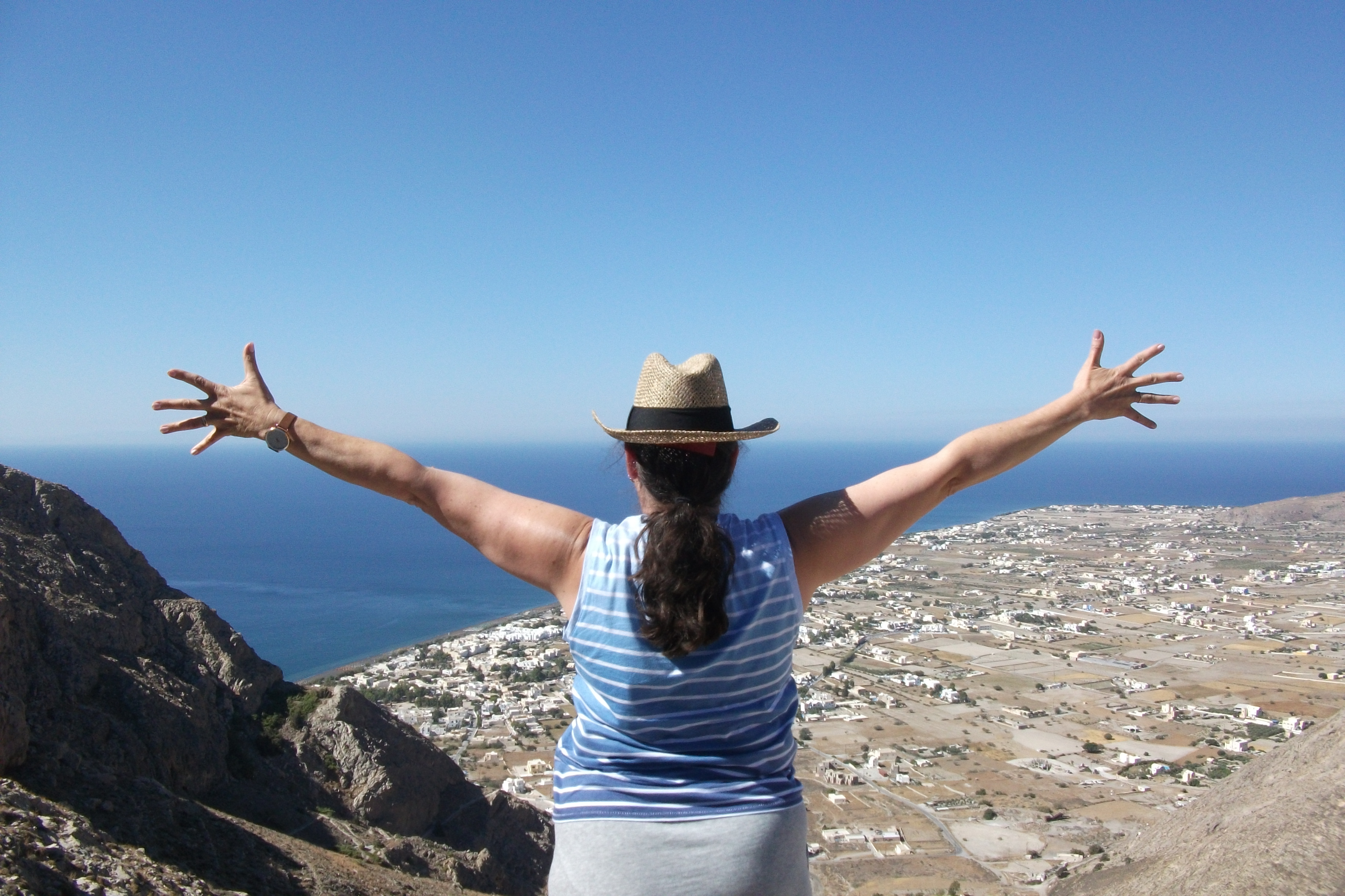
My bride celebrating and reveling in the stark beauty of the sweeping vista below.
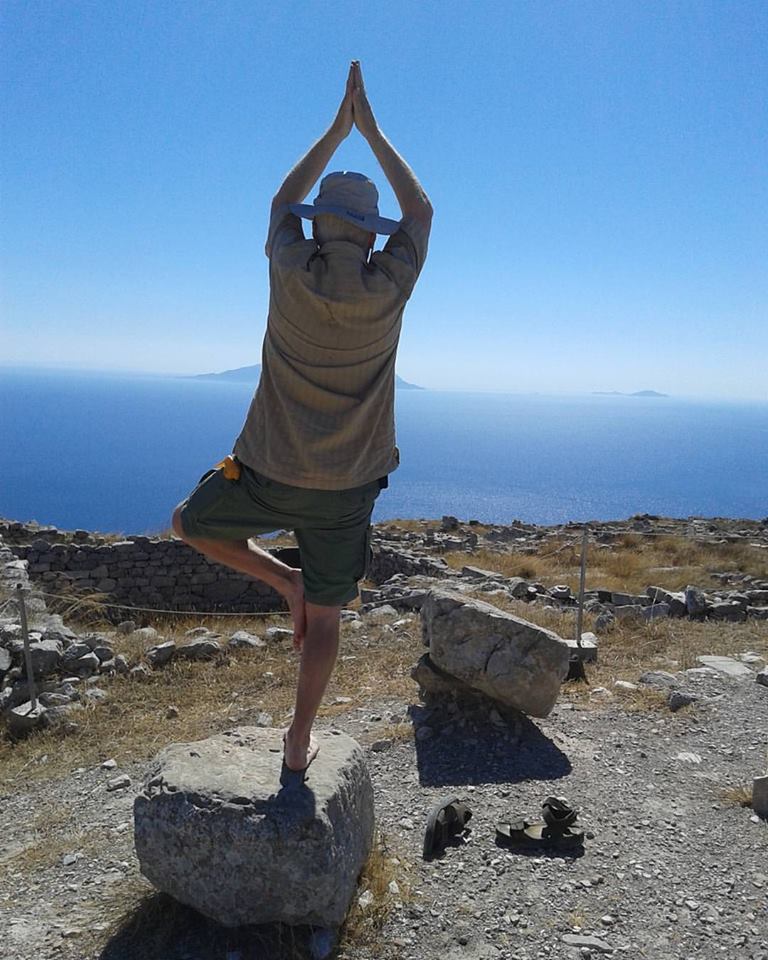
Leaning tower of namaste!
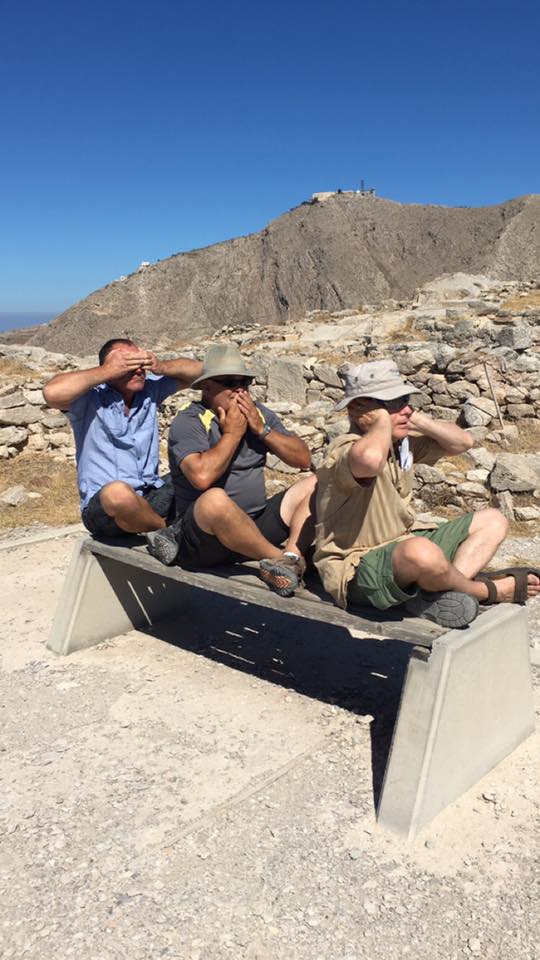
Hear, see, speak no evil (Jeff, Ray, Mike)

This is as close as we got to the Red Beach of Santorini. The volume of tourists from the cruise ships, traffic and lack of parking convinced us to turn around.
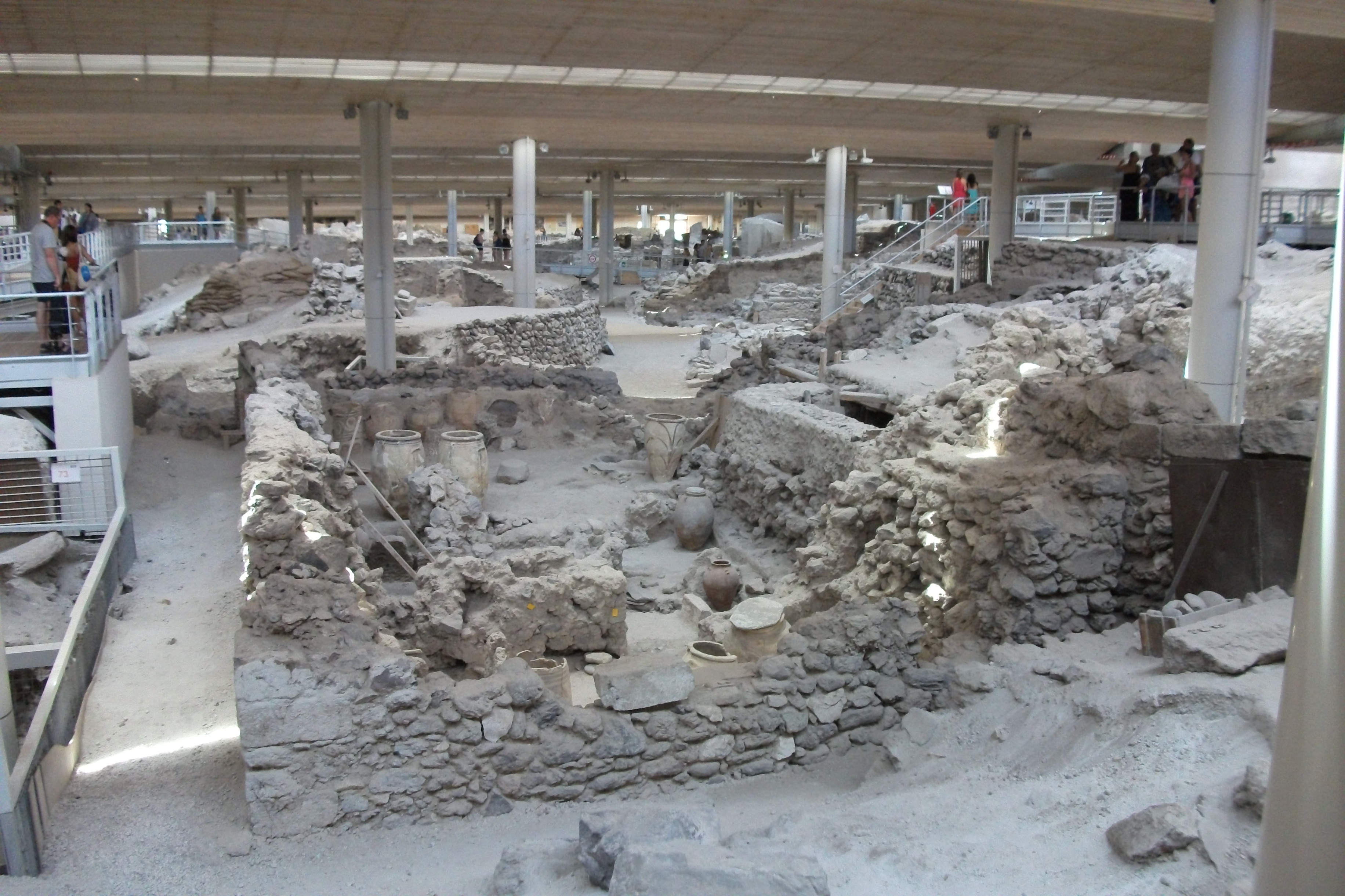
We then toured Akrotiri – a fascinating Minoan Bronze Age settlement that was destroyed in the Theran eruption about 1627 BC and buried in volcanic ash, which preserved the remains of fine Frescoes and many objects and artworks.
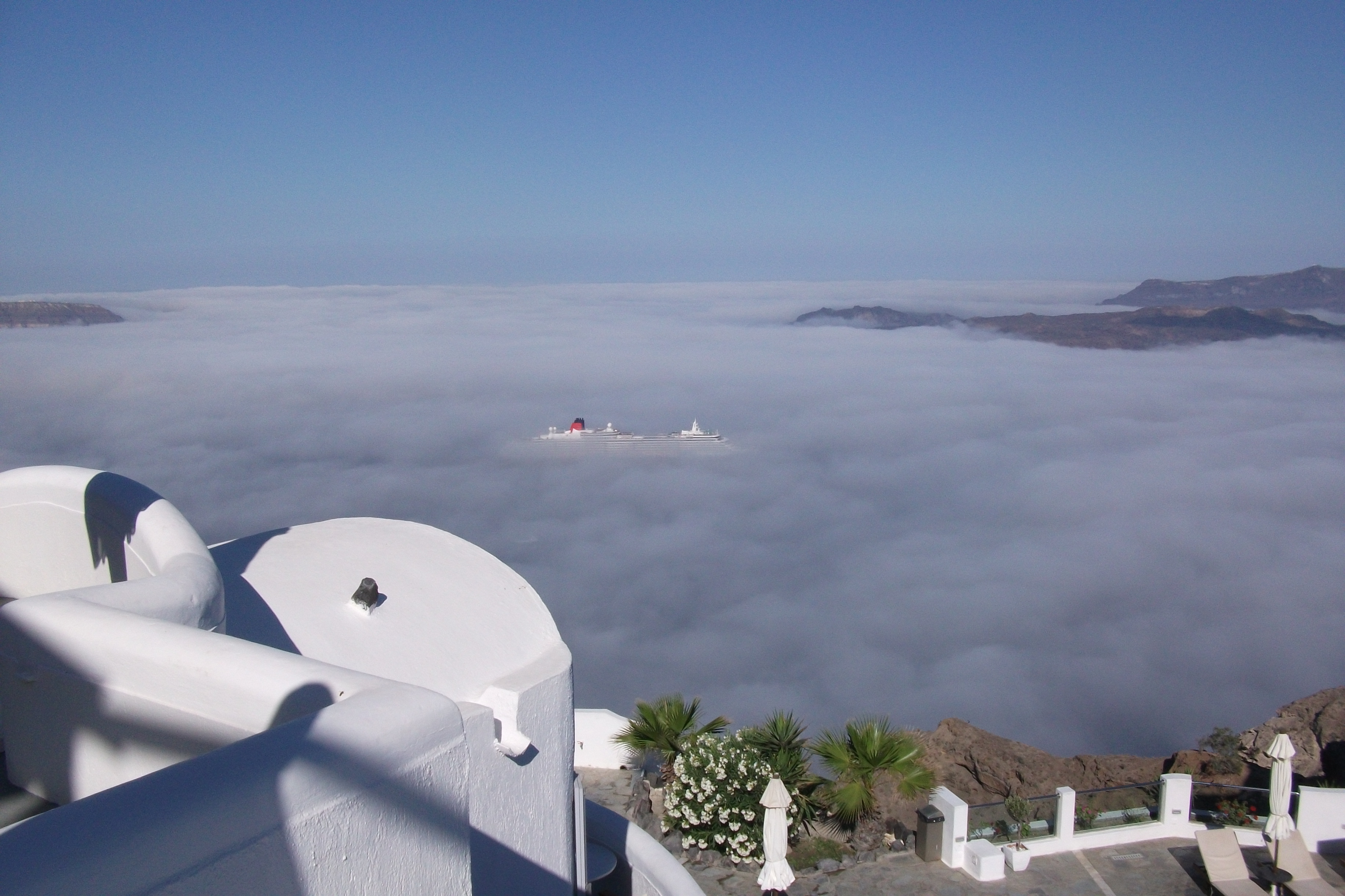 On day 2 we woke up to this heavenly view, feeling as though we were living with the Greek gods on Mount Olympus. That’s right, that’s a cruise ship poking out of the mist. In a few hours the brilliant morning sun slowly burned the mist off the deep blue Aegean sea.
One of the highlights of the entire trip was the Greek dinner and dance night at the Volcano View Hotel. The incredibly delicious Greek food buffet and live dinner music and Greek dancers set the stage for a magical atmosphere and an unforgettable evening of carefree dancing.
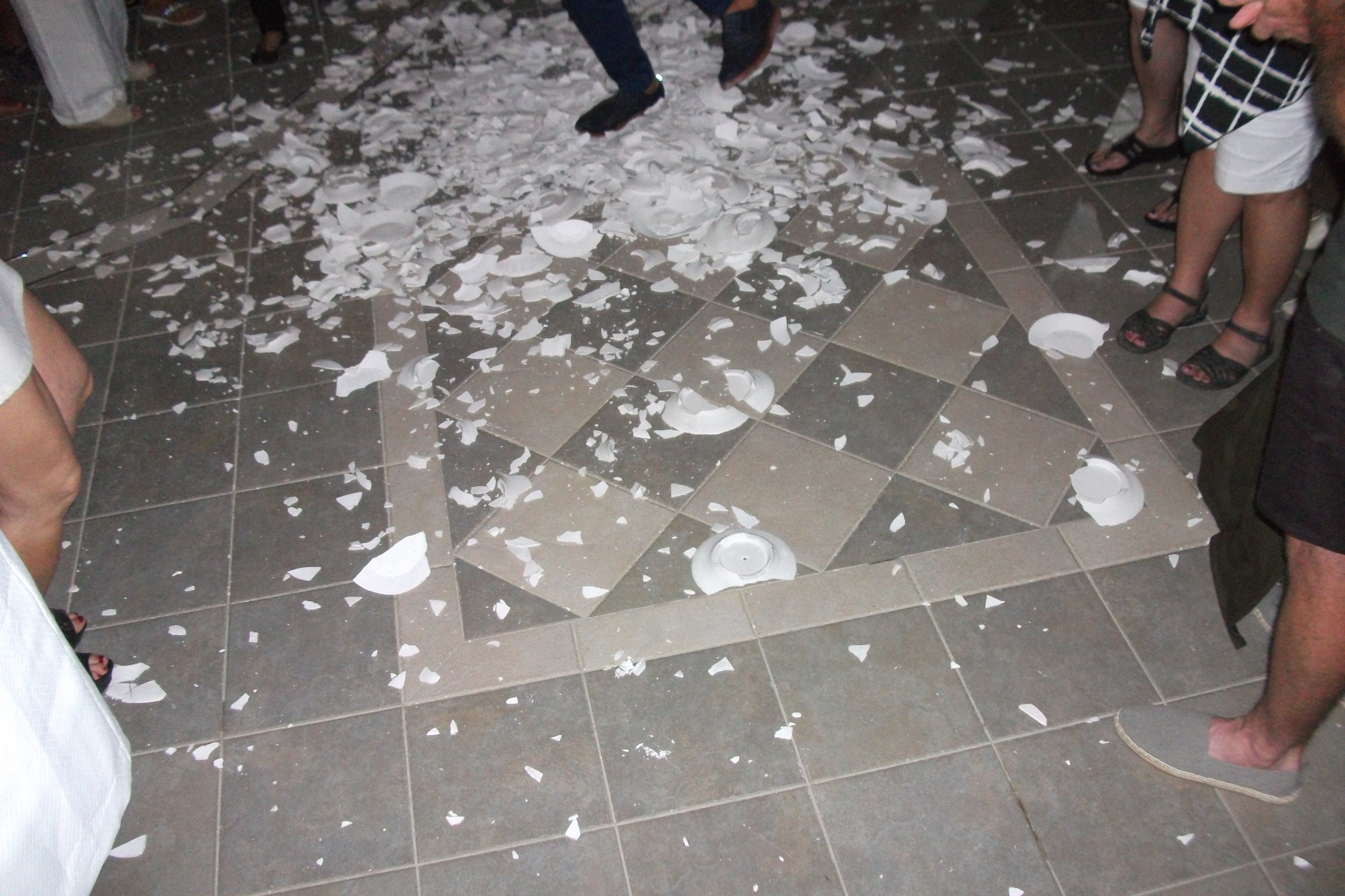
We were all invited to the floor to dance to ‘Zorba’ and given 2 plates to smash. What a blast!
At one point during the plate smashing my good friend Ray asked me to imagine how truly wonderful and peaceful the world would be if everyone (all cultures) got along with one another as wonderfully as the participants in a Greek dance. I couldn’t agree more. OPA!

The brilliant orange sun slowly set on Santorini, casting a warm glow across the velvet sky, capping off a perfect evening of food, fun and fellowship.
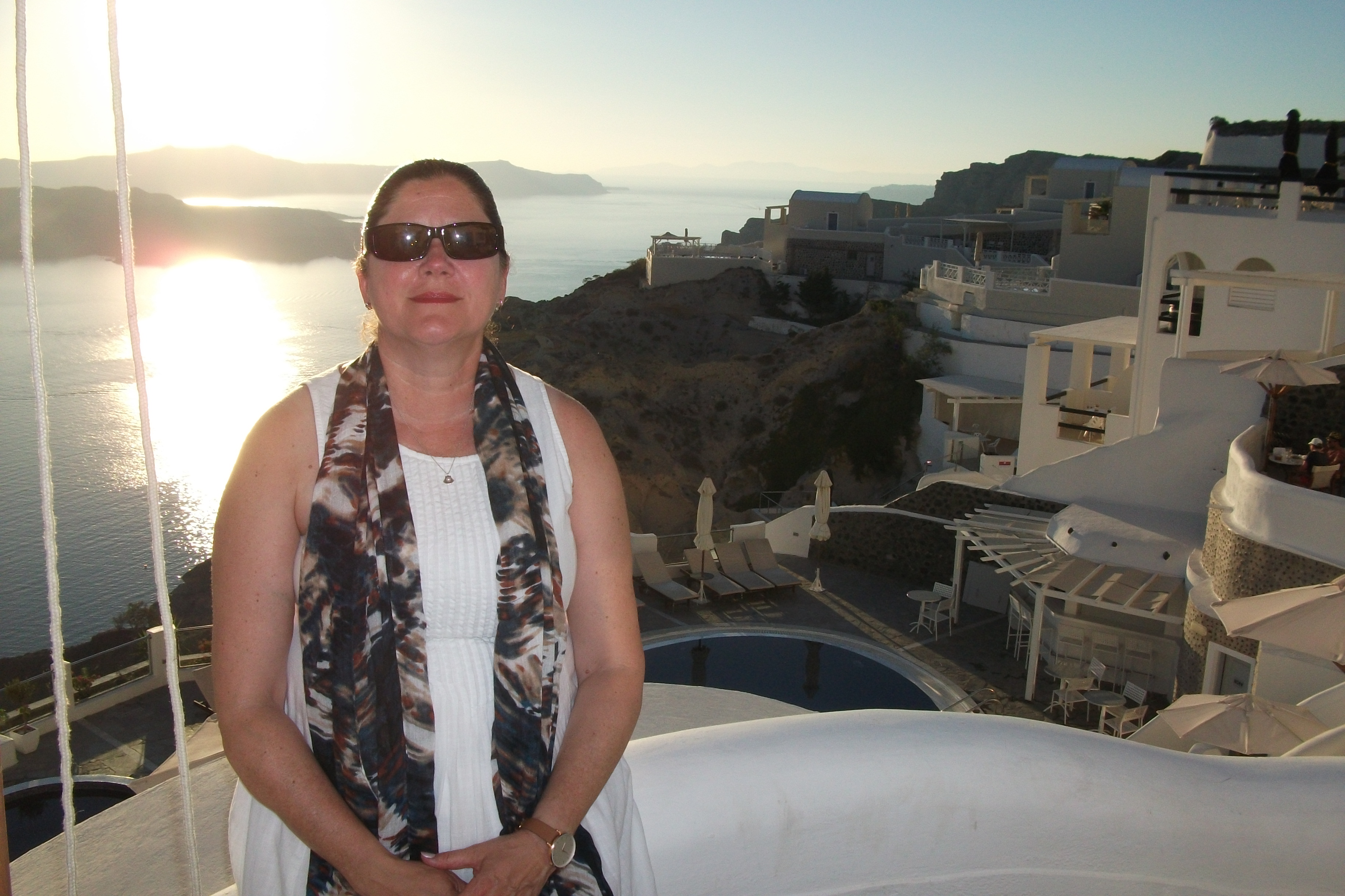
“Shall I compare thee to a summer’s day? Thou art more lovely and more temperate.”
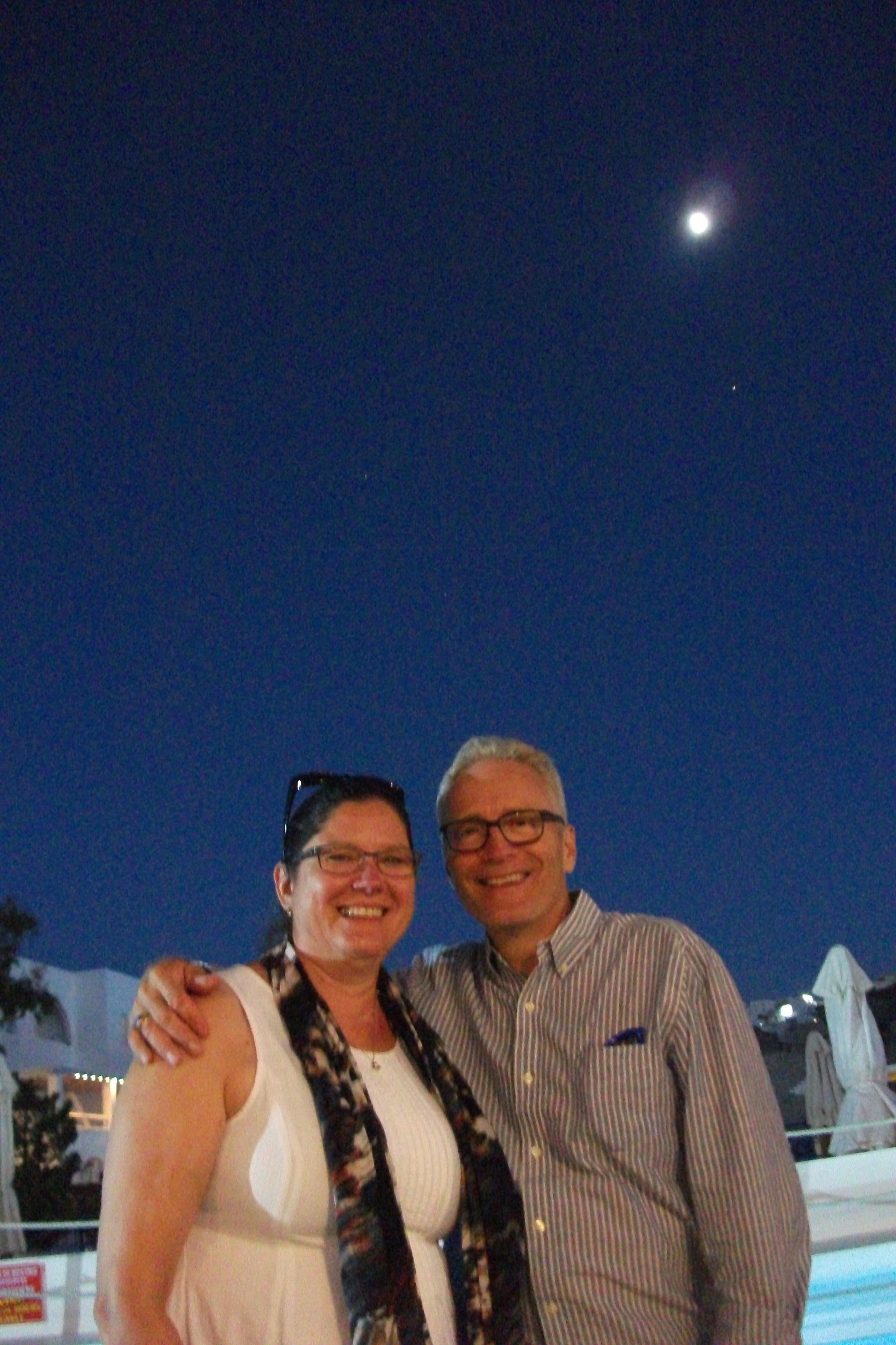
The full moon and God’s infinite grace shone upon us on a most beautiful night.
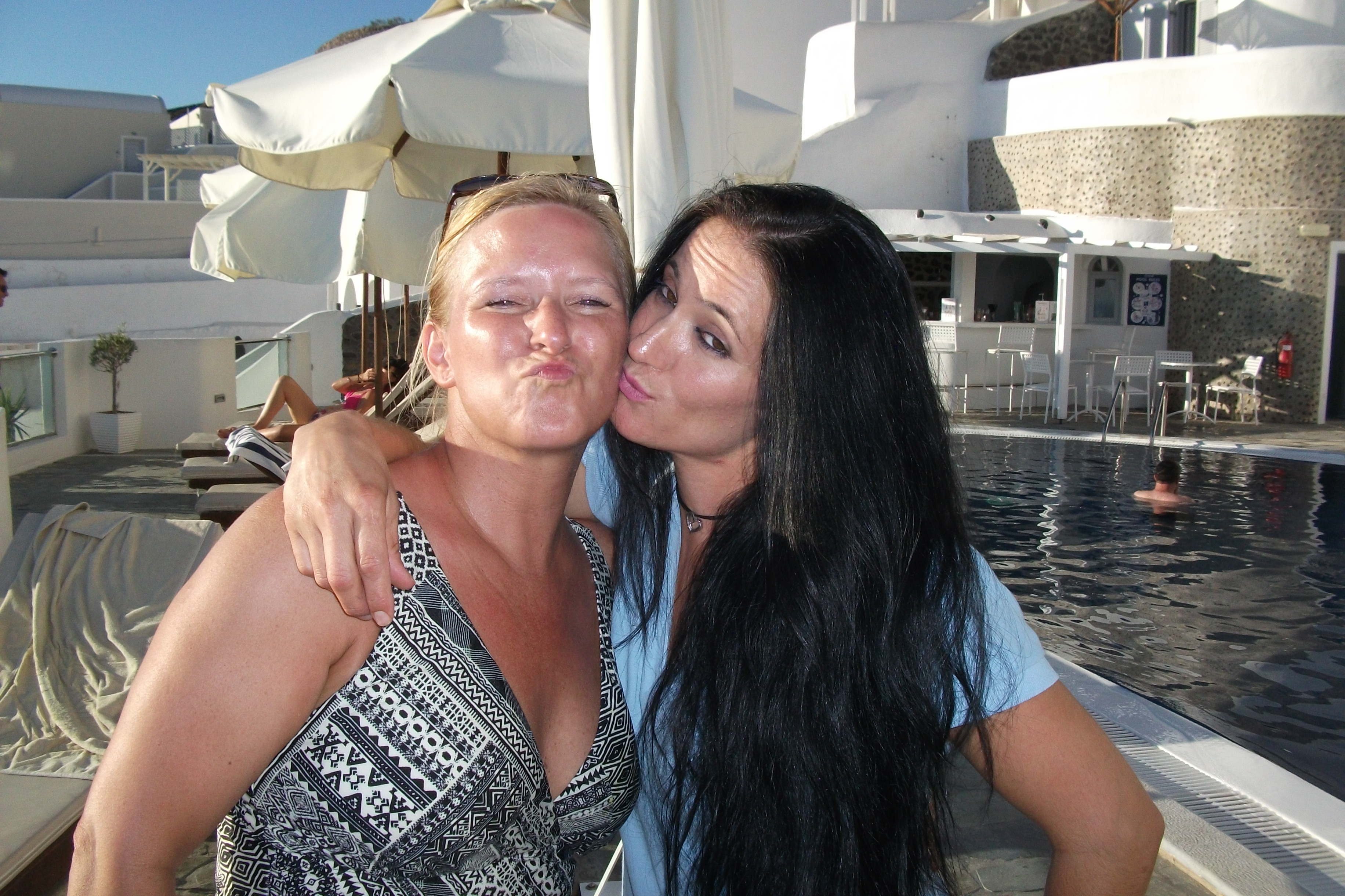
Our lovely Canadian born Greek pool bartender Katerina plants a kiss on the cheek of B.J.
Our final evening in Santorini was topped off with a magnificent sunset dinner cruise.
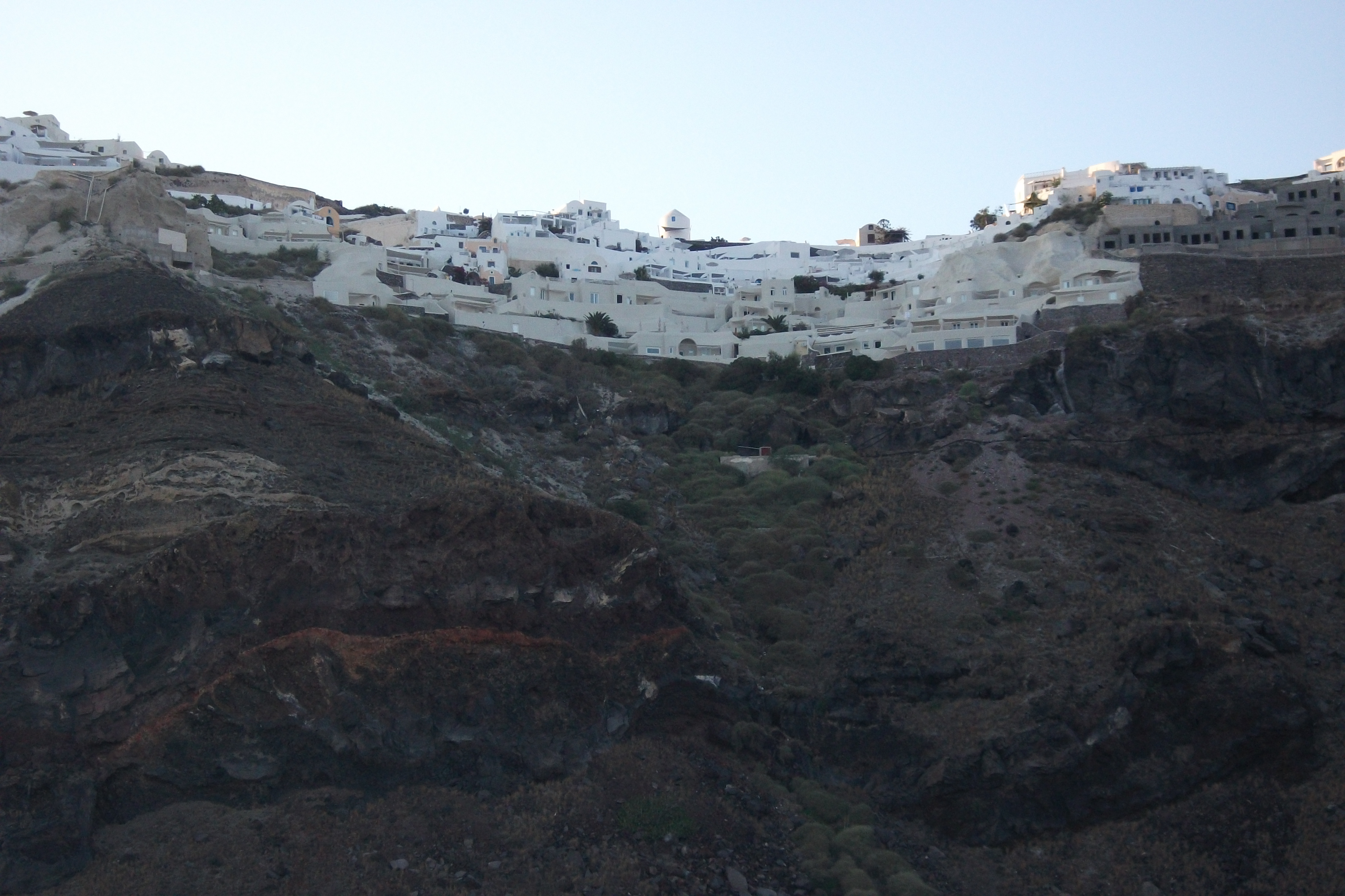
The view of our hotel from our boat.
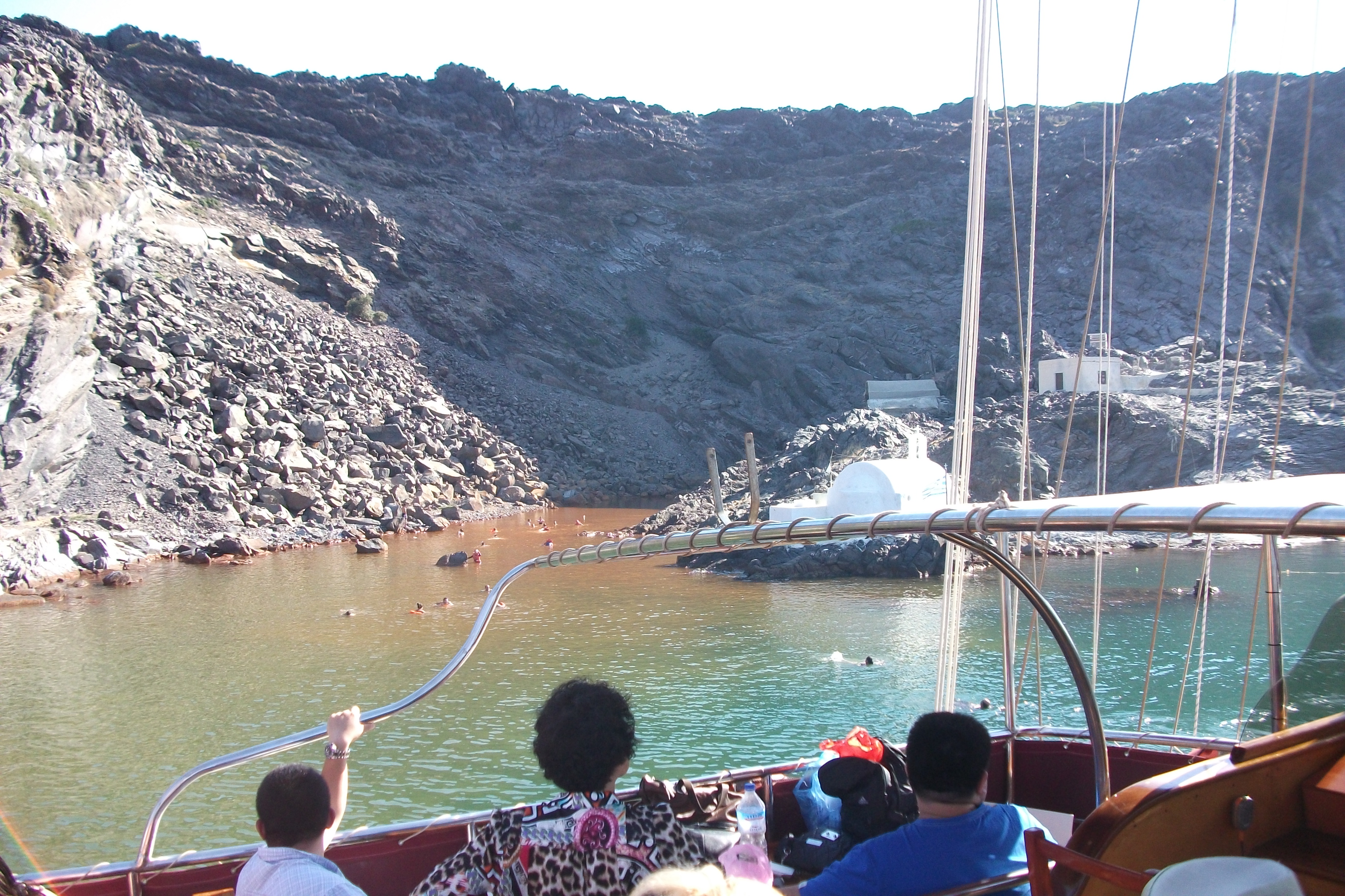
During our Santorini boat cruise we anchored near a live volcano where some of the group hiked up to the top. We then moved on to another island and stopped off by a sulphur spring where we jumped in for a swim beside the live volcano. Our swim in the warm sulphur-filled water was followed up by a sumptuous Greek dinner buffet on the boat.
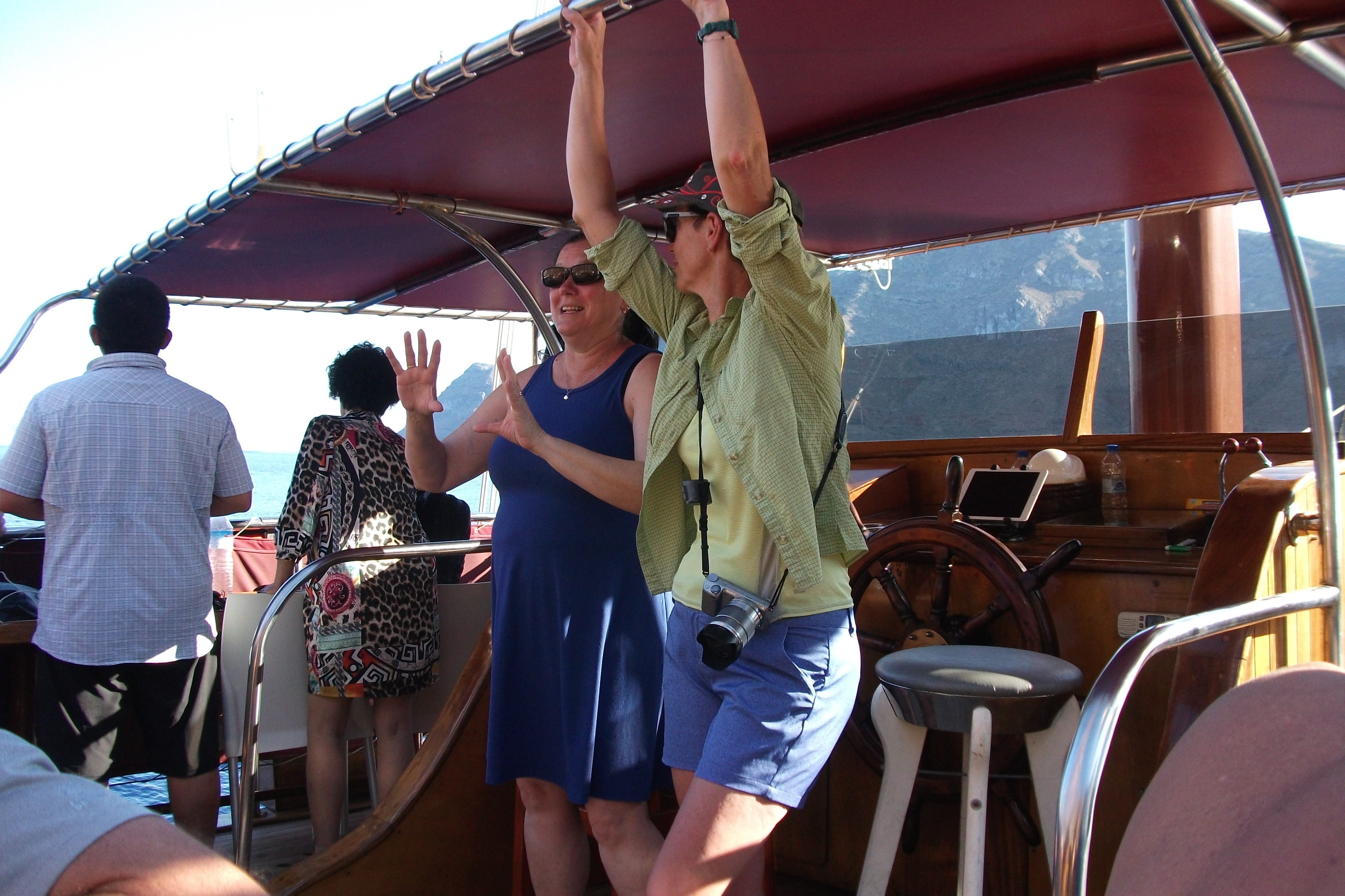
Gina and Barb converse near the captain’s wheel.
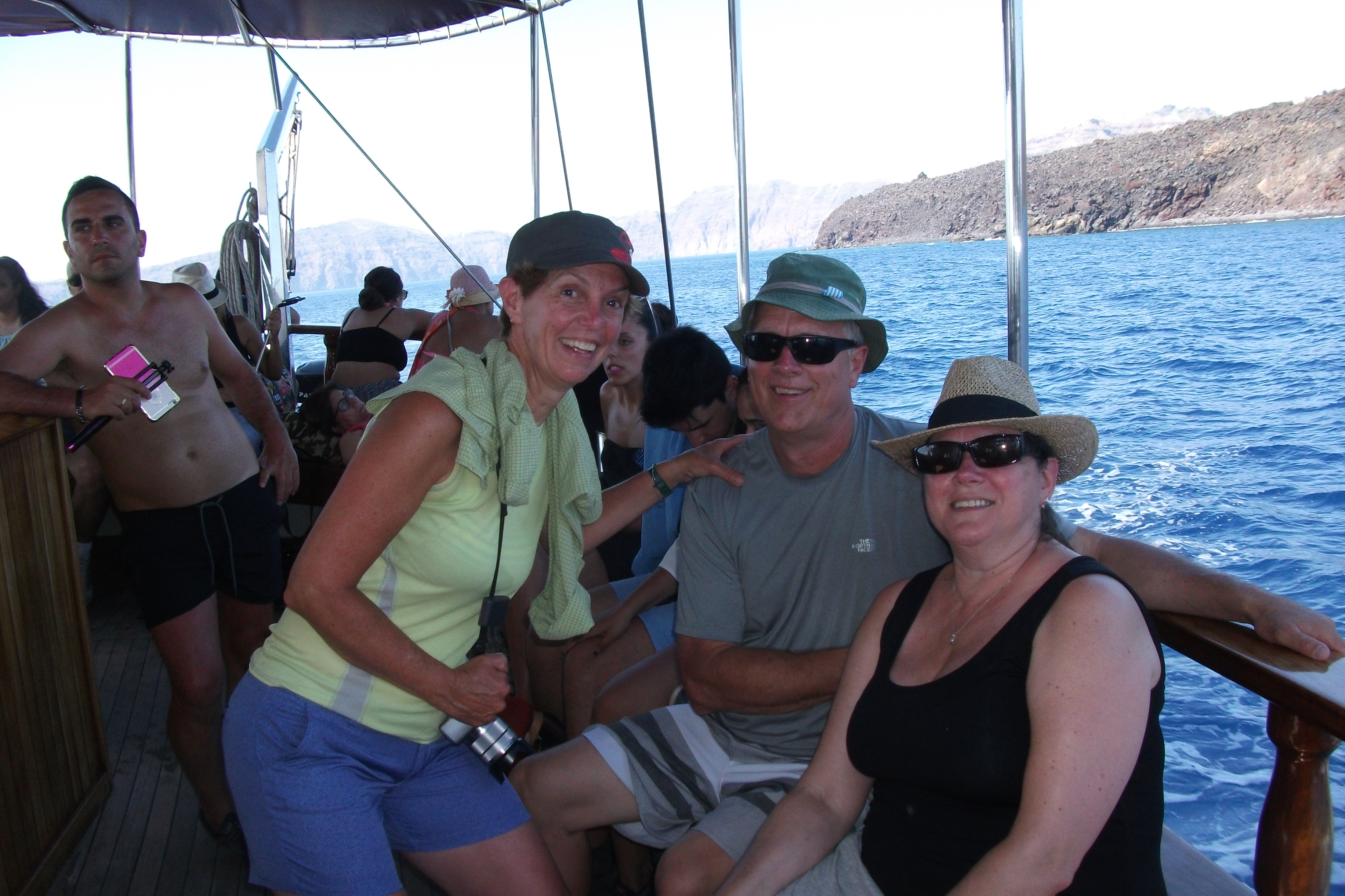
Gina, Bob and Barb
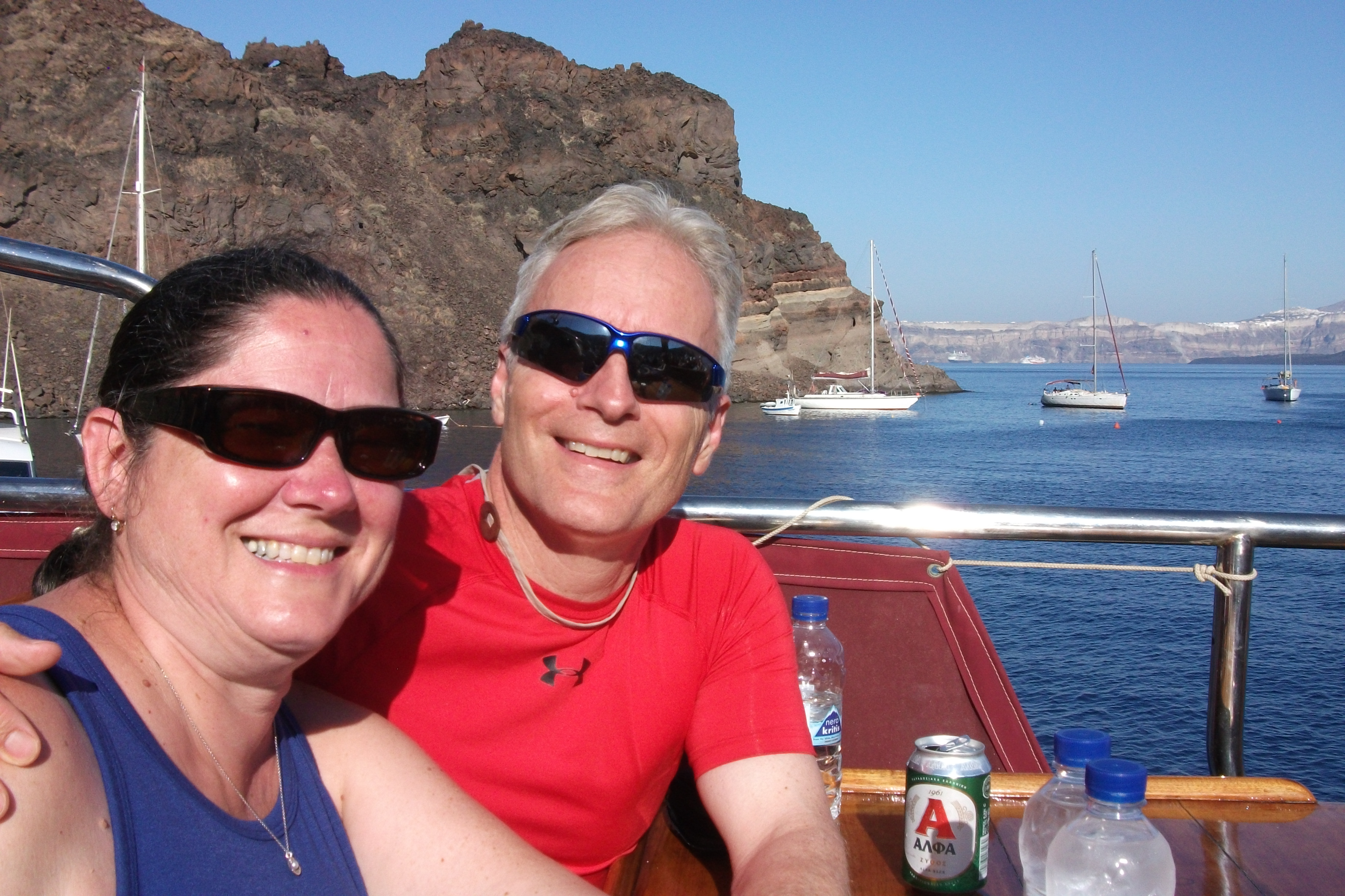
#Livingthedream
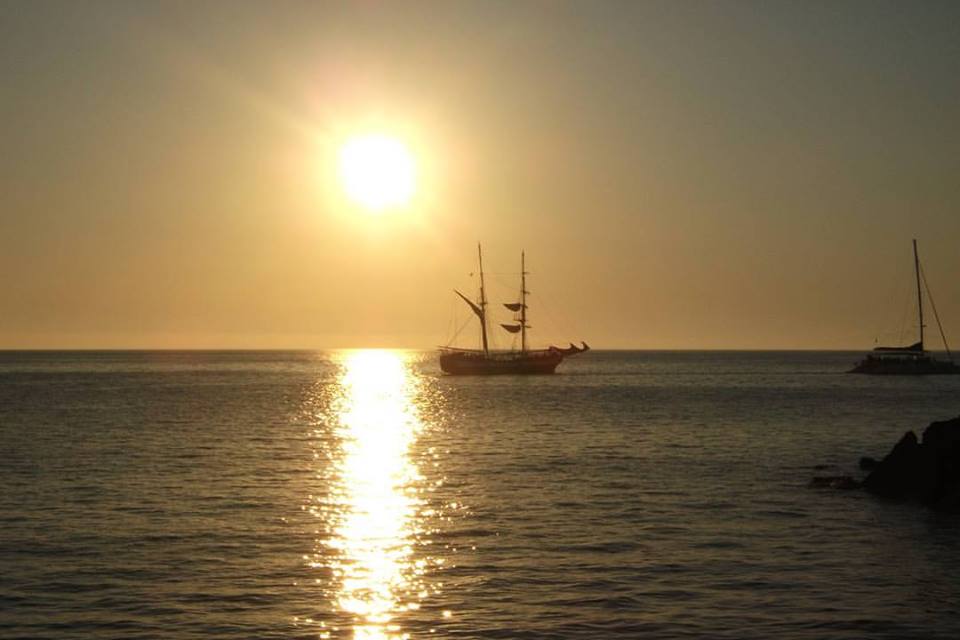
Our dinner boat cruise and final evening on the island wouldn’t be complete without a classic Santorini sunset.
We bid farewell to Santorini enroute to catch an early morning flight to Athens to meet up with our cruise ship, the Celebrity Equinox.
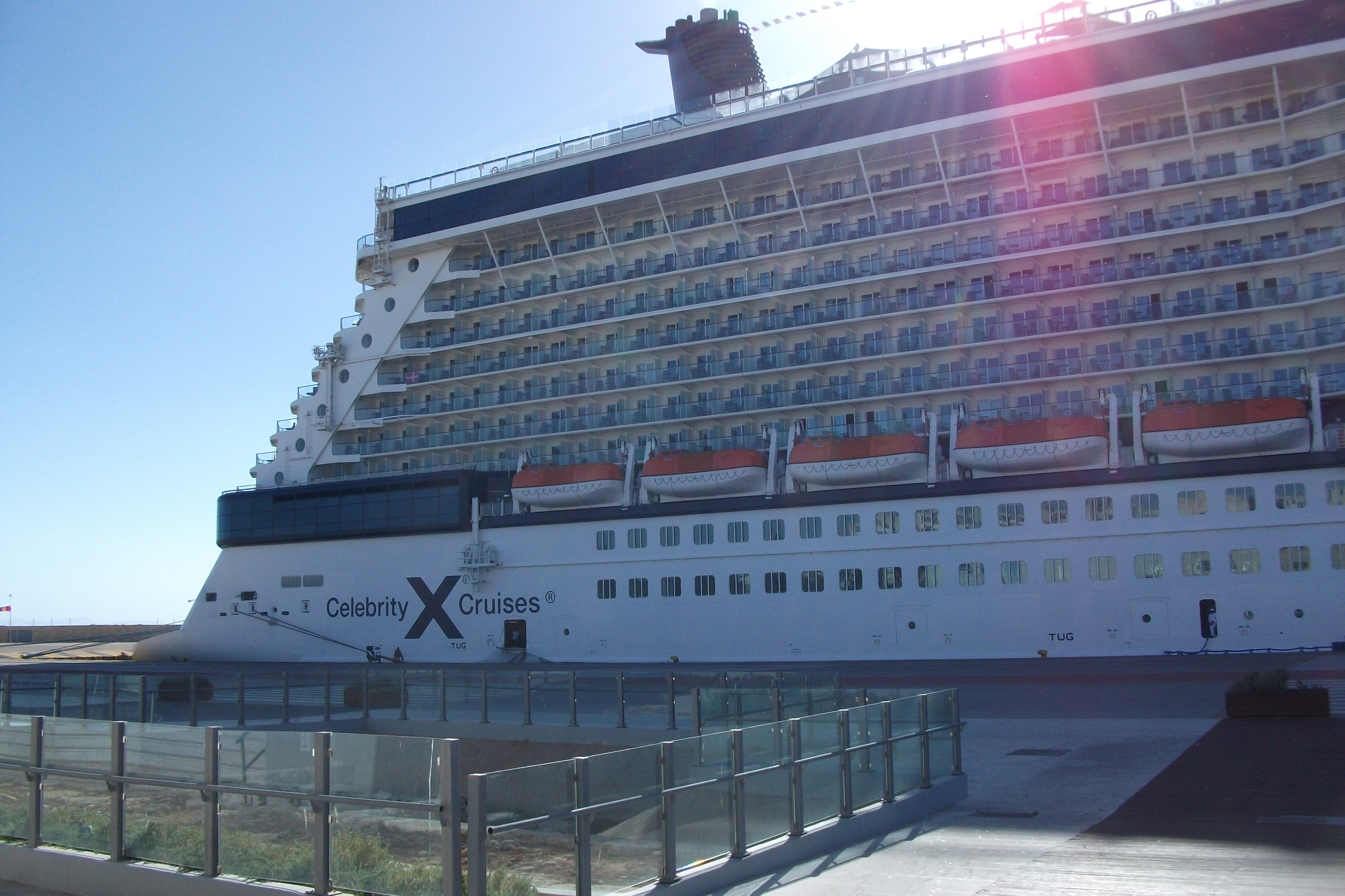
So blessed to have made our cruise ship from the port in Athens after the flight cancellations due to high winds in Santorini. Soooooo fortunate not to have flown to Istanbul and landed smack into the middle of the chaos of an attempted military coup.
So thankful for Bridget who was all over it and who connected with our Celebrity rep in Santorini who then arranged tickets for all 13 of us for a hi-speed ferry trip from Santorini to Athens. Thankful for Barb and Bonnie who stood in line for hours (stepping around dozens of people sleeping on the floor – whose flights were cancelled much earlier than ours.) to ensure we could have access to all our travel options and get written confirmation of the flight cancellation for insurance purposes.
So many other travelers were not as fortunate. 300 or so Cruise guests from Istanbul scrambled until the wee hours of the morning to get to Athens in time for departure to Mykonos. Because of the political turmoil there – some likely didn’t make it.
Celebrity’s decision to change our original cruise departure port from Istanbul to Athens – following the bombing at the Istanbul airport a couple of weeks earlier – in hindsight – now looks brilliant!
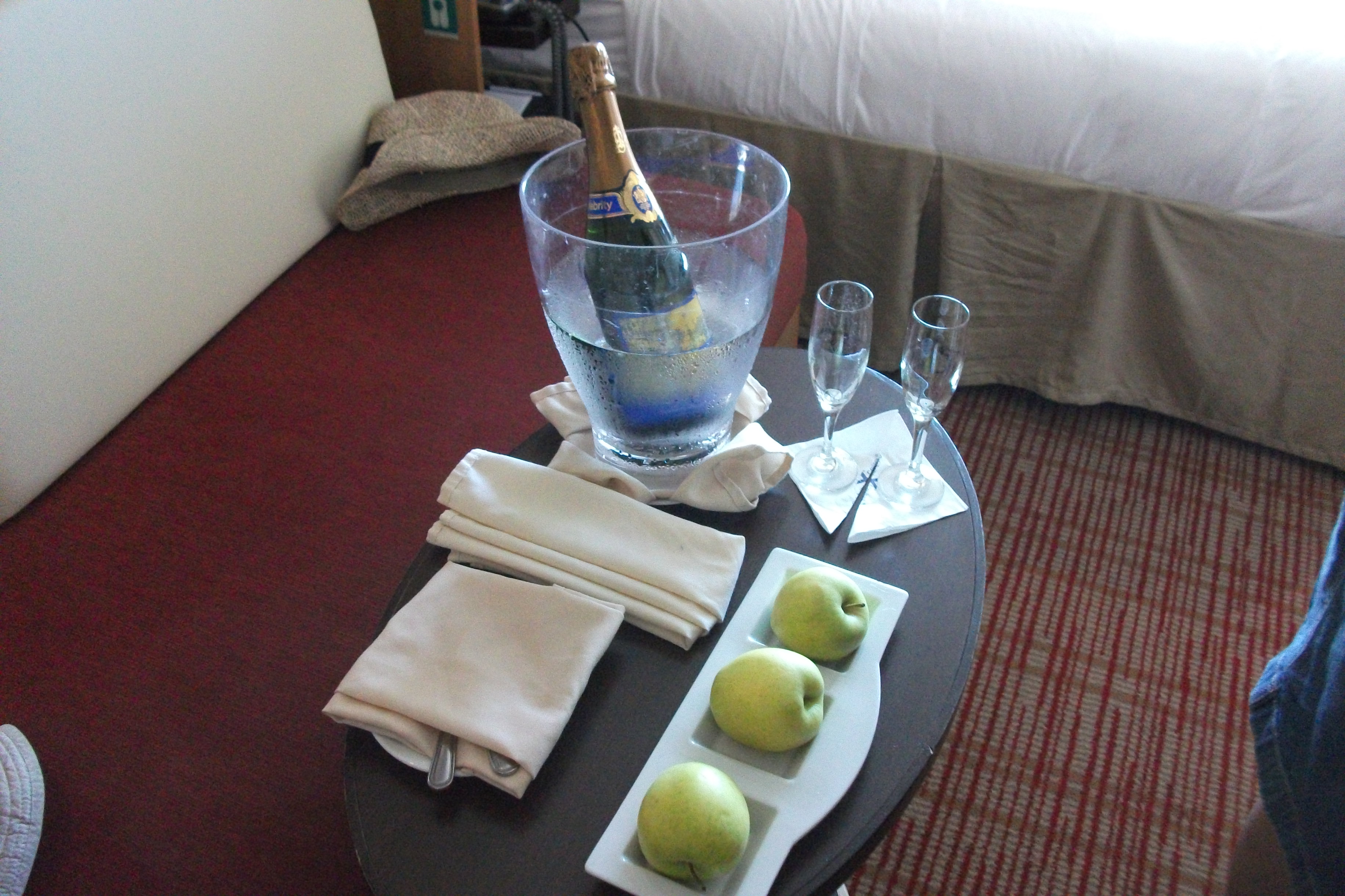
These lovely treats greeted us as we entered our stateroom on the cruise ship.
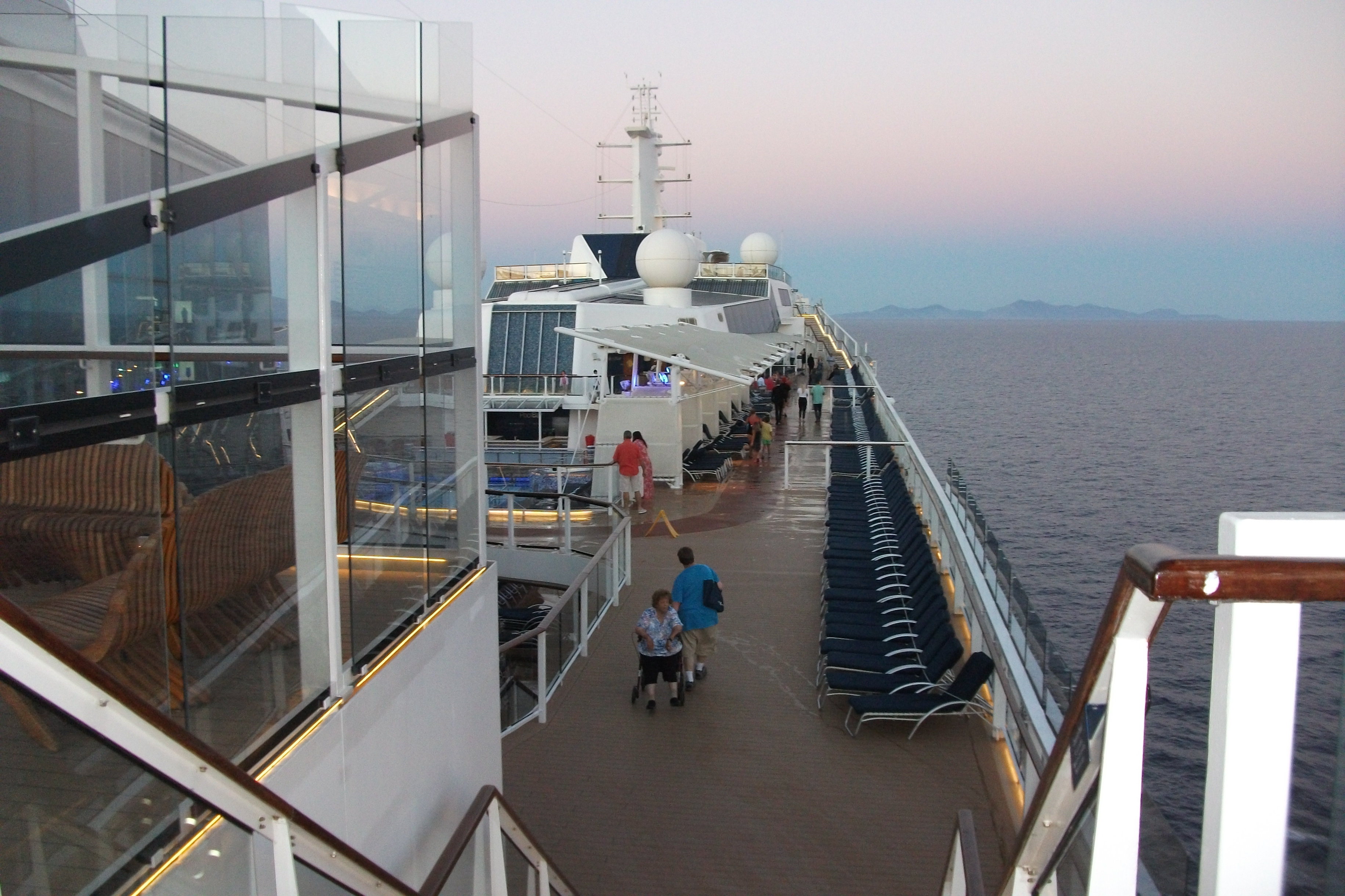
The Celebrity Equinox is a massive ship. Onboard amenities include a large theater called Equinox Theater, multiple restaurant dining options, the Patio on the Lawn where you can relax and have a picnic or play croquet; numerous bars and clubs; the Solstice Deck, the top deck of the ship; a youth facility called the Fun Factory; and iLounge, which is the Internet cafe. For a complete overview check out the Ship Tour video. I love the onboard library!
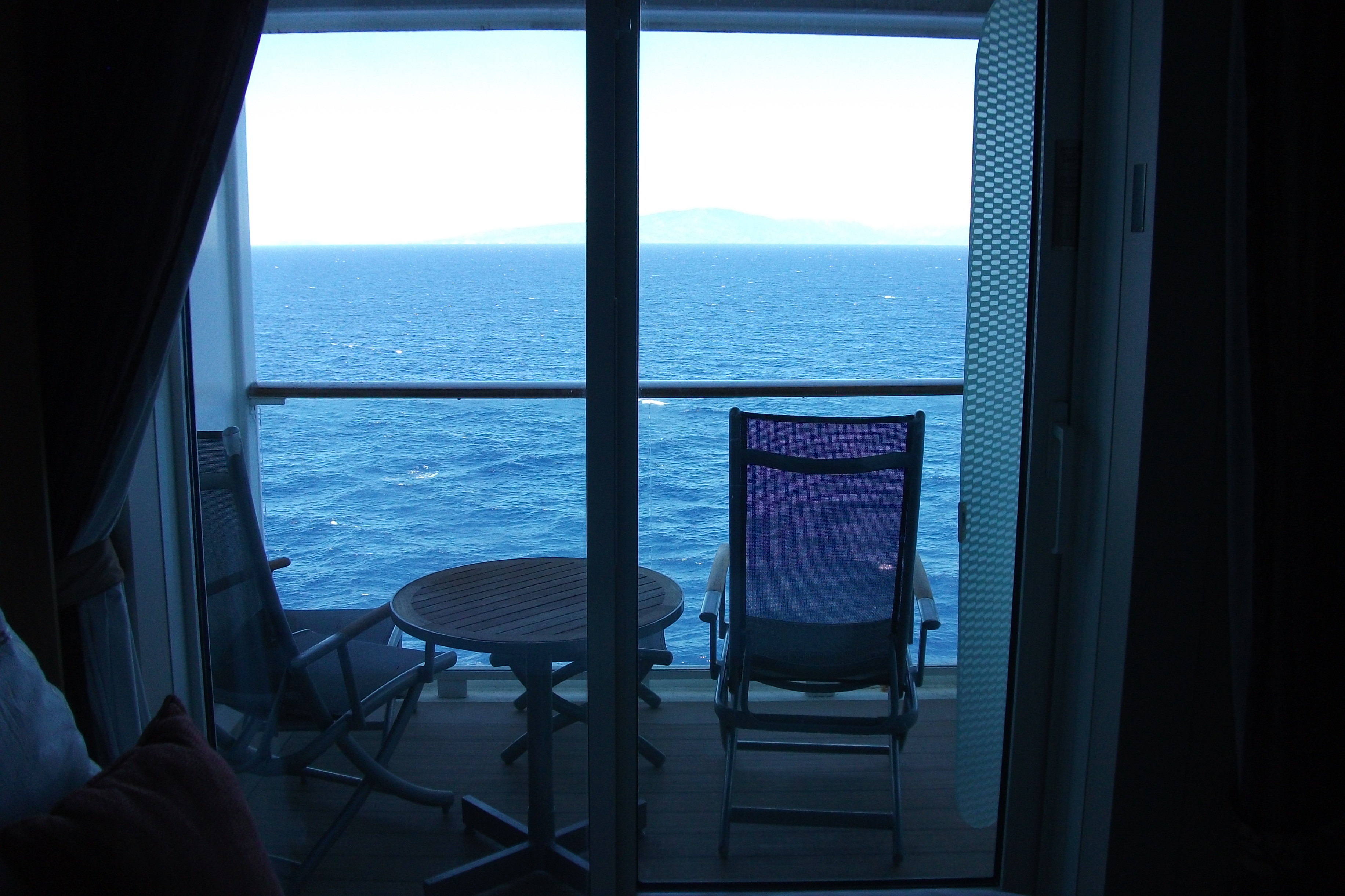
View from our stateroom to our balcony – linked to the balconies of our fellow travelers.
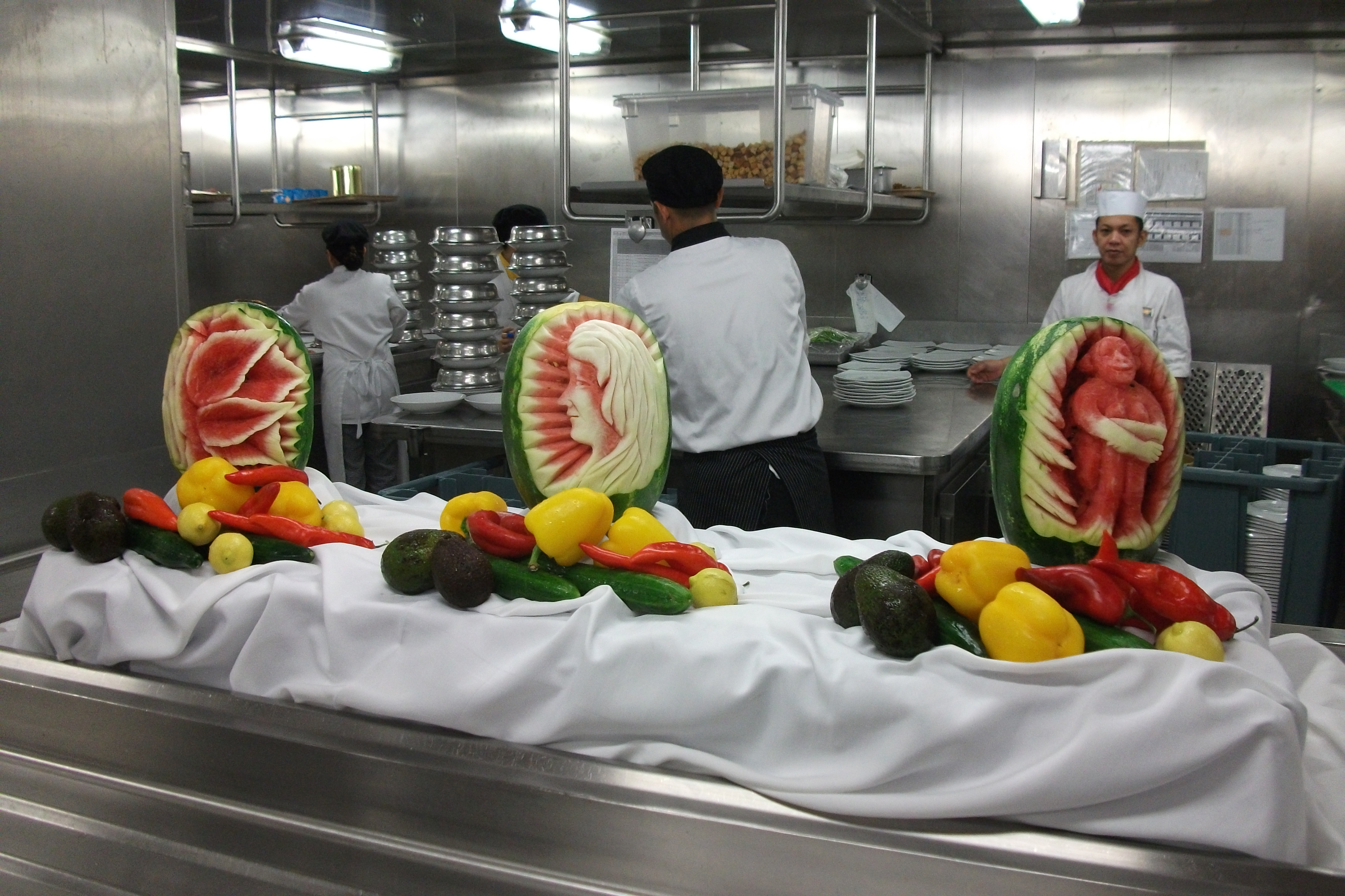
One of favorite onboard excursions was the tour of the kitchen facilities. The onboard bakery and environmental recycling / food waste incineration programs were especially cool!
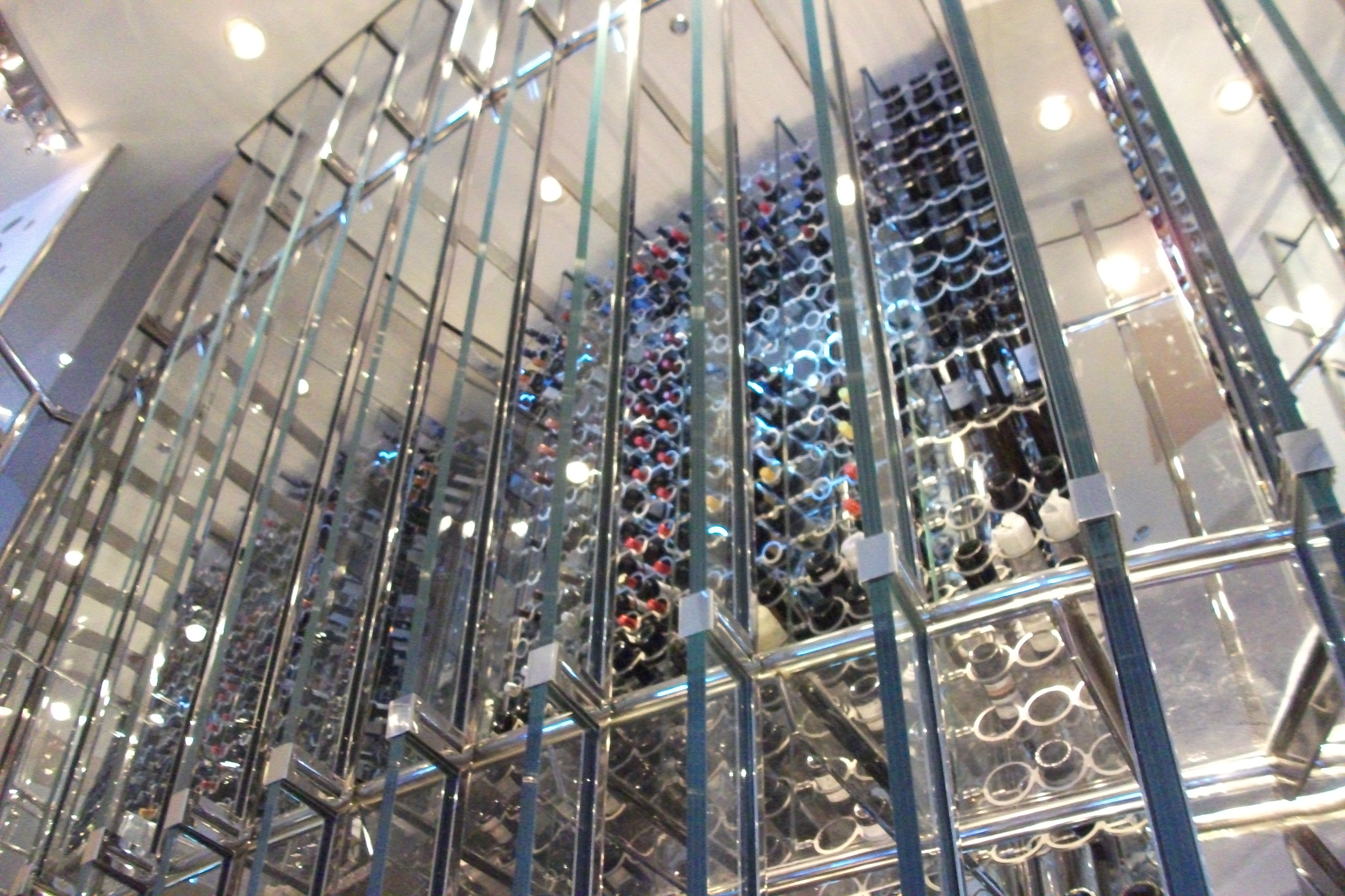
Now that’s a wine tower! About 3 times the size of the Wildcraft Restaurant wine tower.

Our first port of call – Mykonos.

Mykonos, is one of the most popular and glamorous Greek isles, known for its nonstop party atmosphere.
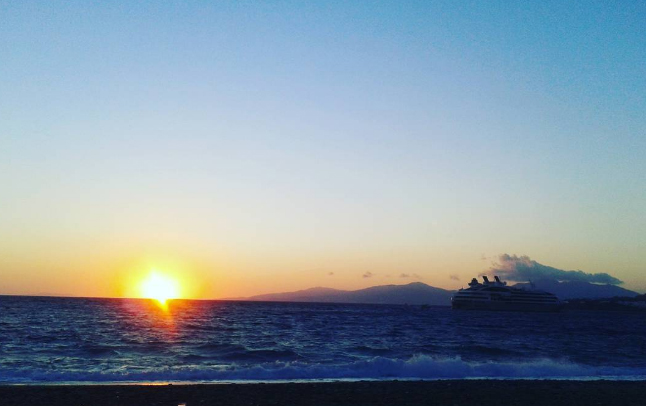
A dazzling Mykonos sunset with our cruise ship in silhouette.

The Vioma Organic farm & vineyard ‘Yummy Pedals Tour’ was one of my favorite excursions!
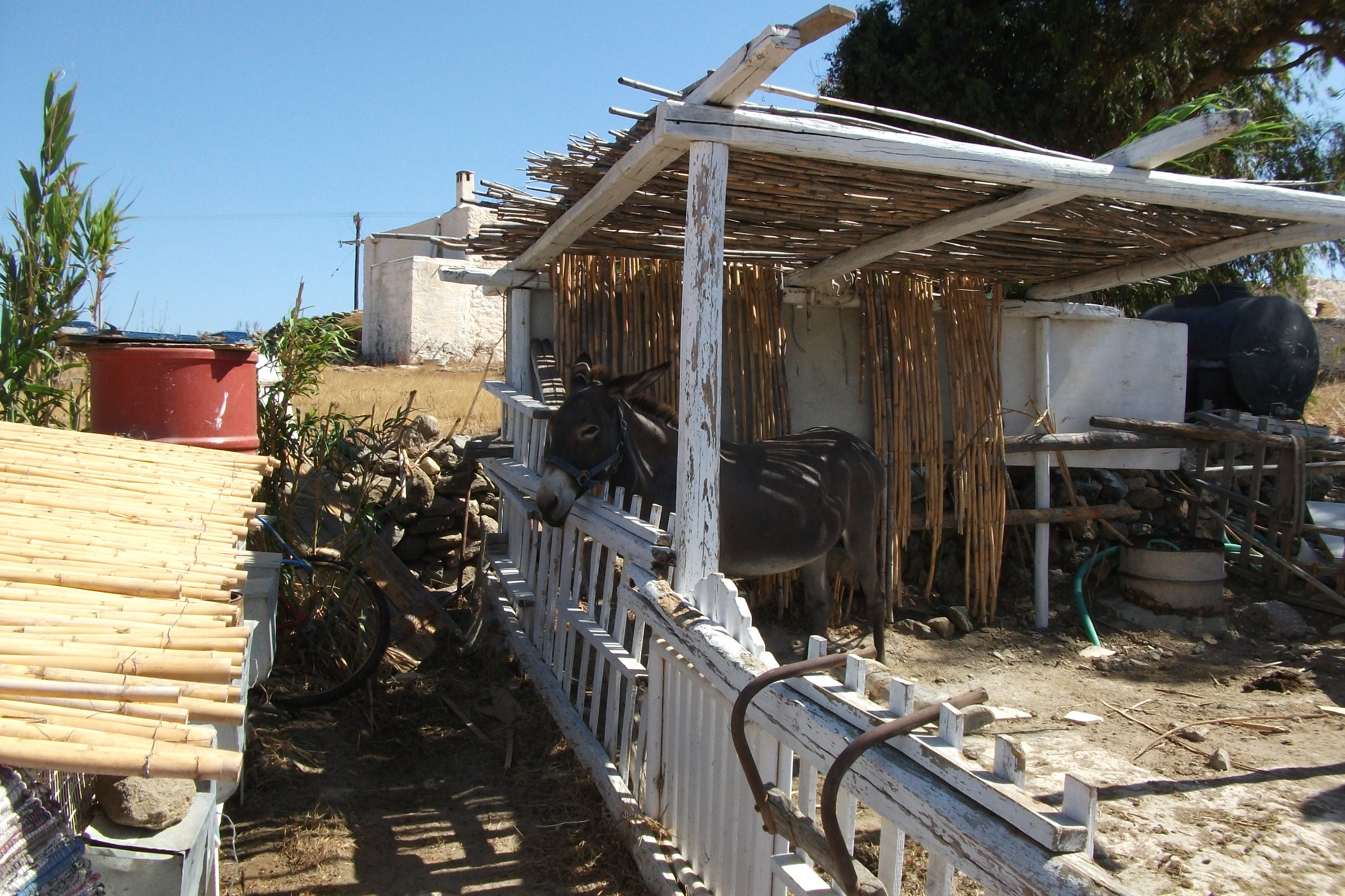 Love this guy, just chillin in the shade.
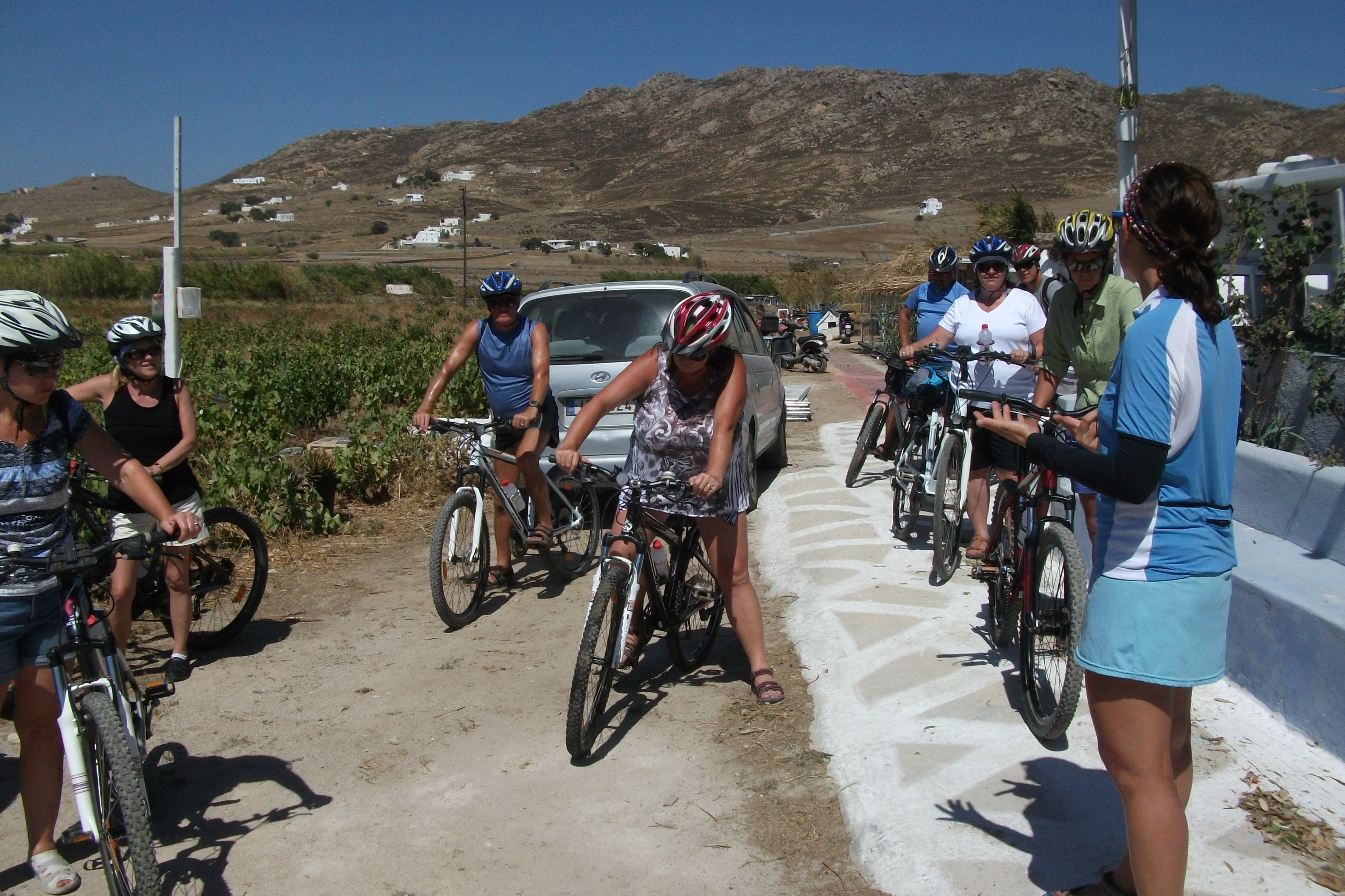
Our Yummy Pedals guide Dimitra outfitted all 13 of us with a bicycle and helmet in preparation for our cycling tour.
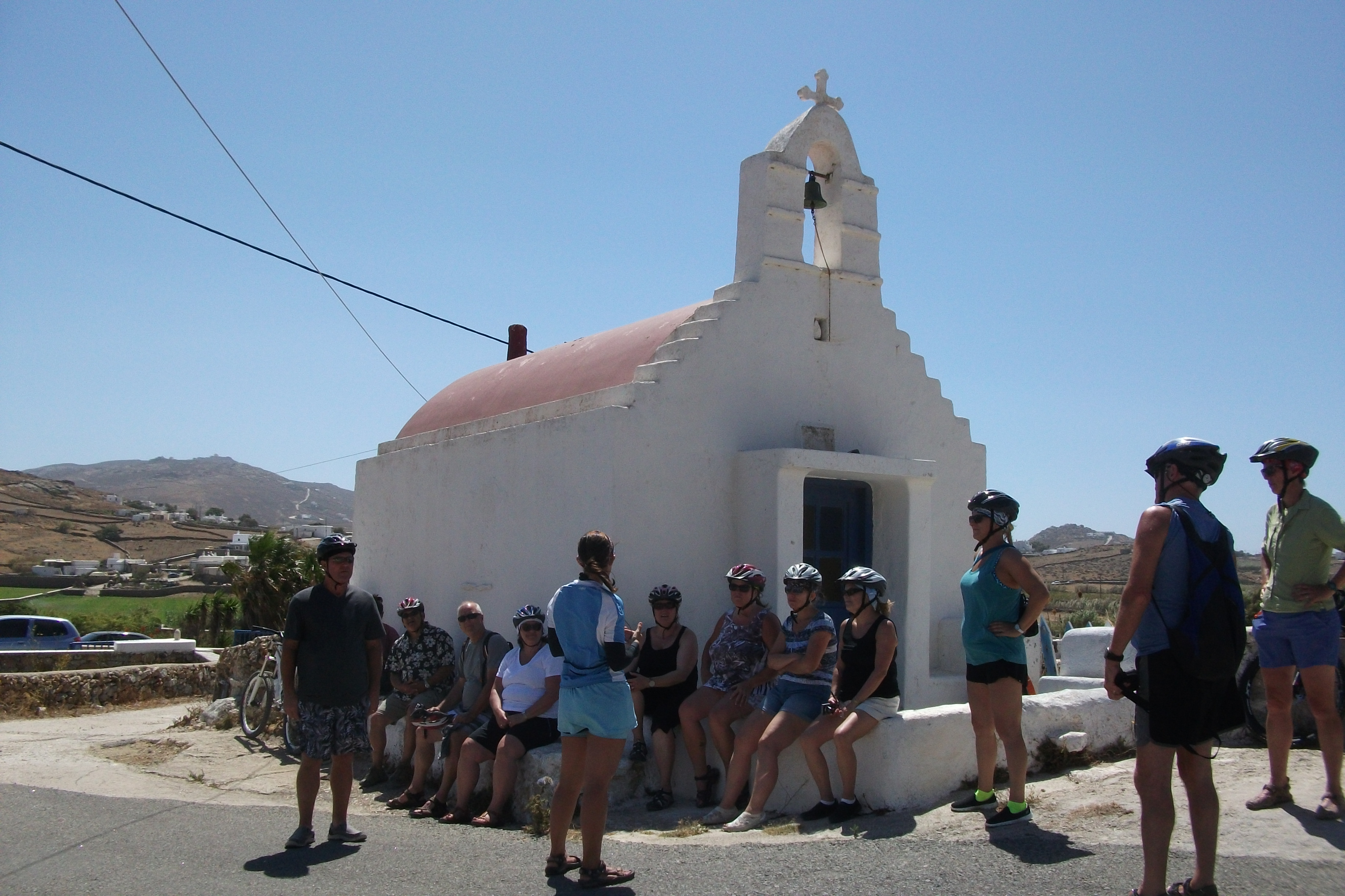
We stopped a few times on route to the ocean. This was a quaint small Christian church/chapel were the locals offer prayers.

Another spectacular day of nothing but sun and blue sky.
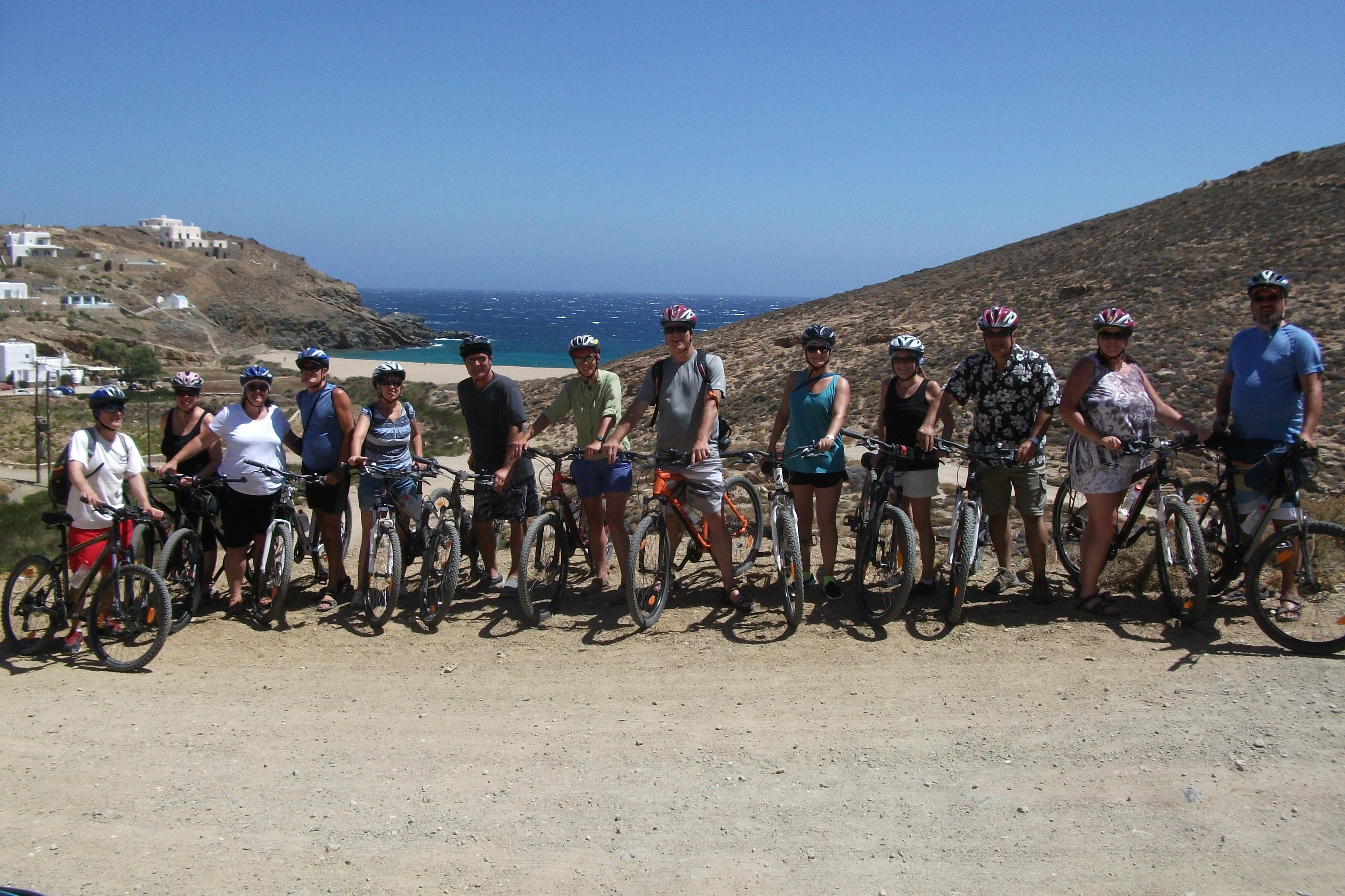
13 Canadian tourists cycling Mykonos
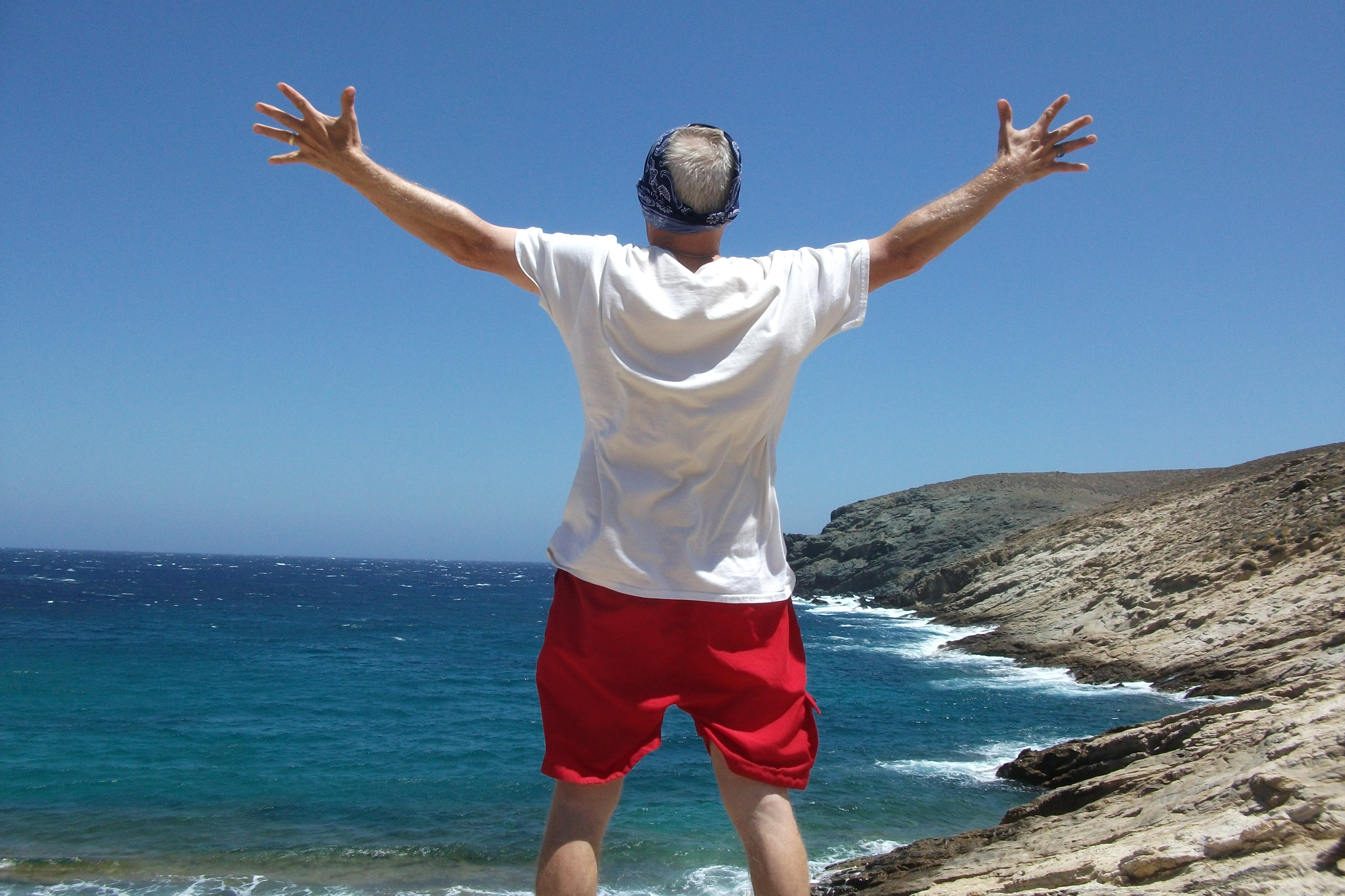
Wow! We made it!
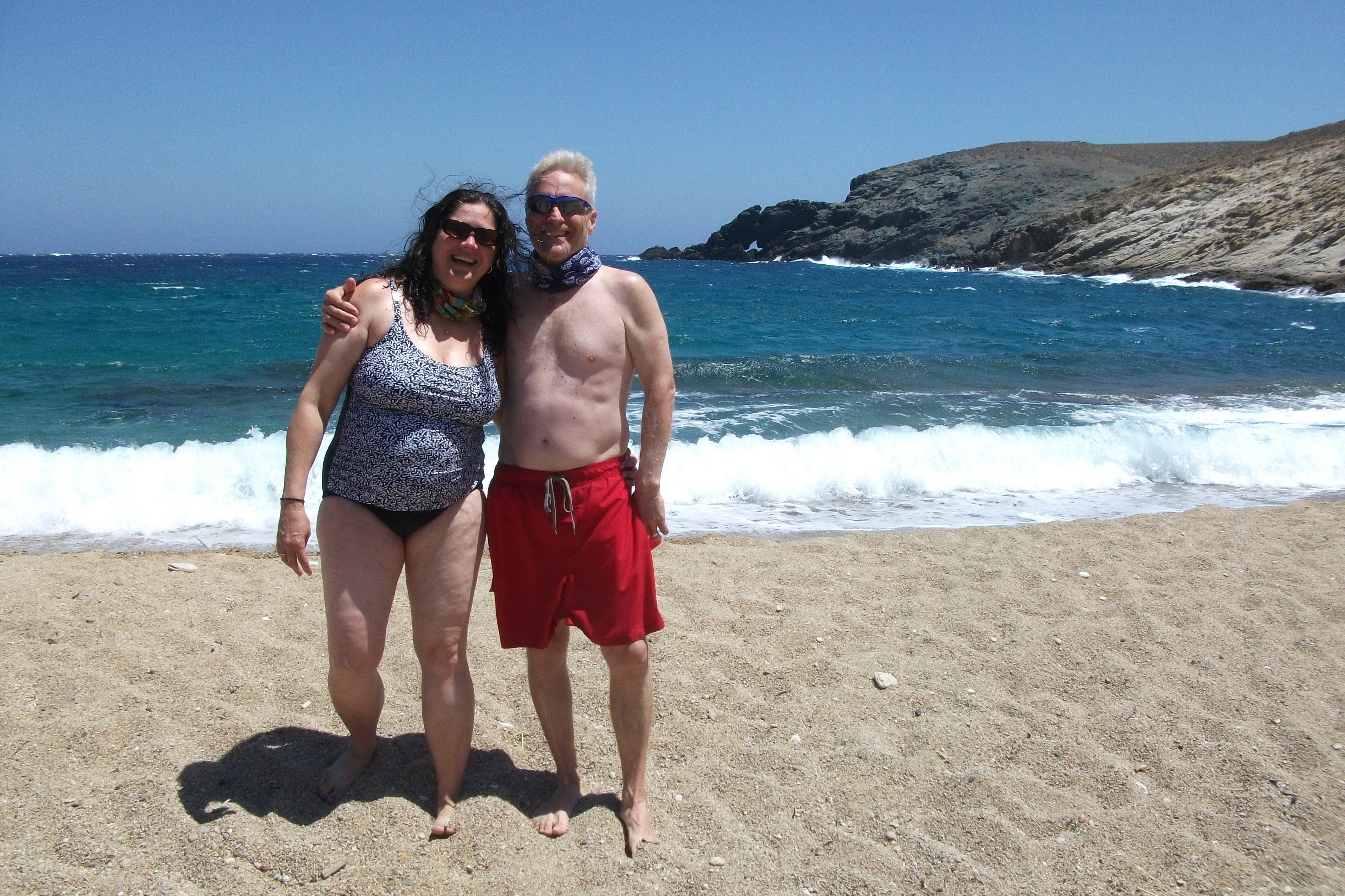
Had a refreshing swim to cool down and a yummy homemade muffin snack and fresh homemade lemonade for the ride back.

Back at the farm and I offered prayers to Dionysus, Greek god of wine and all things alcohol.
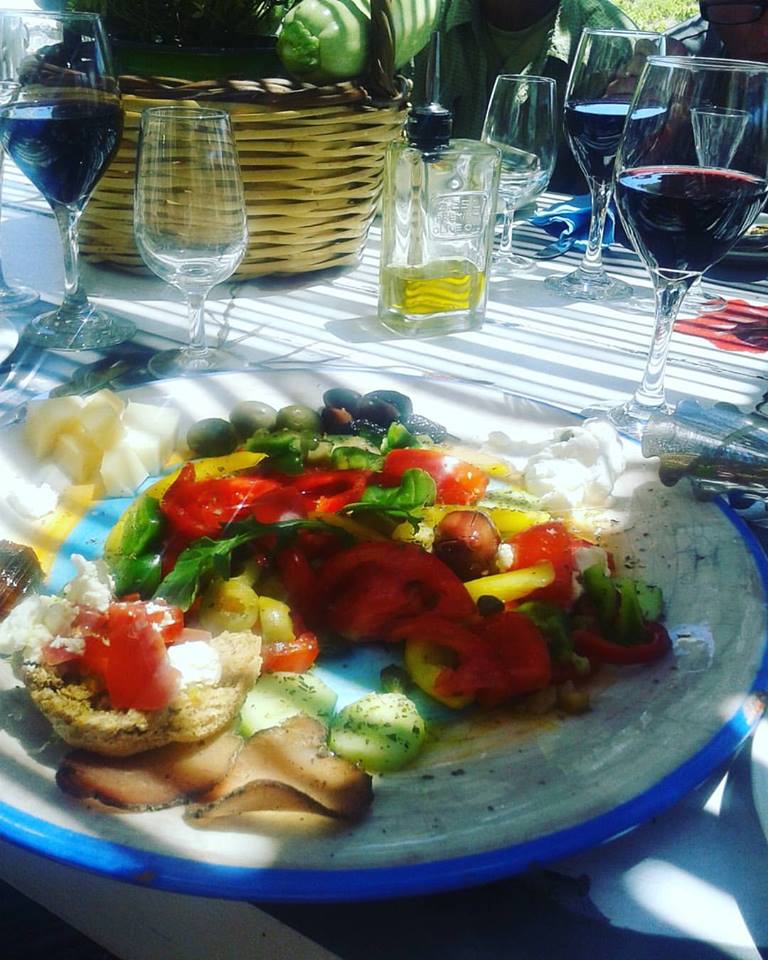
Heavenly spread of delicious fresh Greek food ‘Mykonos Garden’ & wine tasting after 2 hours of biking & swimming in the Aegean Sea. Apparently the prayers worked!
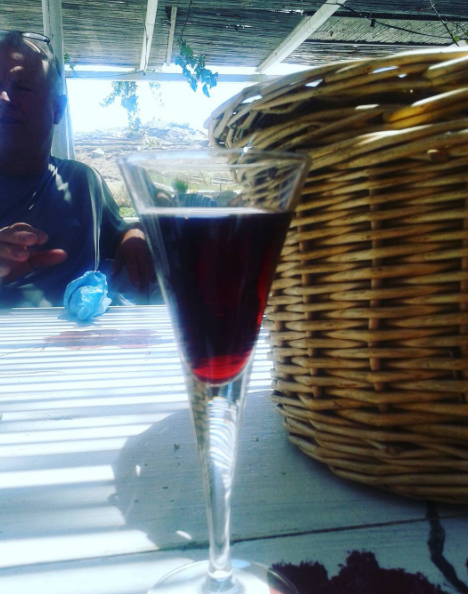
Delicious red dessert wine to cap off a lovely meal.
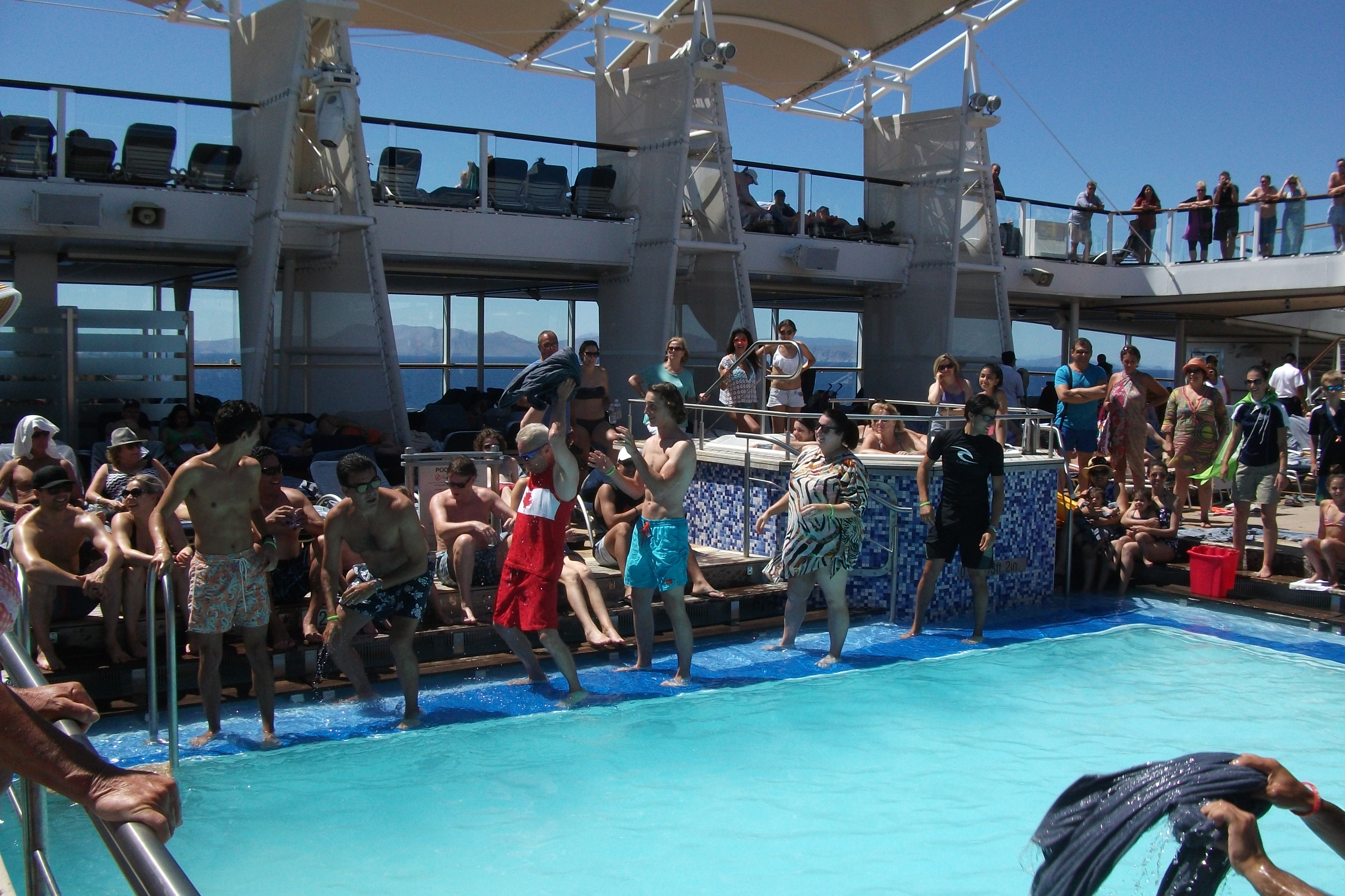
Back on the cruise ship, the cruise activities director roped me “hey Canada, come join us” into some poolside competition.

All dolled up for dinner. Must be casual chic night.

Our next port of call was Valletta, Malta, a fortified city and home to the Order of Malta.
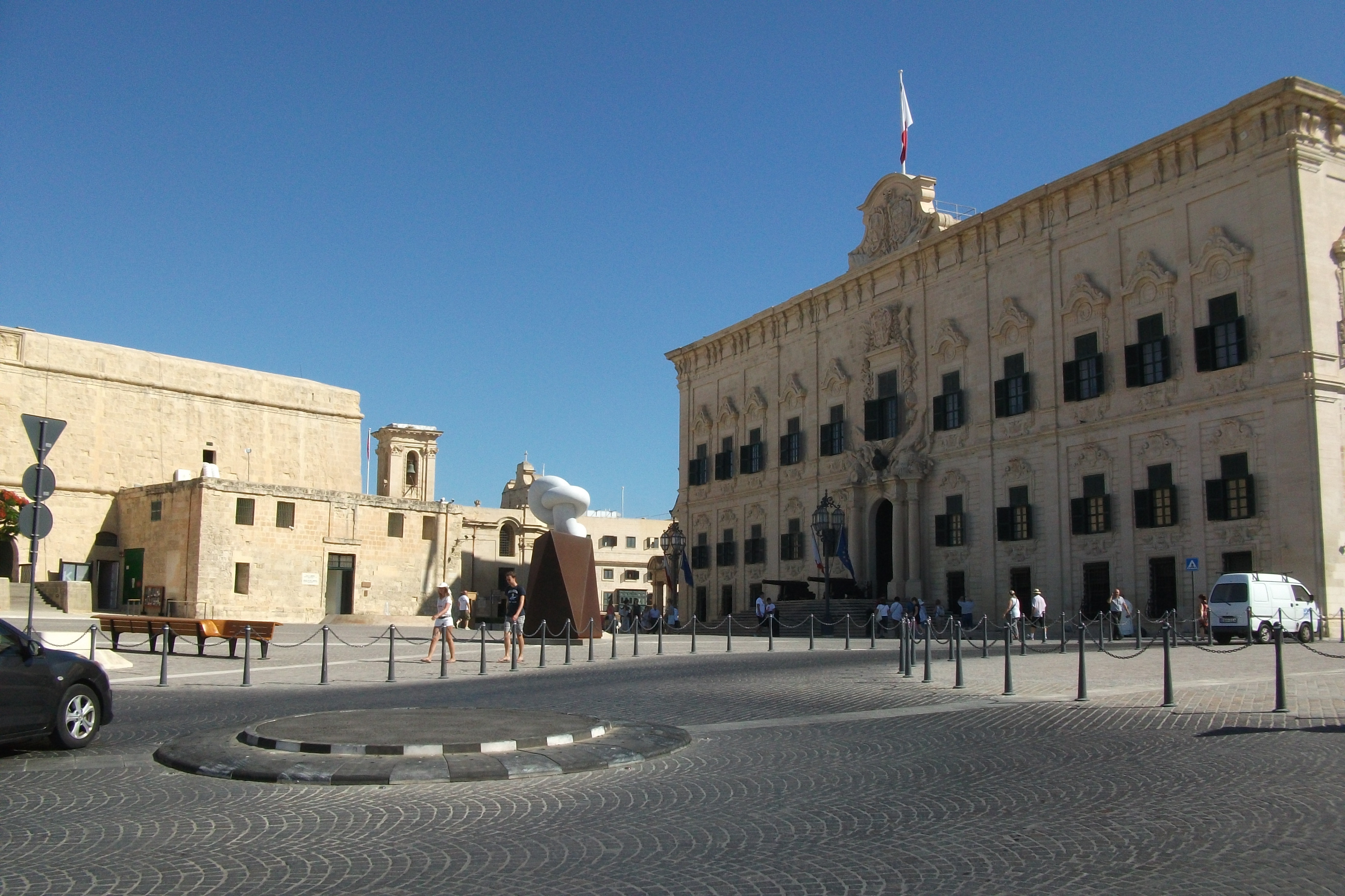
Grandmaster palace of Malta, home of the Order of St. John.
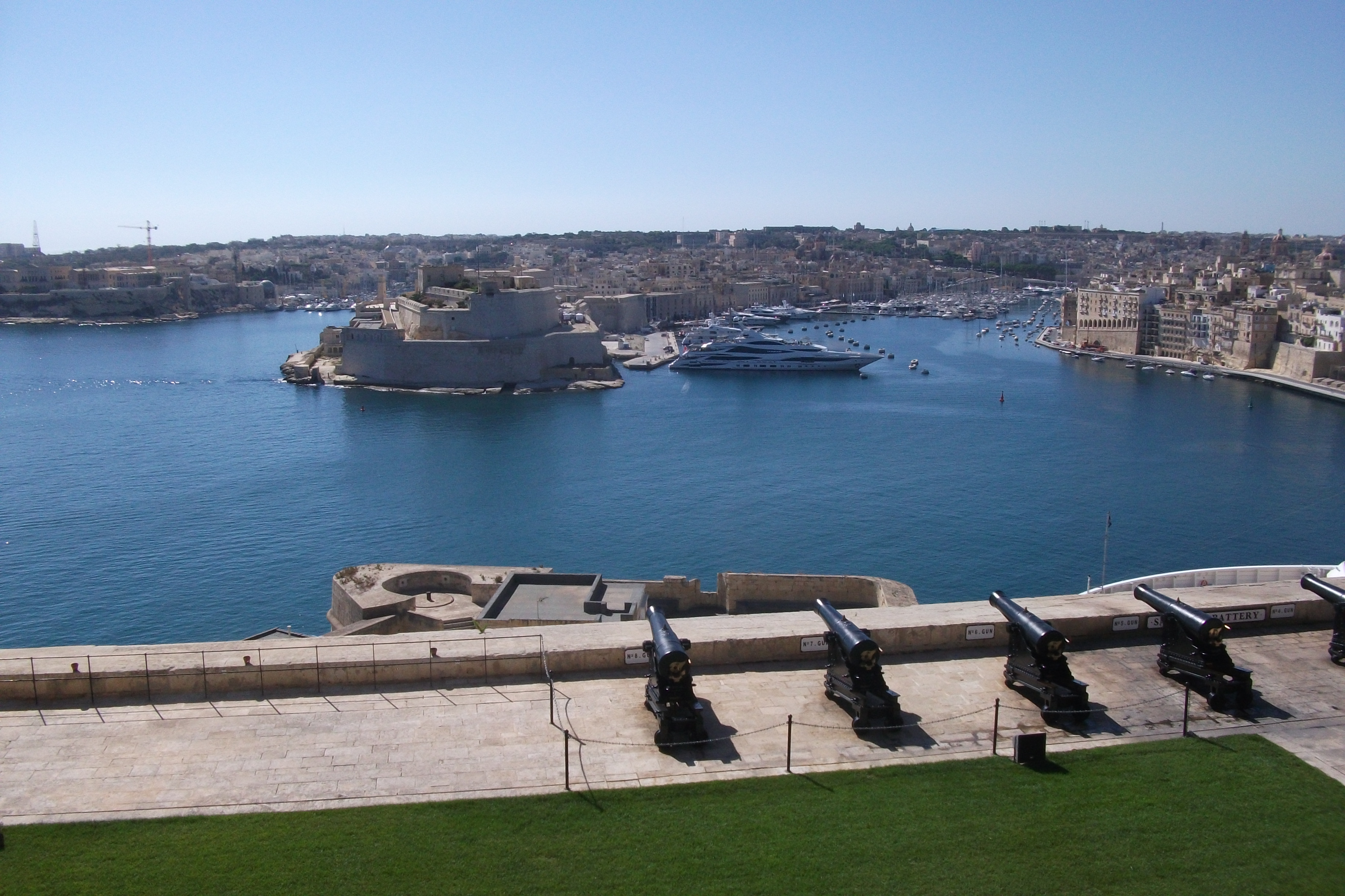
Valletta contains buildings from the 16th century onwards, built during the rule of the Order of St. John also known as Knights Hospitaller.
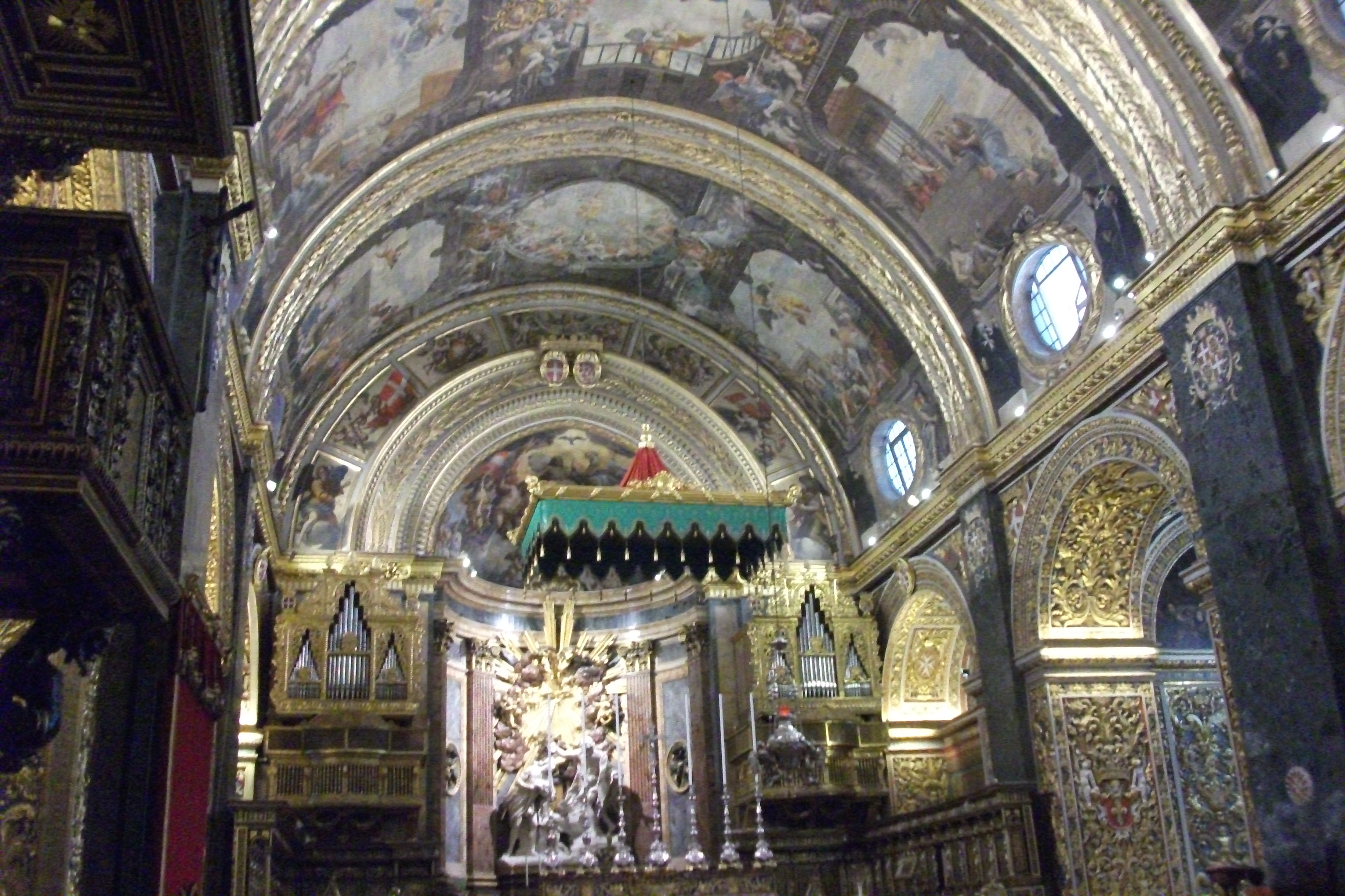
St John’s Co-Cathedral is a gem of Baroque art and architecture. It was built as the conventual church for the Knights of St John. The Grand Masters and several knights donated gifts of high artistic value and made enormous contributions to enrich it with only the best works of art. This church is till this very day an important shrine and a sacred place of worship. It is also a venue for cultural events. Source: stjohncoocatheral.com

This was just one of 9 side chapels containing priceless ornate marble statues and paintings dedicated to the Grand Masters of the Knights of St. John.

We also viewed Caravaggio’s only signed painting of the beheading of John the Baptist – though were not allowed to take any photos – so I included a Google image instead.
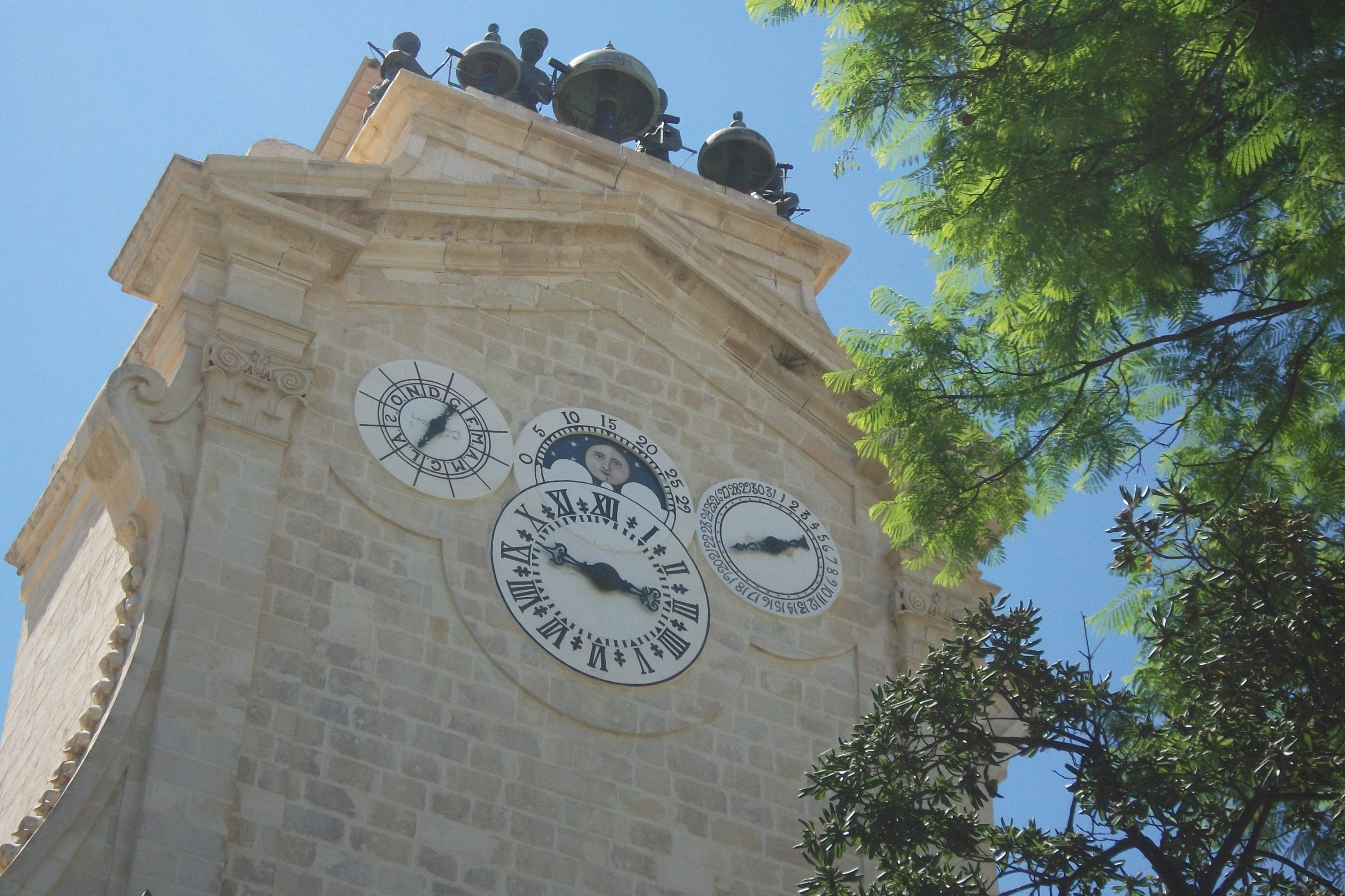
The famous Pinto’s Clock tower has four dials. The middle one shows the hour and the others show the lunar phase, month and day in Italian.
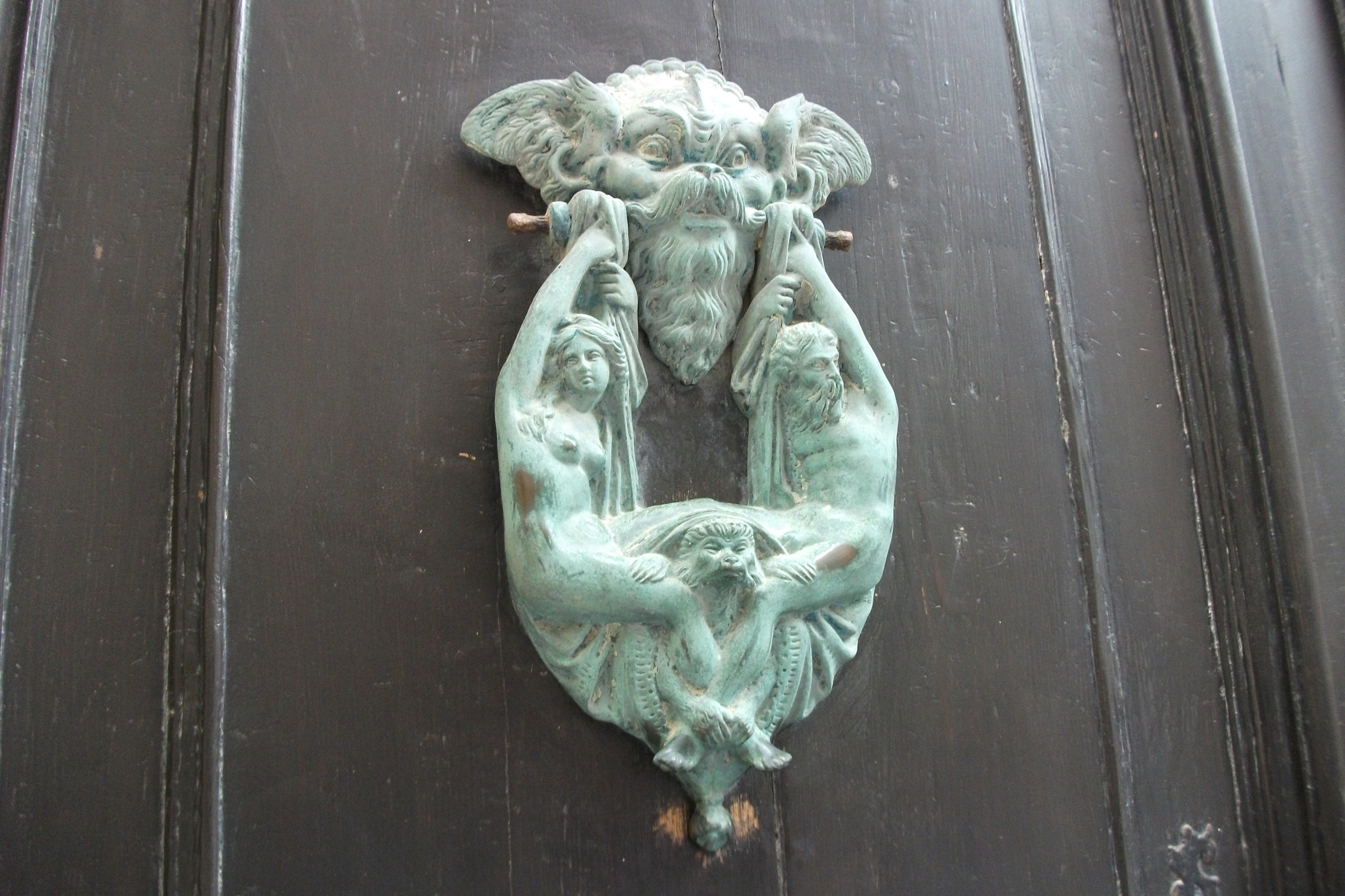
One of a number of creative door knockers in Valletta – known as il-habbata in Maltese. The knockers largely feature maritime motifs such as dolphins, sea horses and fish.
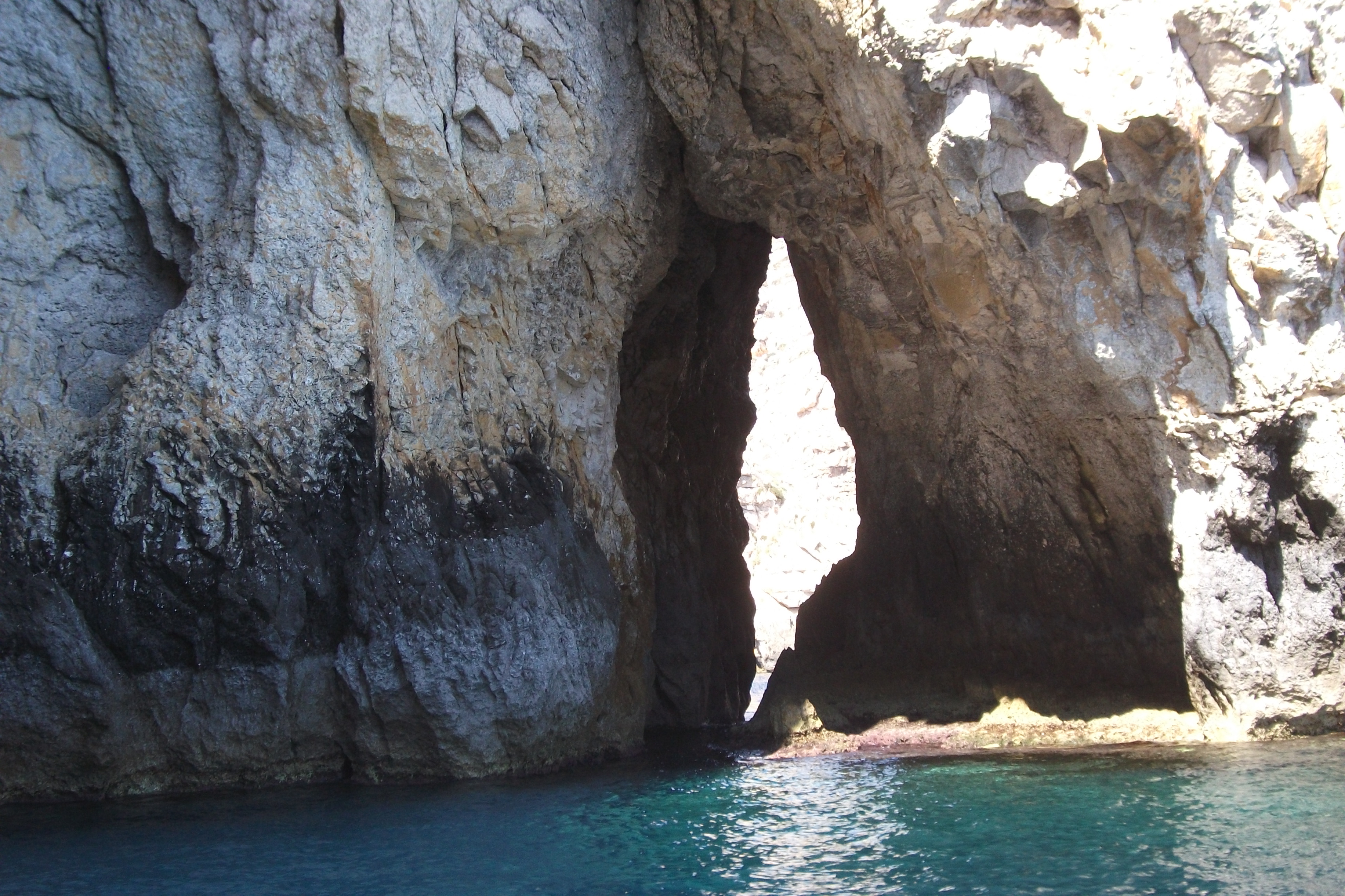
We also took a boat ride to the blue grotto in Malta.

The extraordinary blues in the grottos come to life in the brilliant sunshine.
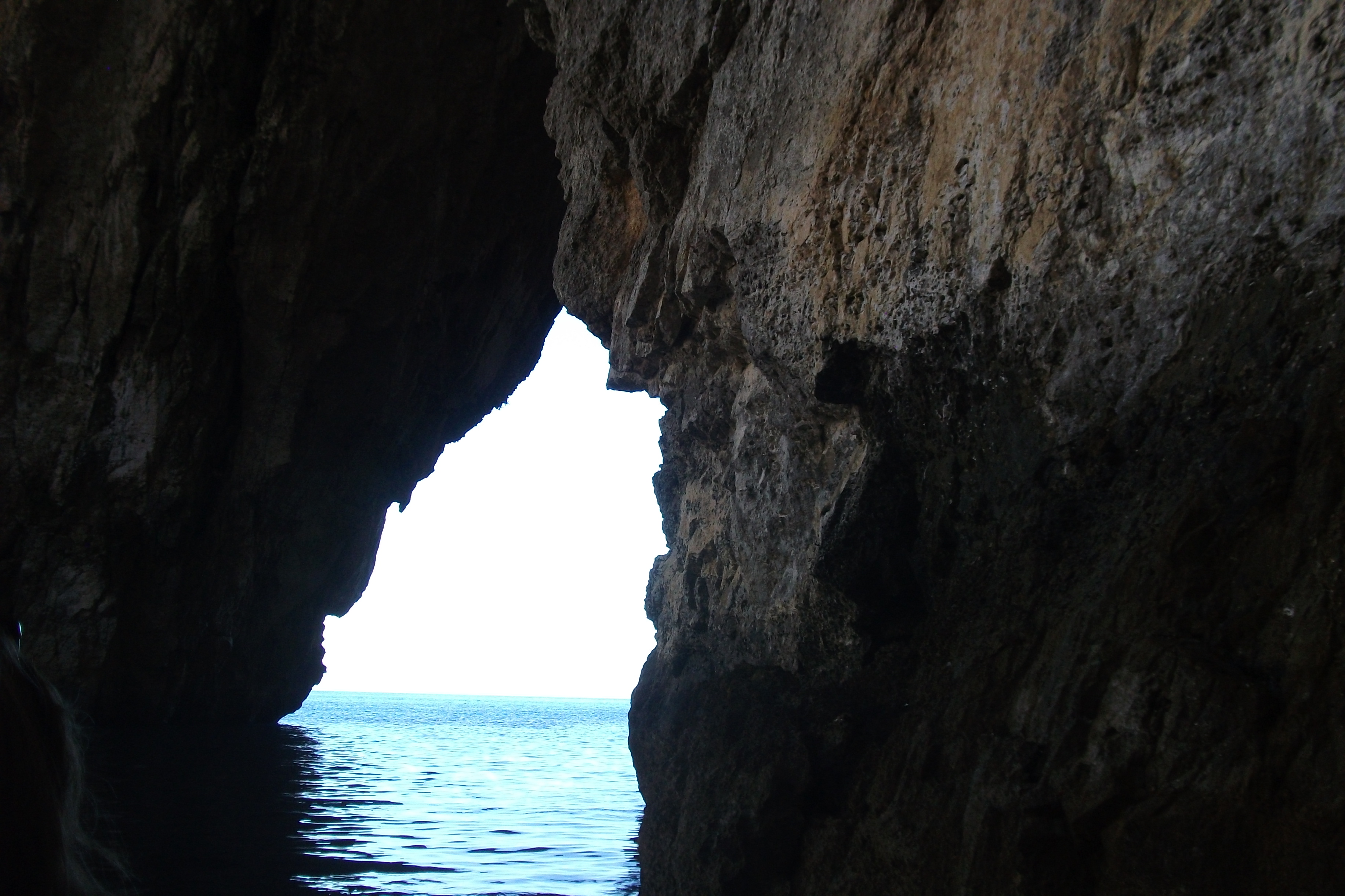
A rugged, natural window on the world.
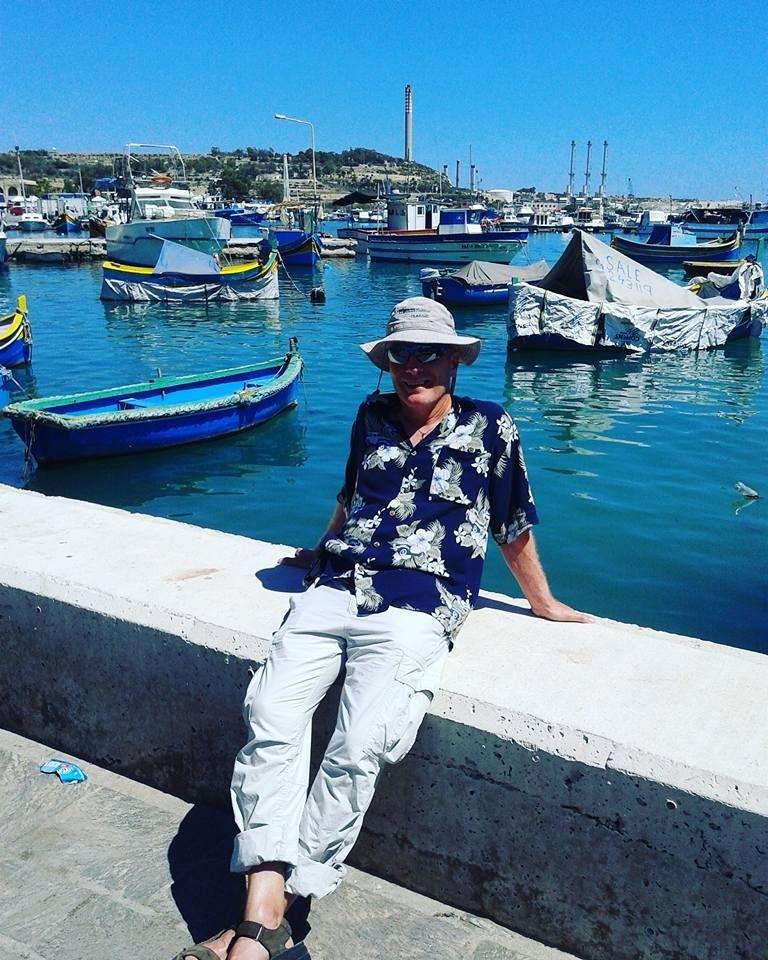
Had a huge lunch and did some shopping in this quaint fishing village of Marsaxlokk, Malta.
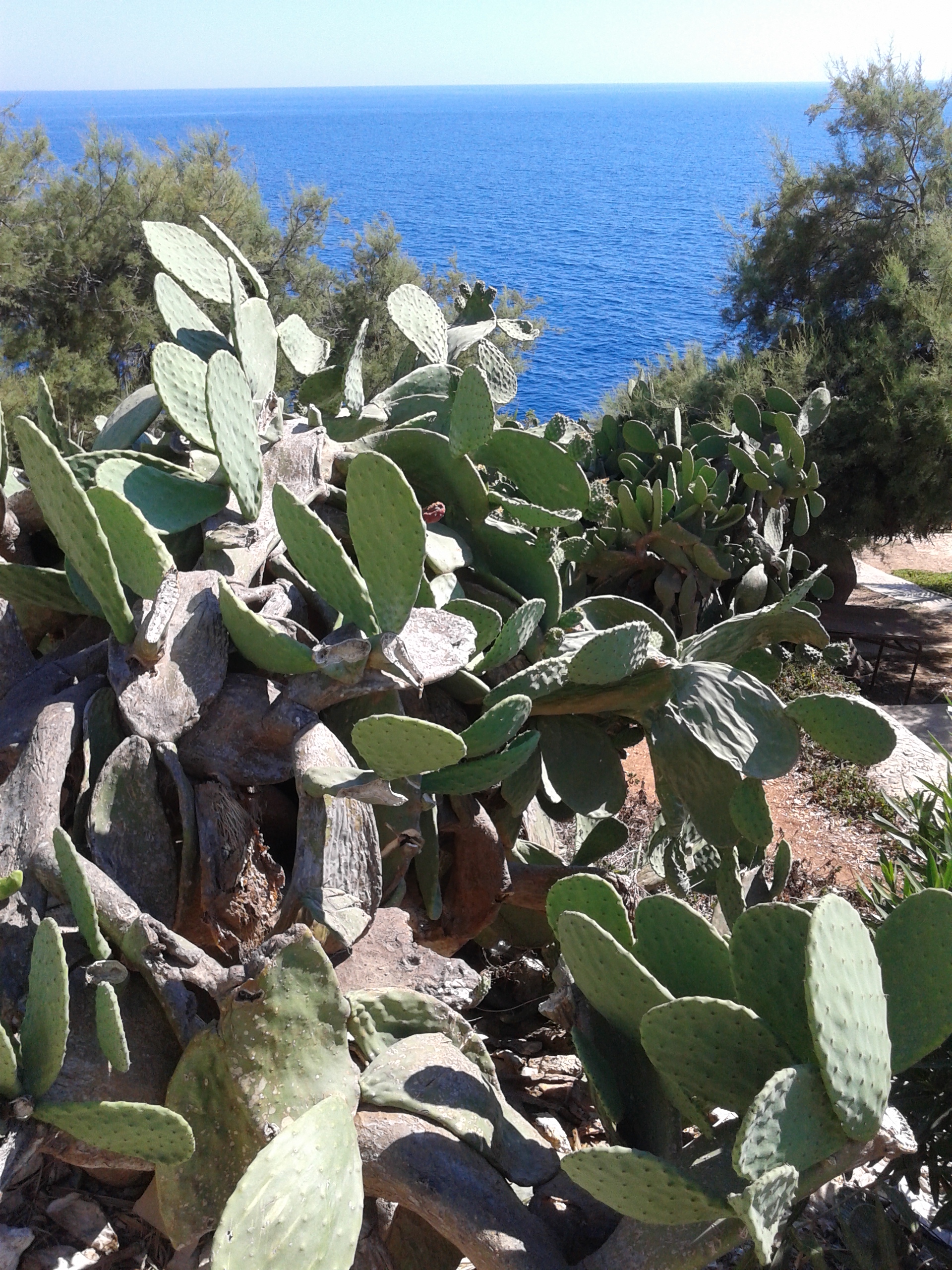
Like olive and lemon trees, the prickly pear cactus can be found everywhere throughout the Mediterranean region.
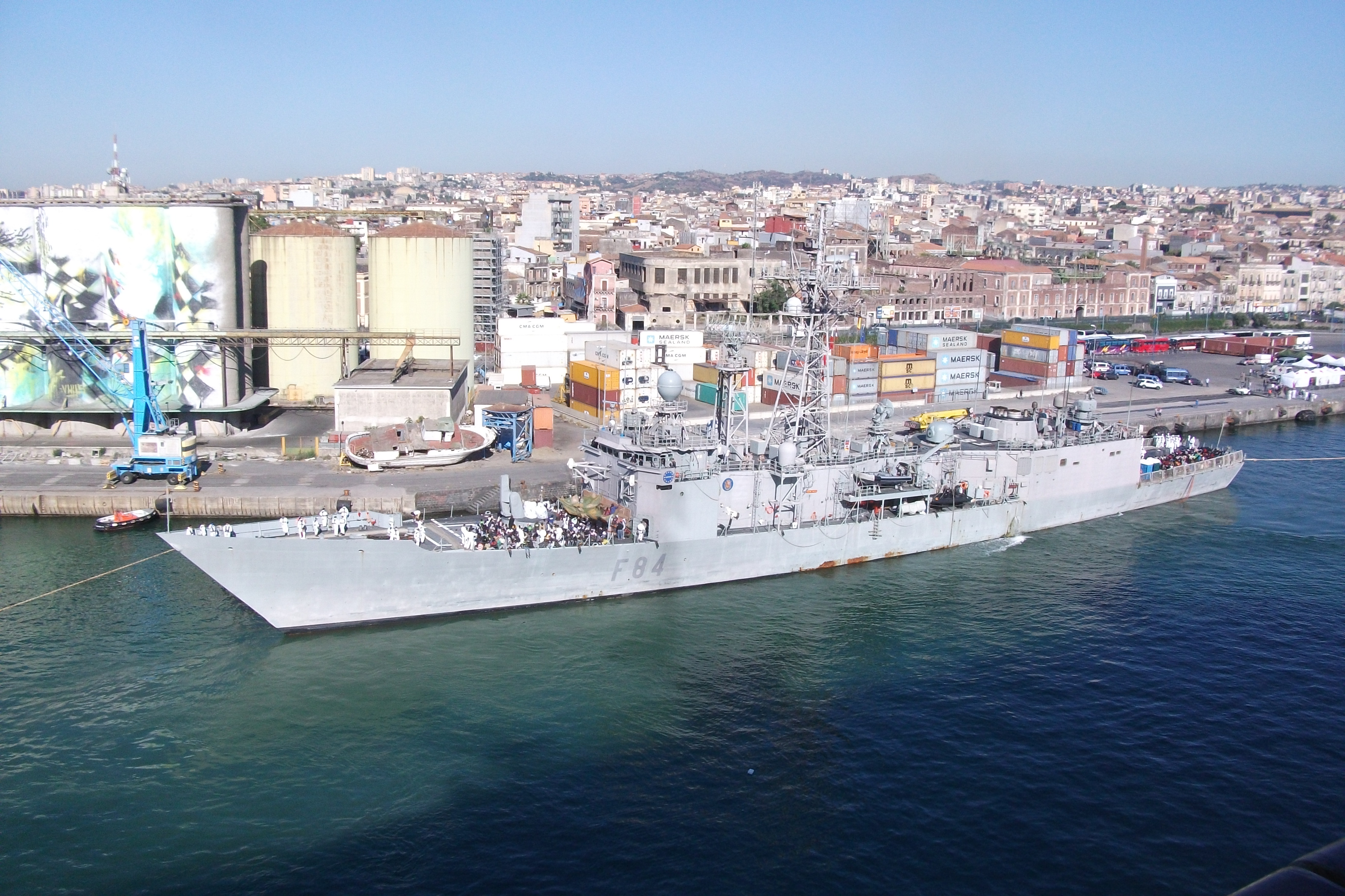
Our next port of call was Catania, Sicily. While approaching Sicily I noticed that this Italian naval frigate was also sailing into port. At first I thought that it was accompanying us into port – what with all the recent attacks on tourists, terrorism etc., but upon closer inspection realized it was out rounding up refugees trying to get to Sicily.
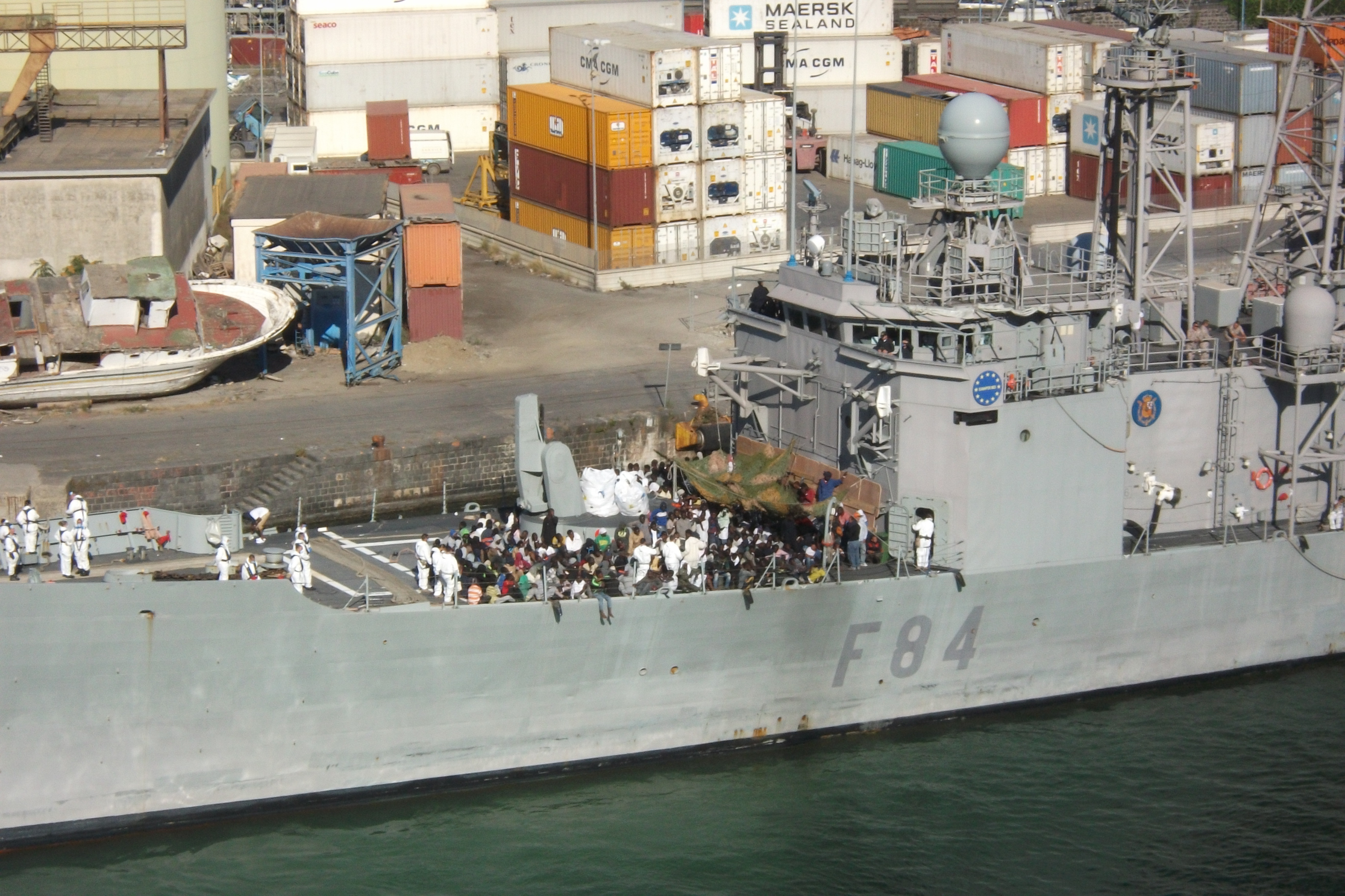
Our tour guide in Sicily informed us that hundreds of refugees (most from Libya and the Balkans) are picked up daily from sea by Italian ships and transported into ports across Sicily. They then have health and identity checks, are fed and temporarily housed, then distributed around Italy. Most of the refugees are young men looking for work.
So here we were, living large like kings and queens on the luxurious Celebrity Equinox cruise ship and these refugees had just risked their lives in dilapidated overcrowded rubber dinghies on open seas, for a chance at a better life in a foreign country, if they make it!
The stark irony, the Italian frigate ride was their ‘dream cruise’! They had just won the lottery! Despite, for the most part, having nothing but the clothes on their backs, they were ecstatic at another opportunity at a better life.
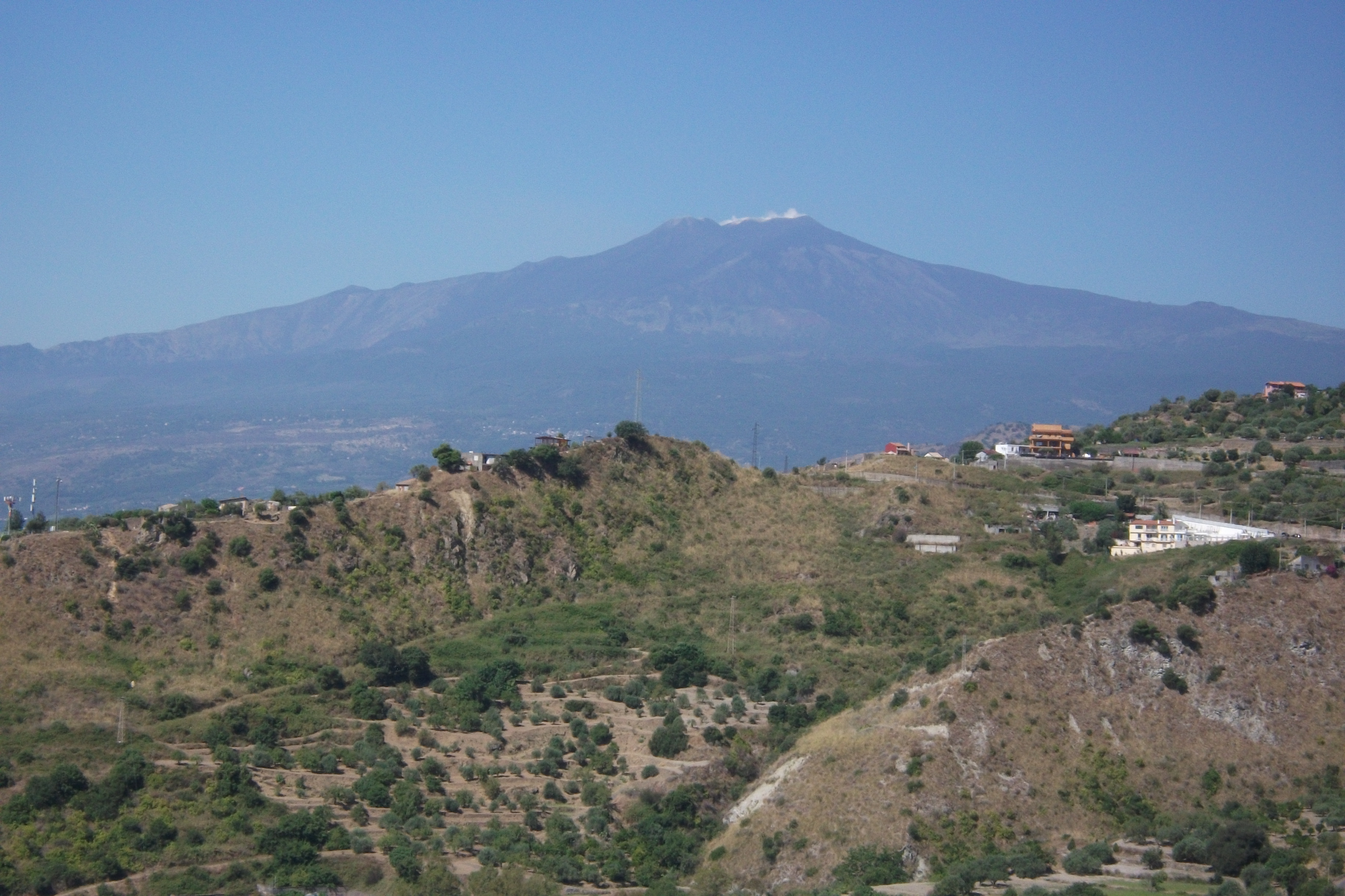
Mount Etna, an active volcano on the east coast of Sicily dominated the landscape on our drive to Taormina.
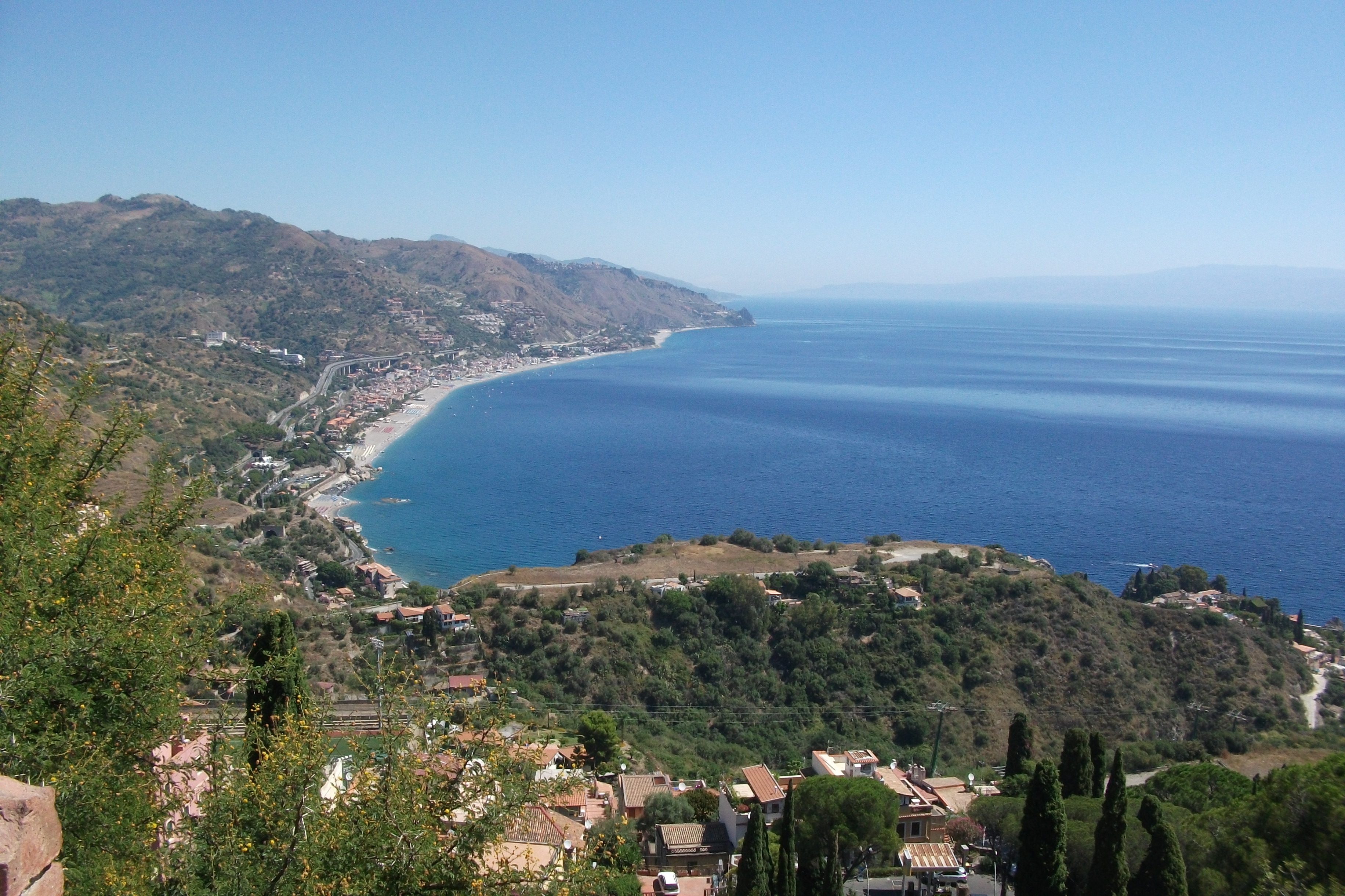
Our next day trip was to Taormina, Sicily, where the views are spectacular.

Taormina is a hilltop town on the east coast of Sicily. It sits near Mount Etna, an active volcano with trails leading to the summit. The town is known for the Teatro Antico di Taormina, an ancient Greco-Roman theater still used today.
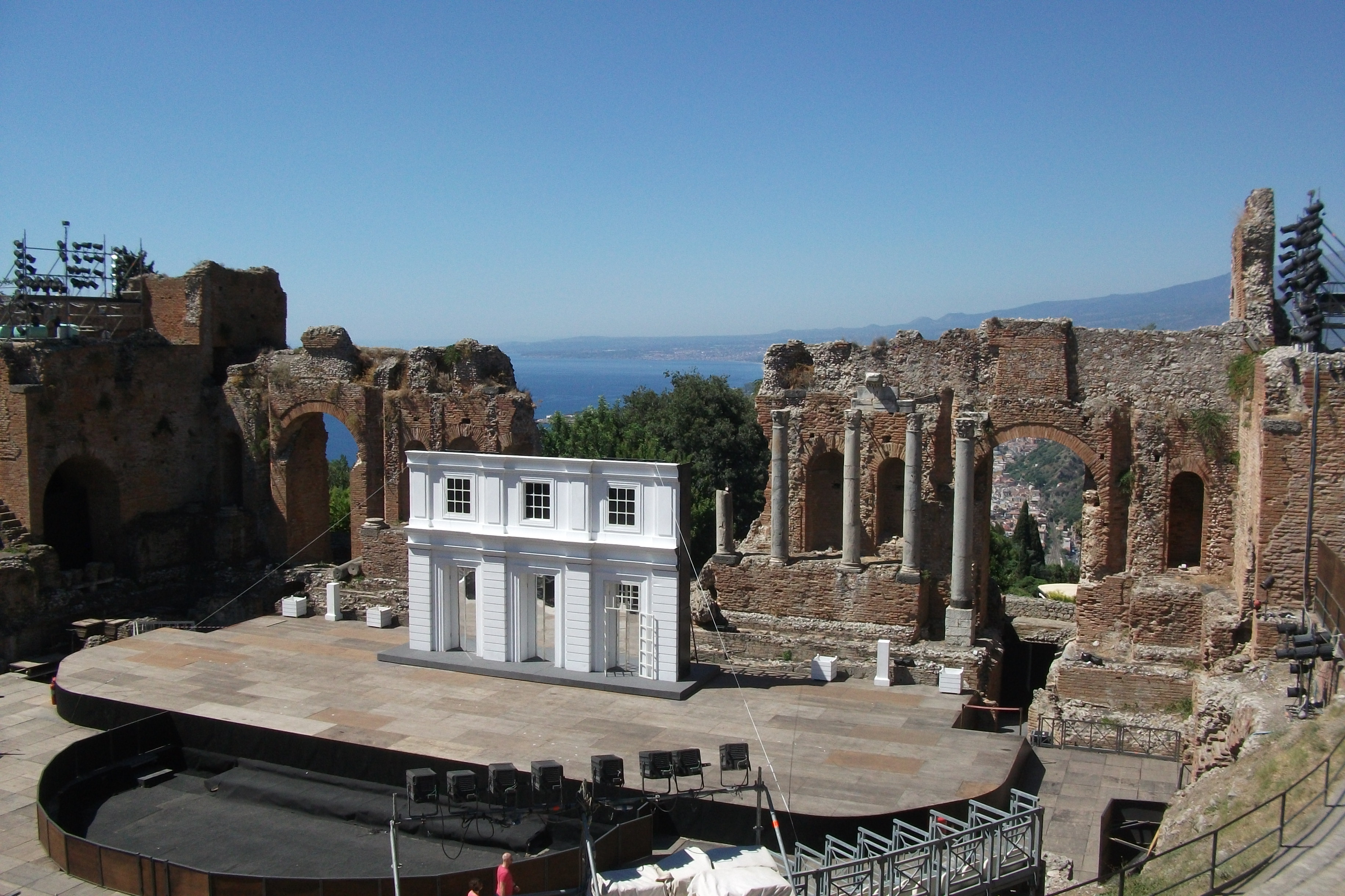
The Ancient theatre of Taormina is an ancient Greek theatre built in the third century BC.
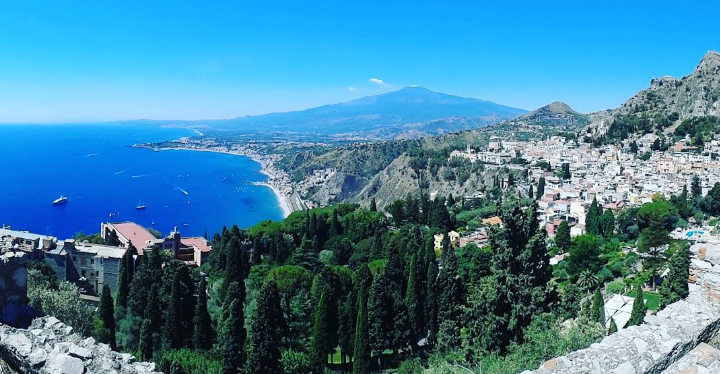
Panorama from the ancient theatre
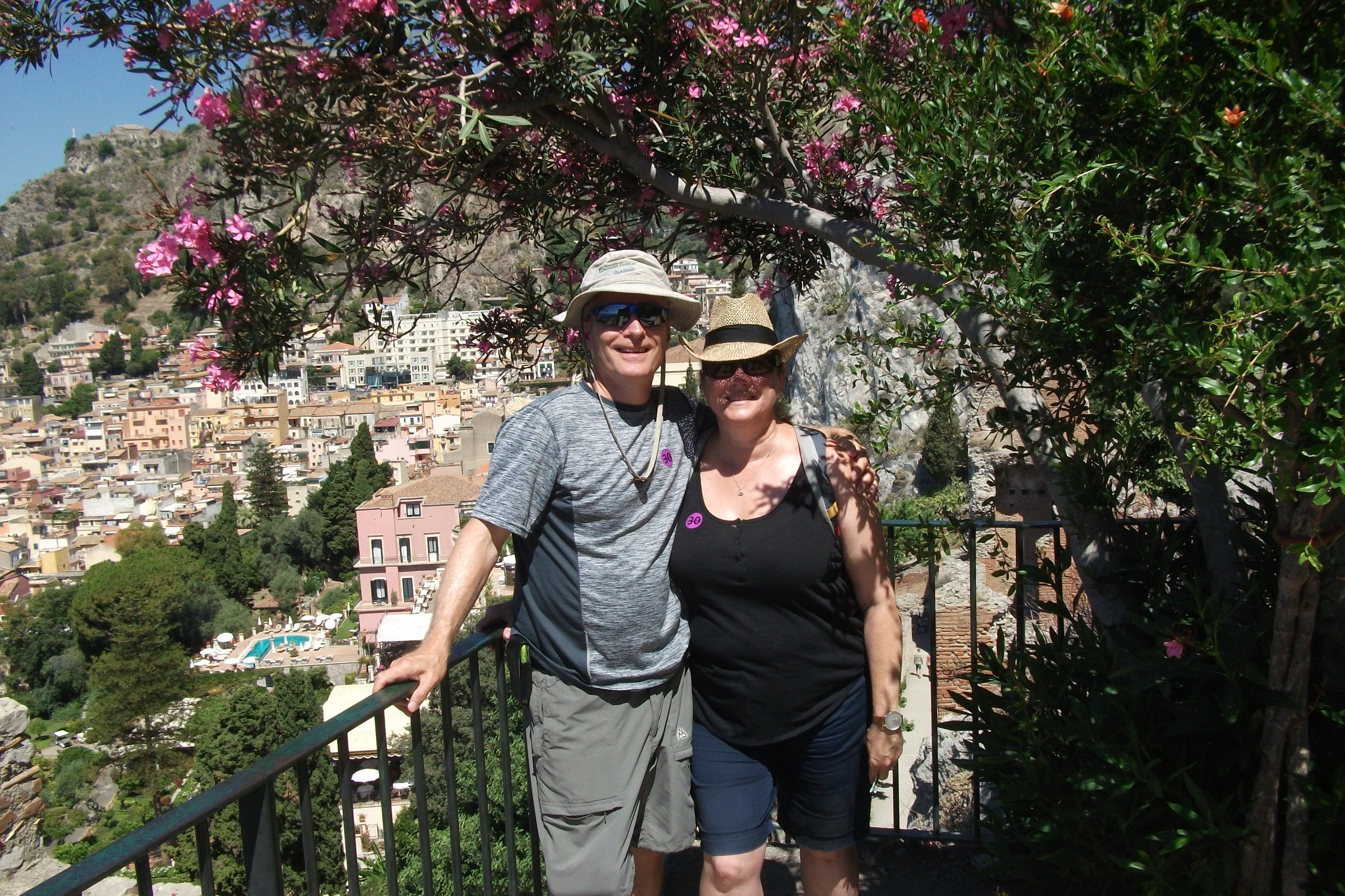
Photo op time during a brief bus stop.
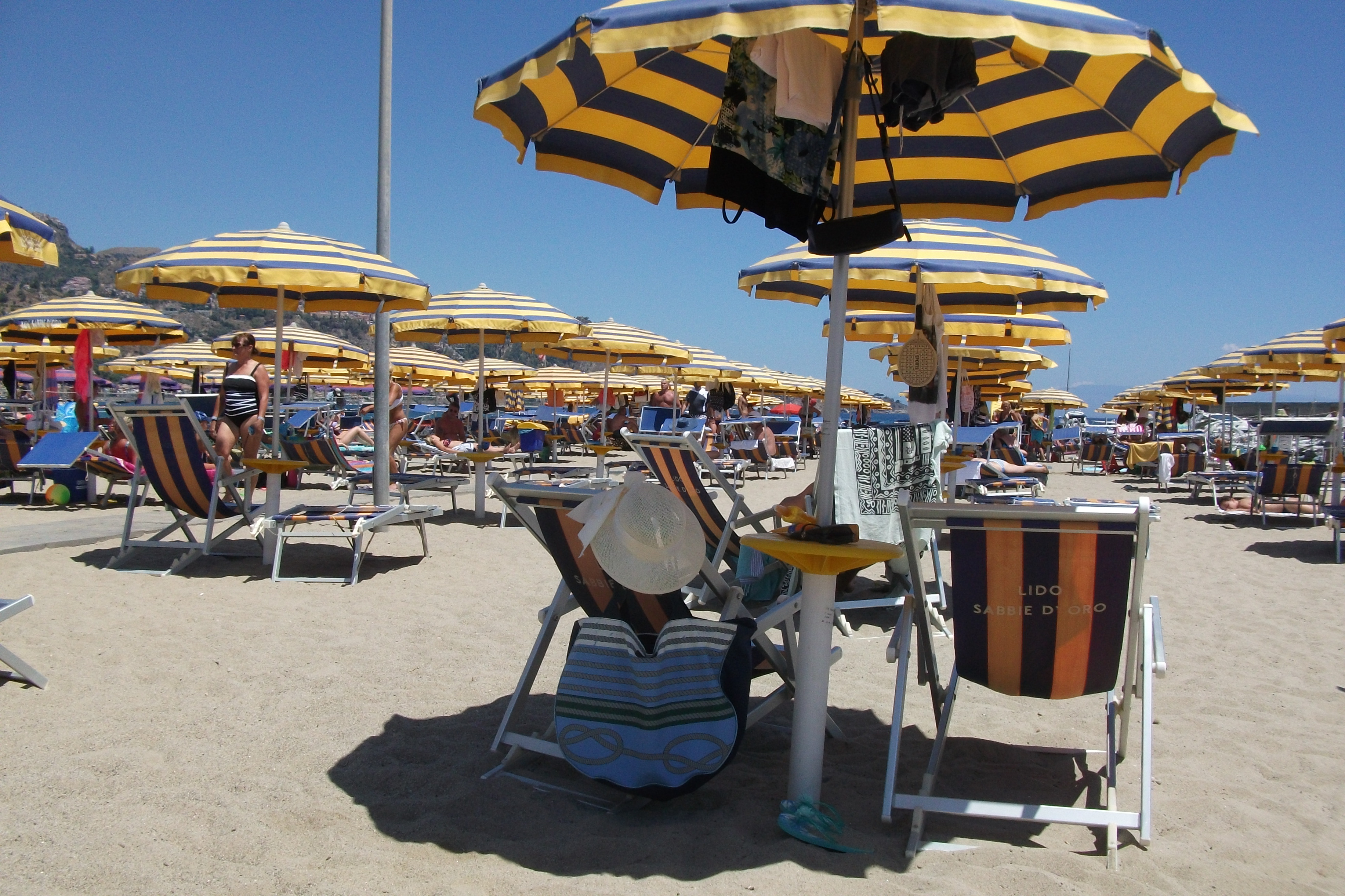
We headed to a beach near Taormina for the afternoon.
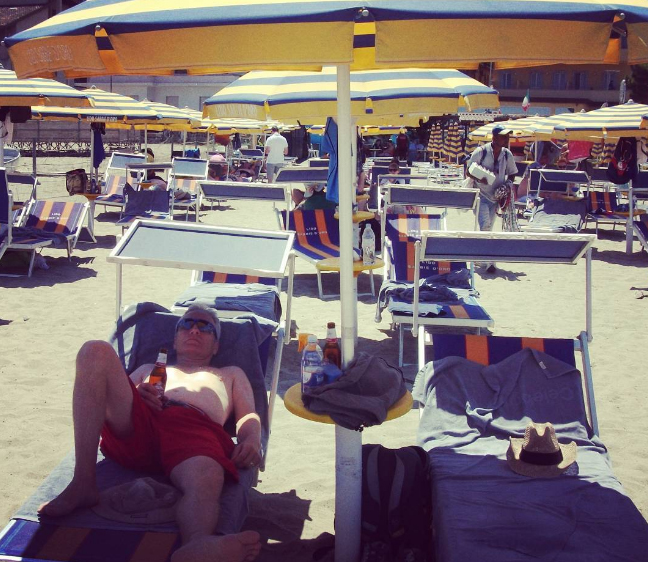
Barb and I enjoyed a refreshing swim, margherita pizza and Peroni beer #lavitadolce
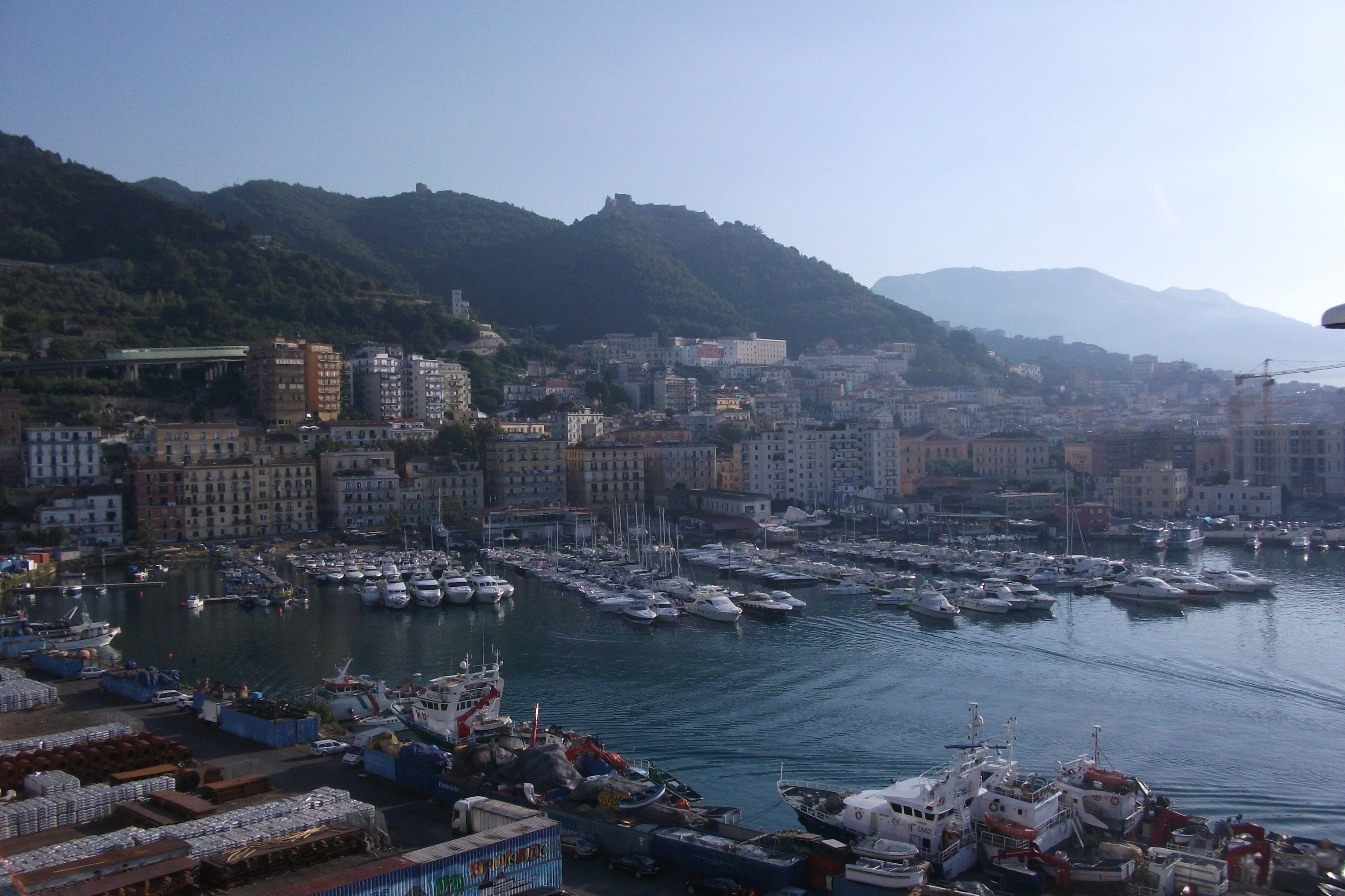
Final port of call – Salerno, Italy

The final excursion of our holiday was to Sorrento and the Amalfi Coast.
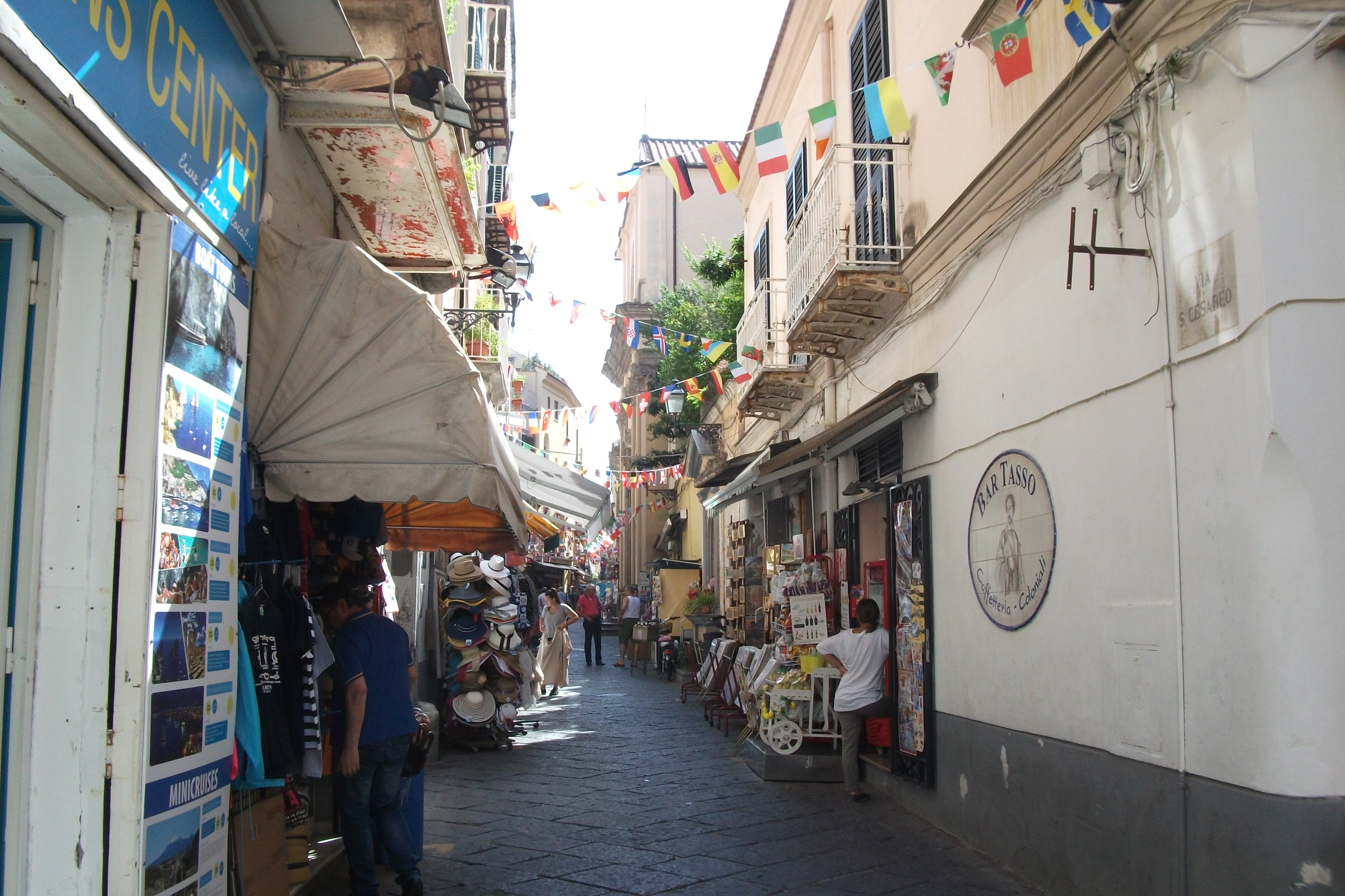
Sorrento is a charming coastal town in southwestern Italy, facing the Bay of Naples. It’s perched atop cliffs and is known for sweeping views and Piazza Tasso, a cafe-lined square.
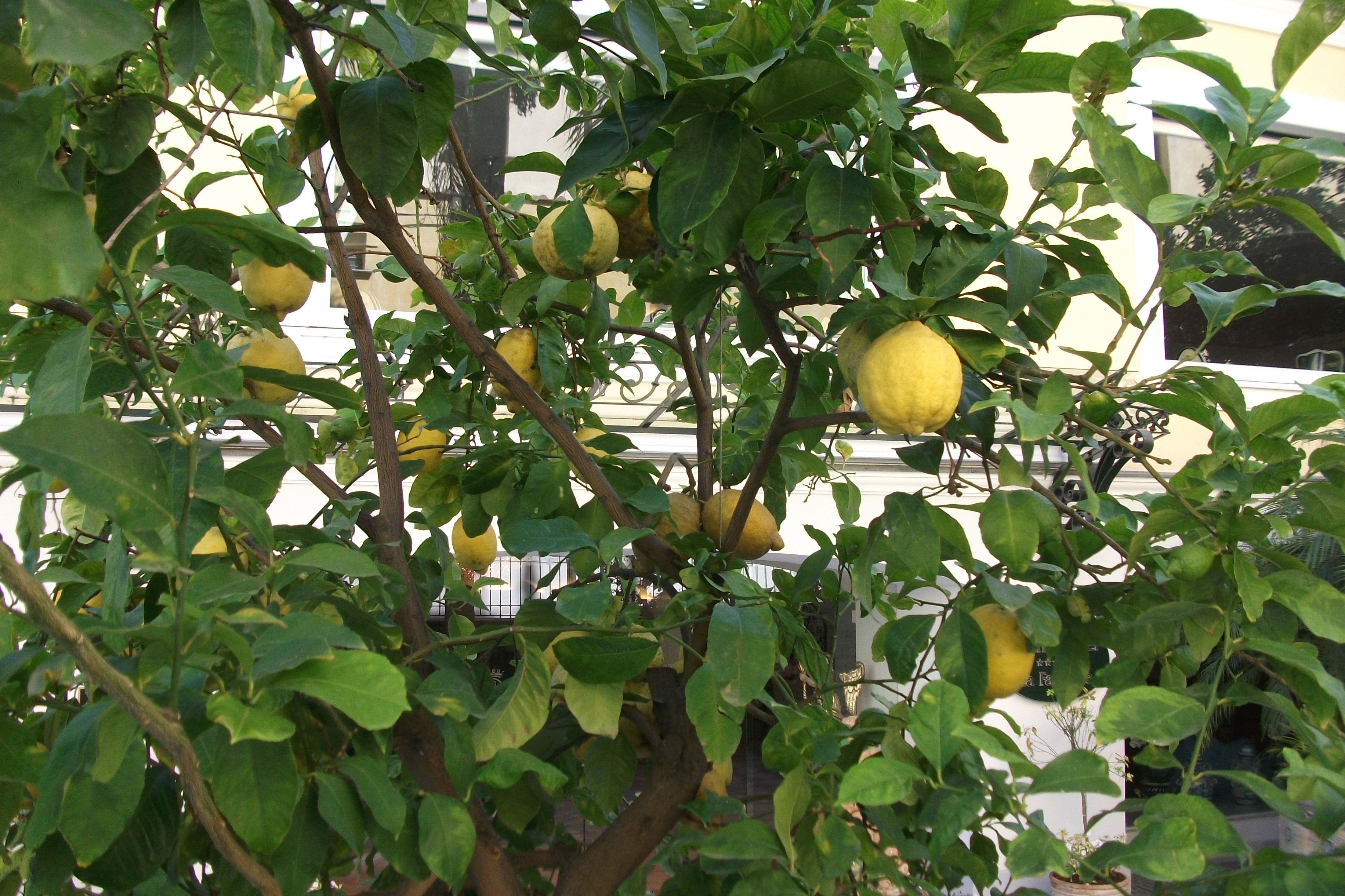
Lemon groves and trees dominate the landscape throughout the Mediterranean.

Giant lemons for sale in one of the markets in Sorrento.
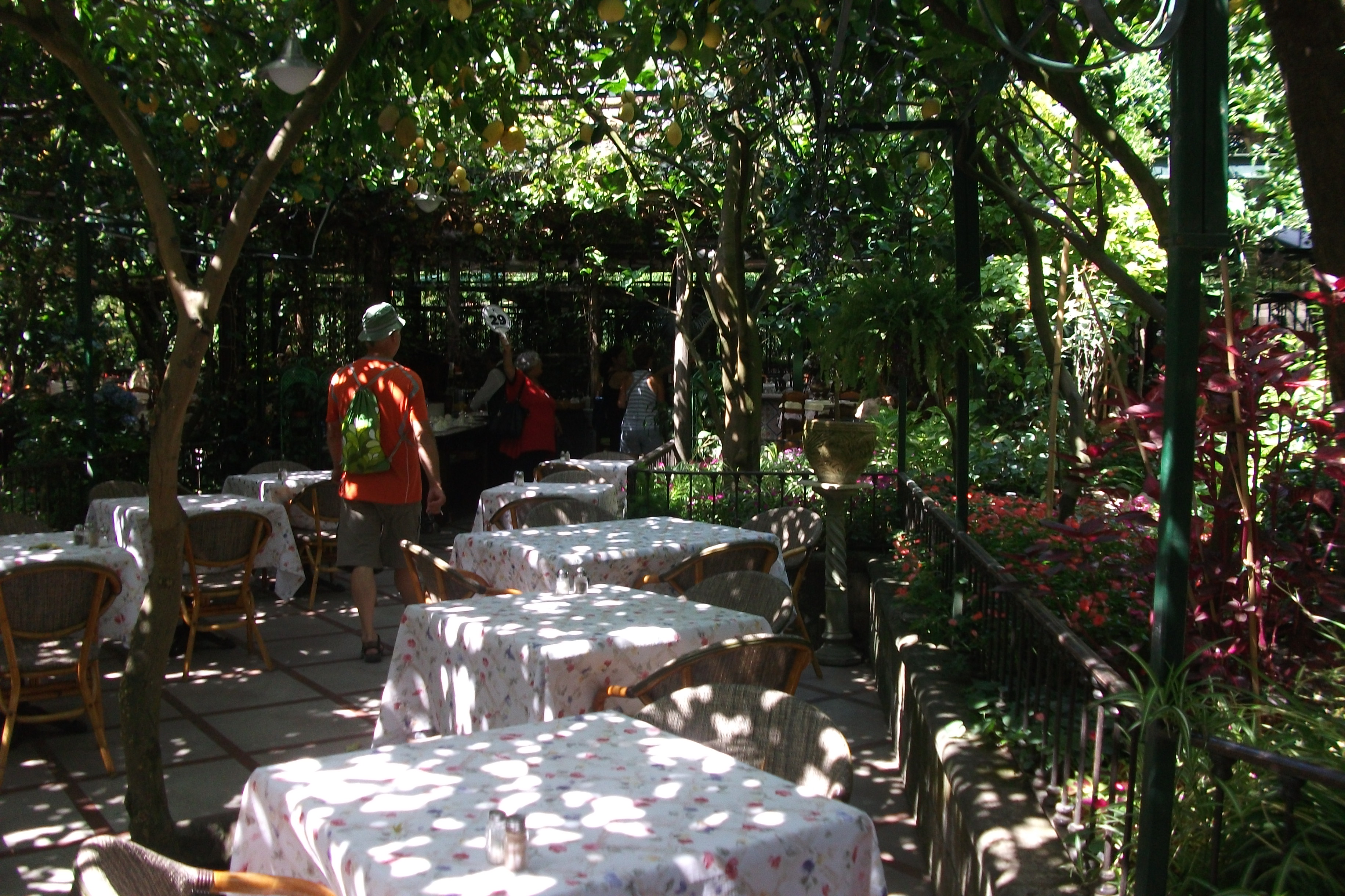
Bob, Gina, Barb and I enjoyed a wonderful lunch along with the people from our tour bus in this lush, colorful ristorante in Sorrento.

Bob and Barb cool their heels in this shady ristorante oasis from the midday heat.
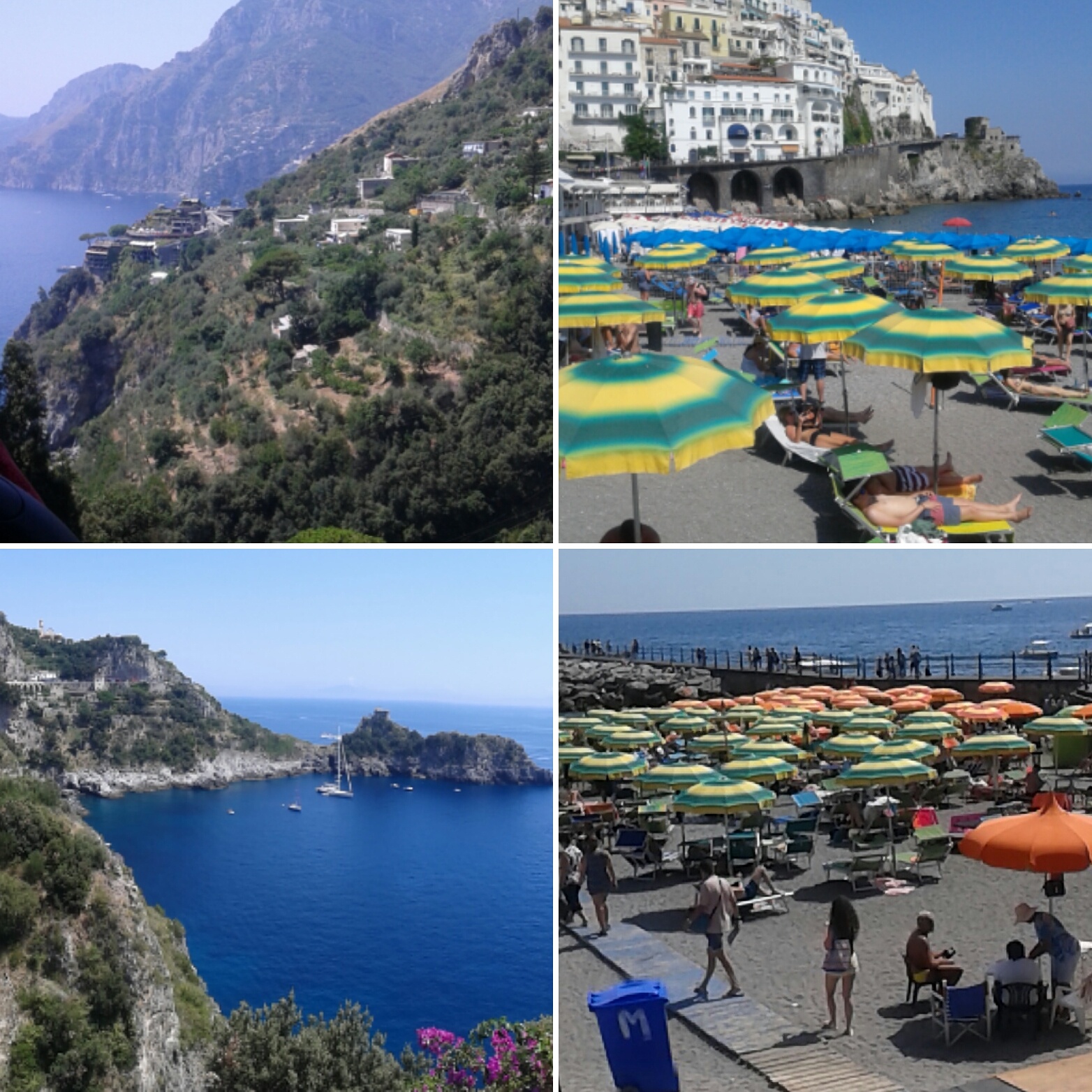
Spectacular clifftop views, cliff-side villas and inviting beaches dominate the breathtaking landscape along Amalfi Coast.
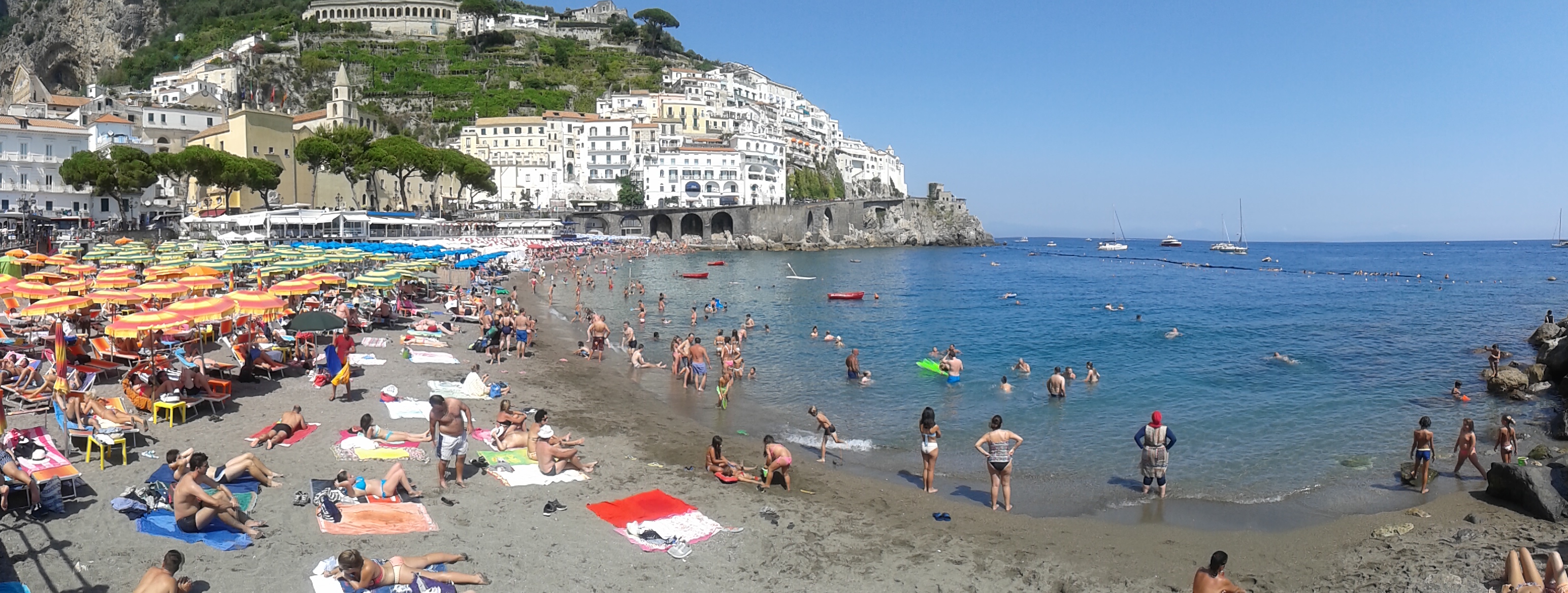
The seaside town of Amalfi is bursting with stunning natural beauty and a rich history. Between the 9th and 11th centuries Amalfi was the seat of a powerful maritime republic. Today it is the playground of the rich and famous.

St. Andrew Cathedral has been remodeled several times, adding Romanesque, Byzantine, Gothic, and Baroque elements. The cathedral includes the adjoining 9th-century Basilica of the Crucifix. Leading from the basilica are steps into the Crypt of St. Andrew.
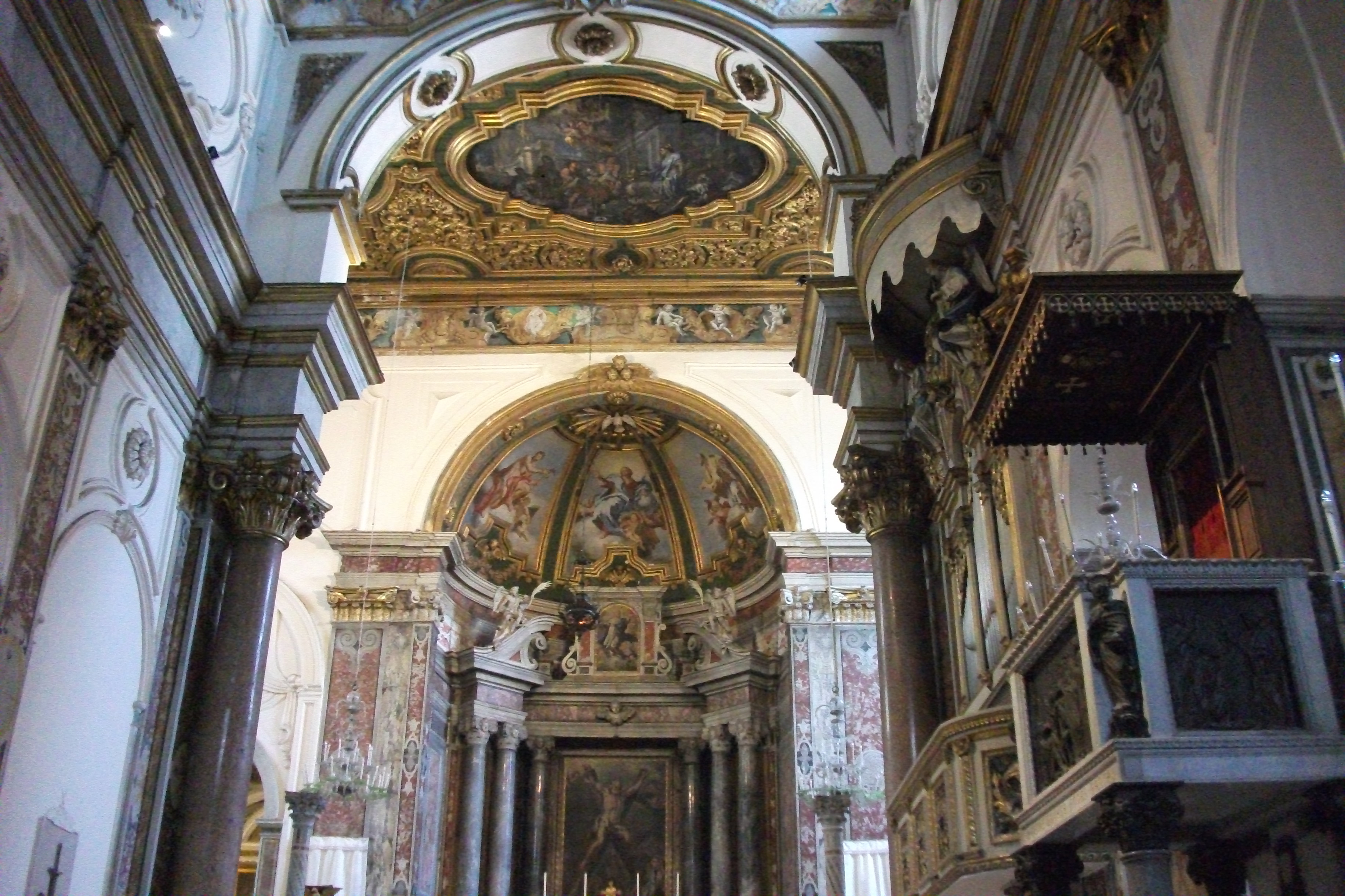
St. Andrew’s is a 9th-century Roman Catholic cathedral in the Piazza del Duomo. It is dedicated to the Apostle Saint Andrew whose relics are kept here.
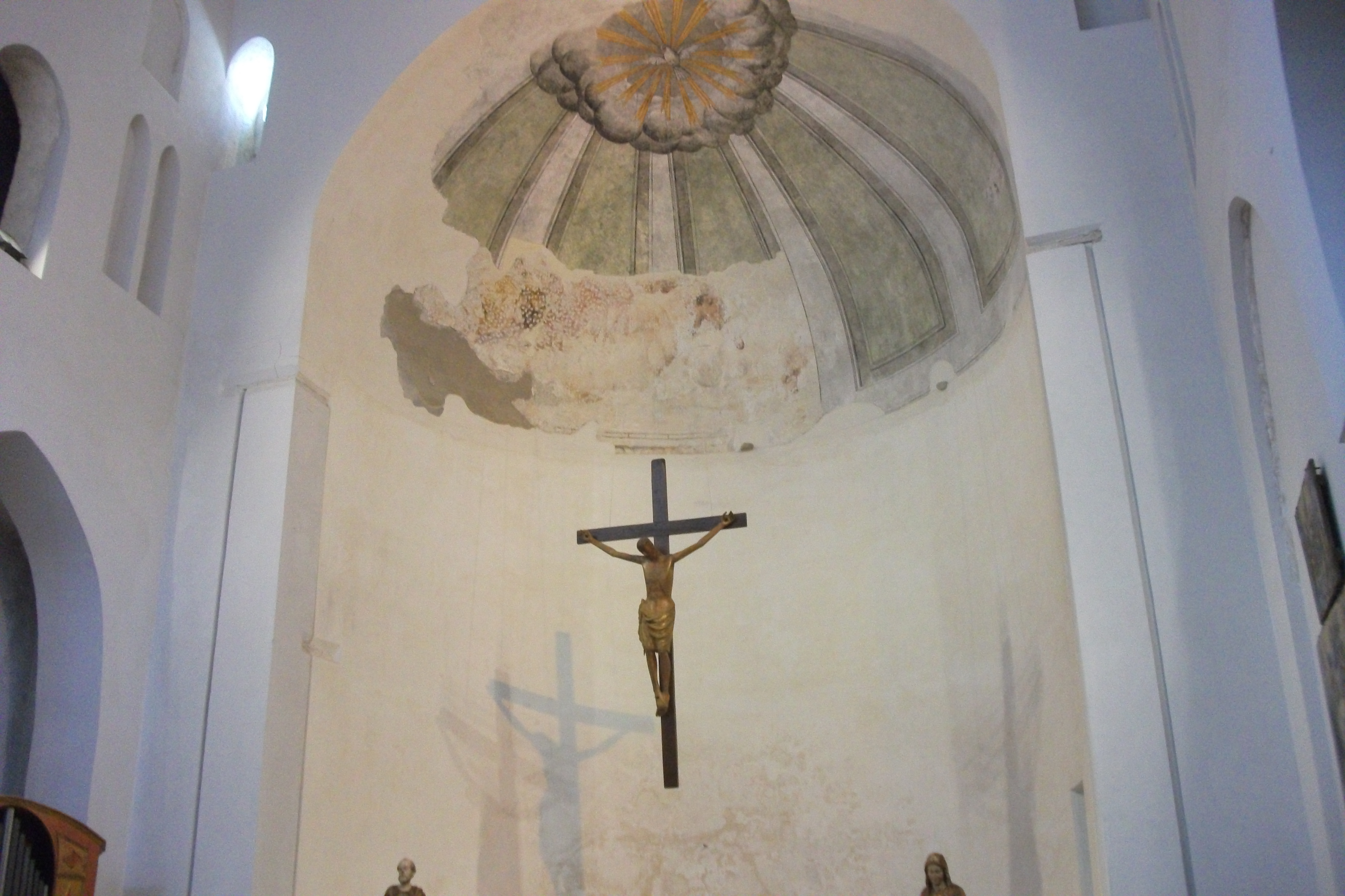
A beautiful wooden 13th century Crucifix hangs in the liturgical area.
The next stop was the port of Fiumicino for our transfer to the airport for our flight home.

As if on cue, a glorious sunset graced the horizon as we cruised toward Fiumicino.
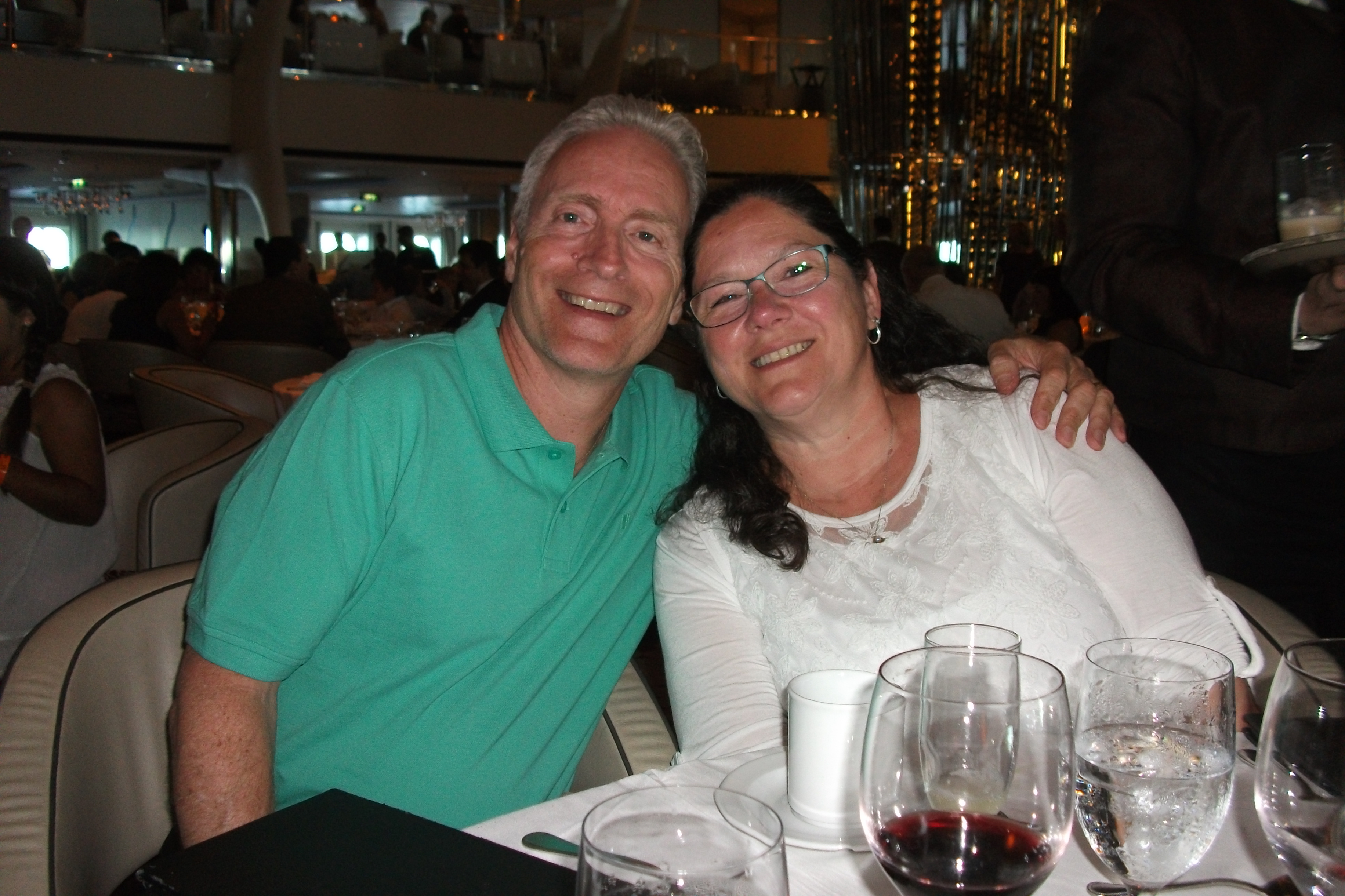
We hope you enjoyed riding along with us! We certainly enjoyed the trip of a lifetime!
Things crossed of our bucket list:
First Cruise (Celebrity Equinox)
St. Peter’s tomb (Scavi Tour)
Castle St. Angelo
Borghese Gallery / Villa
Santorini (Greek Night & Sunset boat/dinner cruise)
Amalfi Coast (Sorrentto, Amalfi)
Malta (Valletta, Mdina, Marsaxlokk)
Sicily (Taormina)
Kiefer Sutherland Band ‘Kills It’
Posted: June 24, 2016 Filed under: Arts, Entertainment, Inspiration, music | Tags: 24, jackbauer, kiefersutherland, kiefersutherlandband, maxwells, music, waterloo Leave a commentYou think Jack Bauer is the biggest badass around? Think again, because you obviously haven’t seen the Kiefer Sutherland Band.
Throw in a mix of some gritty country-rock music, a solid supporting cast of talented bandmates (Austin Vallejo and Michael Gurley on guitar, Joseph De La O on bass, Jess Calcaterra on drums) and an intimate concert venue and you have all the ingredients for a memorable night on the town.
I don’t think Sutherland would have it any other way. At least that appeared to be the case judging by the reaction of 700 plus patrons last night as they thoroughly savoured and soaked up every drop of Sutherland’s Not Enough Whiskey tour performance at Maxwell’s in Waterloo.
In his self-depricating manner, Sutherland introduced the band by stating that they had things a little “ass backwards” and admitted upfront that “a band usually puts out an album first and then does the tour.” So he graciously thanked everyone (multiple times) for their leap-of-faith in coming out to see the band without first hearing its 13 songs.
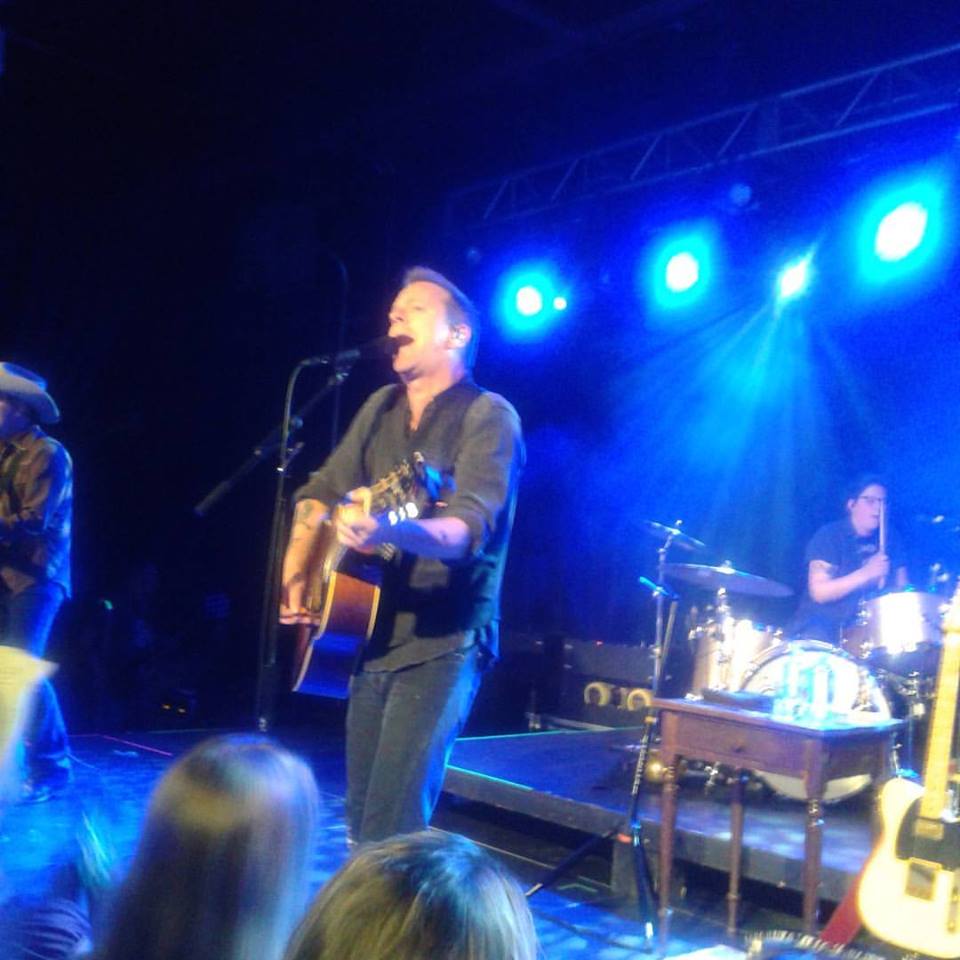
Kiefer Sutherland and his band performing at Maxwell’s in Waterloo last night.
To be clear, Sutherland is not going to challenge any of the current reigning music stars in the vocal category. Though it’s evident his low, raspy ‘whiskey-soaked’ voice still gets it done. And what he lacks in vocal range, he more than makes up for with his frenetic leaping around the stage while playing his Gibson acoustic and Fender electric guitars with a gusto that even his doppleganger (Jack Bauer) would envy.
And the man writes his own songs (along with collaborator Jude Cole). From My Best Friend (A thoughtful reflection on how one has to ‘be their own best friend’ before expecting love / friendship from another) to the semi-autobiographical Down In A Hole (How people’s choices sometimes land them in trouble). Sutherland observed that, though never landing up in prison, he had seen the inside of a jail a few times.
At one point in the evening Sutherland shared a poignant story and song (Gonna Die) about a young American Iraq war veteran whom he stumbled upon in a confrontation with bouncers outside of a Los Angeles bar. The veteran was scared and explained to him that the hospital staff mistakenly gave him the wrong prescription medication.
Eventually, Sutherland was able to convince the bouncers to leave the young man alone and then took him back to the Veteran’s hospital where they admitted to the mix-up. The experience haunted Sutherland for weeks afterwards and inspired him to write Gonna Die.
Jack Bauer was the main reason the majority of the crowd showed up last night, but it was clearly the ‘real Bauer’ (Kiefer Sutherland) and his bandmates who, undoubtedly, left them begging for more.
P.S. – Opening for the Kiefer Sutherland Band was a brilliantly talented singer/songwriter by the name of Jessica Mitchell. Her voice was pure magic! Check her out at –
jessicamitchellmusic.com
Related Websites:
Photo Credit: Michael G. Redfearn
 Mcluhansghost blog
Recent Comments